
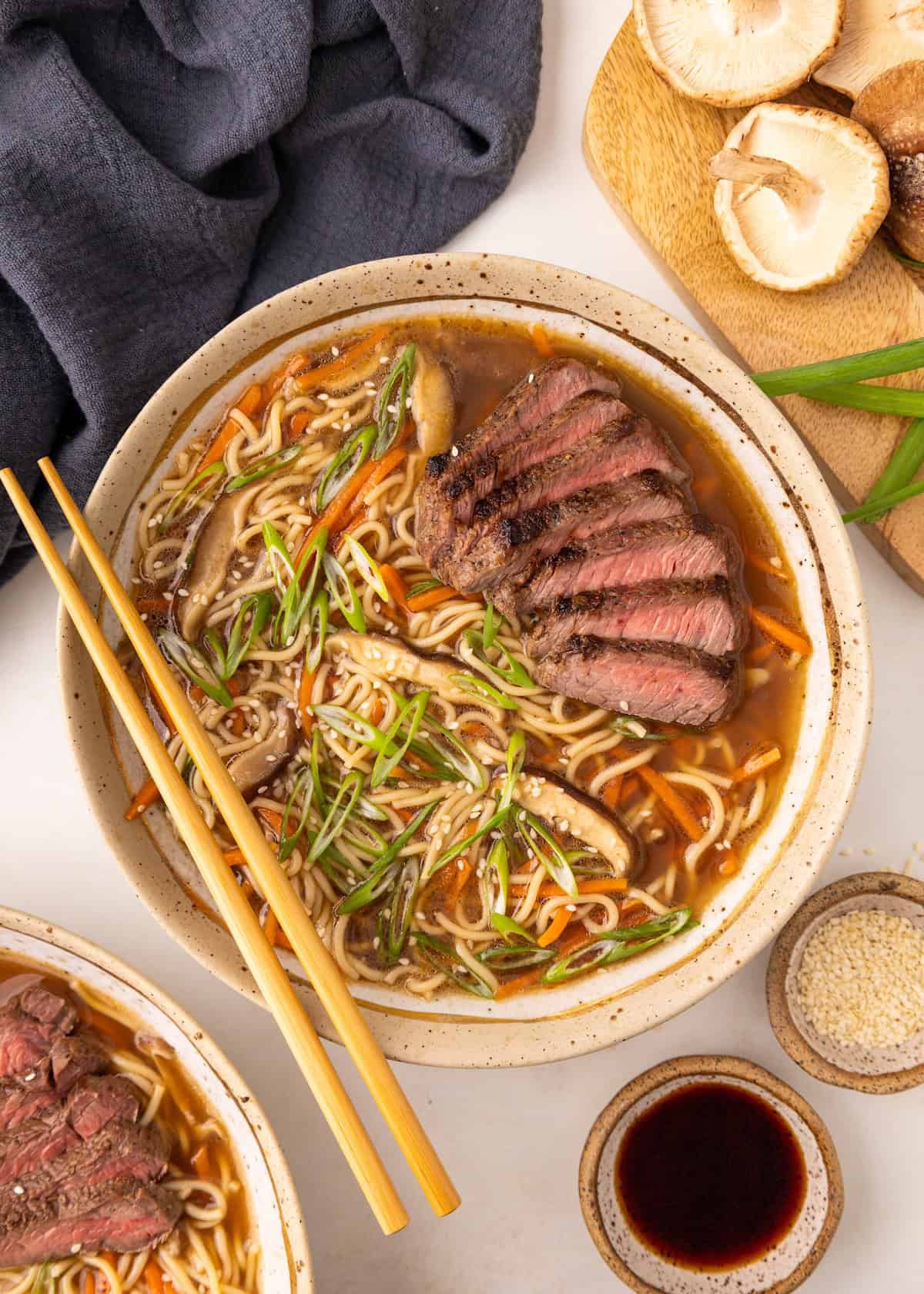
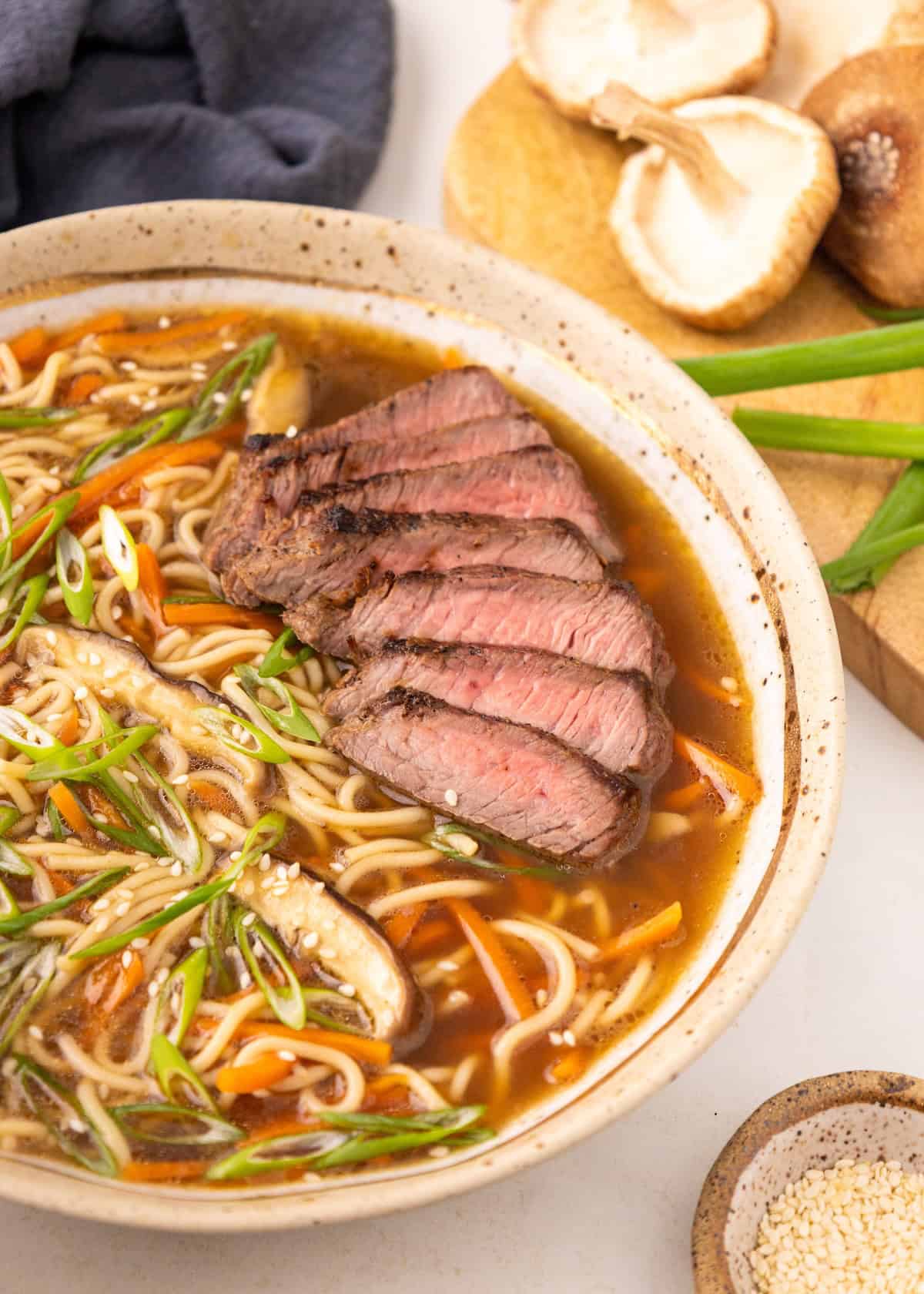
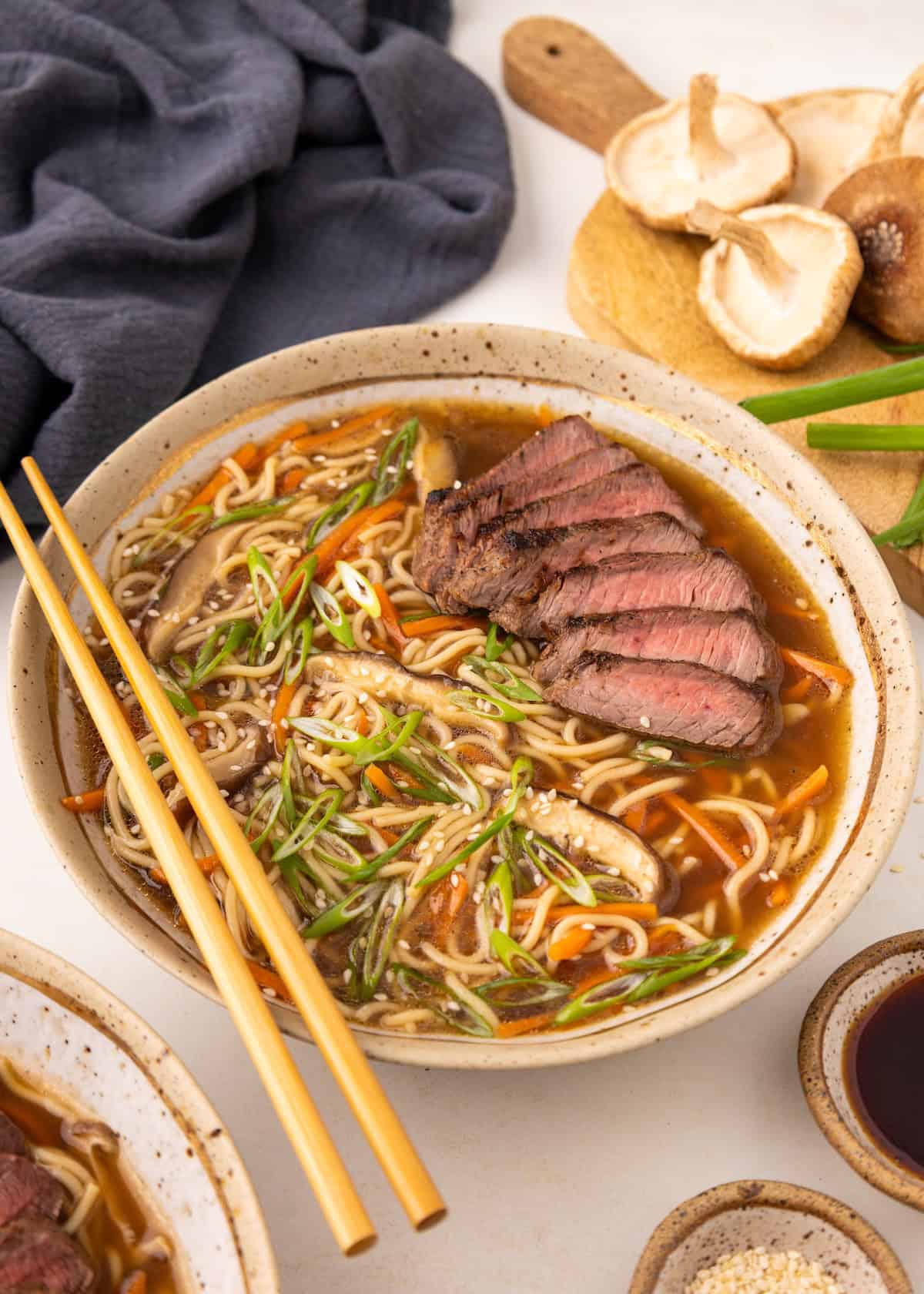
Beef ramen is a comforting, flavor-packed noodle bowl made with tender slices of seared steak, a savory broth, and fresh vegetables. It's a simple way to enjoy a homemade ramen experience without specialty ingredients or long simmering times.
A Quick Look at the Recipe
✅ Recipe Name: Beef Ramen
🕒 Ready In: ~30 minutes
👪 Serves: 4 servings
🍽 Calories: ~500 per bowl (estimated)
🥣 Main Ingredients: Sirloin steak, beef broth, ramen noodles, garlic, ginger, mushrooms, carrots
📖 Dietary Info: Simple, whole-food ingredients; dairy-free; gluten-free option
👌 Difficulty: Easy - quick sear, simple broth, and fast-cooking noodles
SUMMARIZE & SAVE THIS CONTENT ON
This beef ramen recipe builds flavor at every step, searing the steak, sautéing garlic and ginger, and simmering everything in a seasoned beef broth with mushrooms, carrots, and ramen noodles. The result is a rich, umami-forward broth and a satisfying noodle bowl that feels cozy and restaurant-inspired while still being quick enough for weeknights.
If comforting bowls are your go-to dinners, you might also enjoy recipes like Ground Turkey Chili, Fish Taco Bowls, and Crockpot White Chicken Chili. They bring the same warmth and ease that make this beef ramen a weeknight favorite.
Jump to:
Why You'll Love this Beef Ramen:
Loaded with vegetables: Mushrooms and carrots add texture and color, and you can easily mix in bok choy, snow peas, bean sprouts, broccoli, or peppers.
Easily adjustable heat: Keep it mild or turn it into a spicy beef ramen with chili paste, sriracha, or crushed red pepper flakes.
A healthier take on ramen: Made with whole ingredients, lower sodium options, and no seasoning packets just clean, customizable flavor.
Flexible noodle choices: Use classic ramen, gluten-free noodles, rice noodles, or zucchini noodles for a lighter bowl.
Fast weeknight meal: Everything cooks in one pot and comes together in about 30 minutes, making it a simple but satisfying dinner.
Key Ingredients:
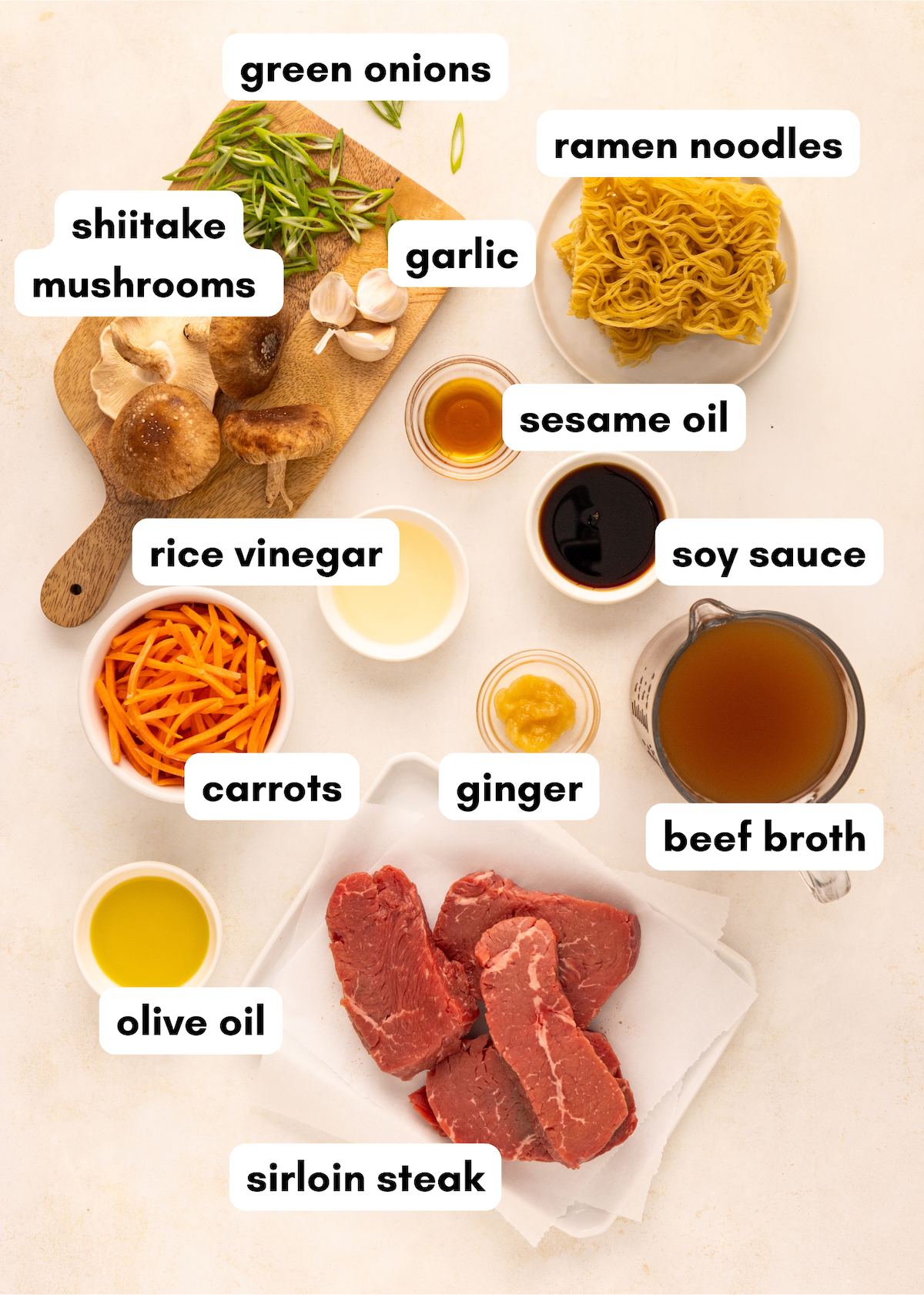
- sirloin steak: Thinly sliced against the grain for tenderness. Flank steak or ribeye are great alternatives.
- beef broth: Use a high-quality or low-sodium broth for the best control over flavor and salt content.
- soy sauce: Adds umami and depth; choose low-sodium if preferred.
- shiitake mushrooms: Earthy and meaty; button or cremini mushrooms also work in a pinch.
- carrots: Shredded or julienned for quick cooking and vibrant texture.
- noodles: Whole wheat or brown rice ramen noodles work well; swap in zucchini noodles for a low-carb option.
Scroll to the recipe card at the bottom of this page for exact quantities.
Easy Substitutions & Variations:
- Make it gluten-free: Swap traditional ramen for gluten-free ramen noodles or rice noodles and keep all seasoning ingredients the same.
- Use a different cut of beef: Flank steak, ribeye, or thin-sliced sirloin all work beautifully and stay tender in ramen.
- Try another protein: Replace the beef with chicken, shrimp, tofu, or pork for an easy variation on the same broth base.
- Change the vegetables: Add bok choy, spinach, snow peas, bean sprouts, broccoli, or bell peppers to customize the texture and flavor.
- Adjust the broth richness: Add a splash of coconut milk for creaminess or boost umami with miso paste or a bit more soy sauce.
- Turn it spicy: Stir in chili oil, chili crisp, sriracha, or gochujang for a fiery beef ramen variation.
Save this Recipe
How to Make Beef Ramen:
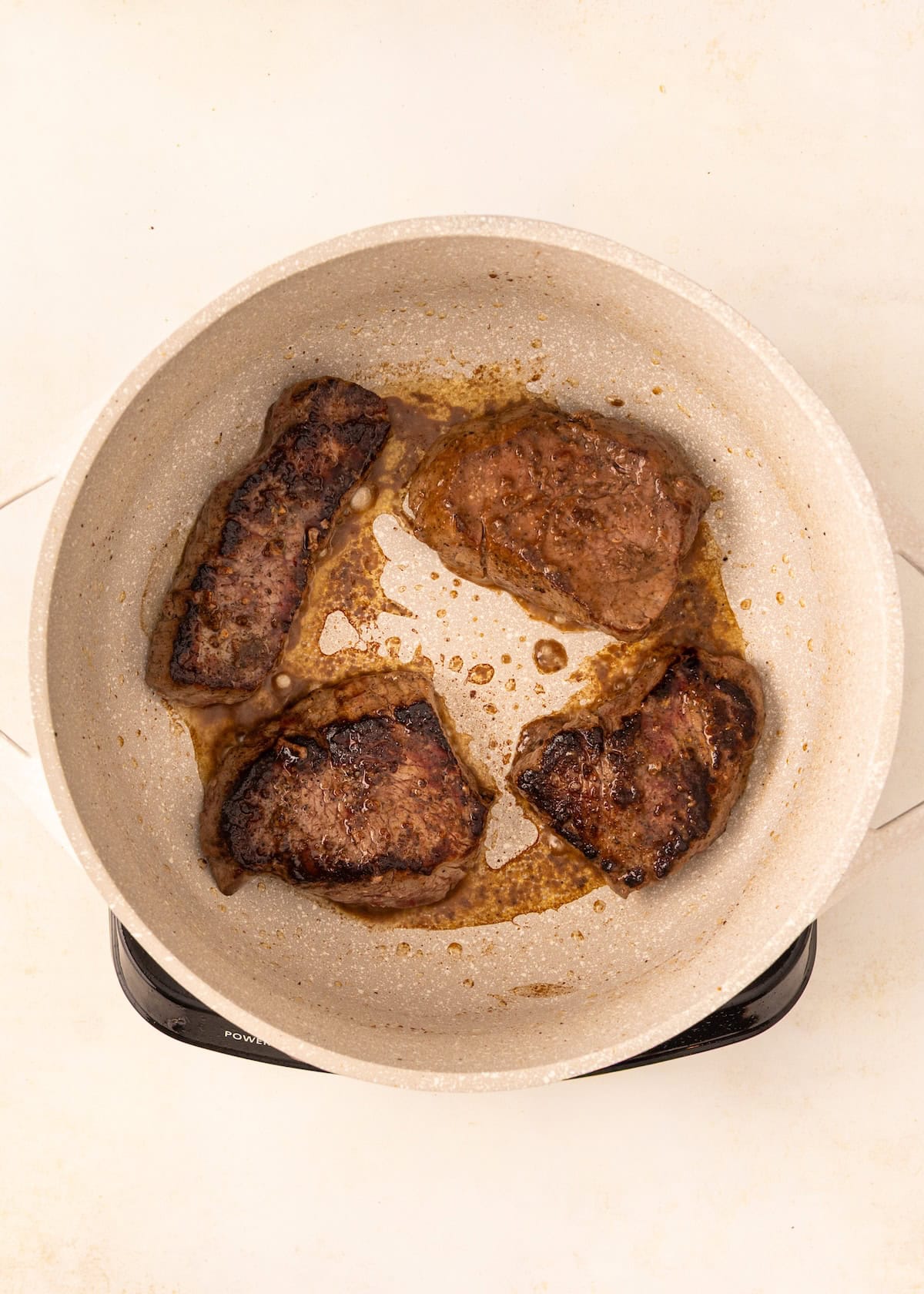
- Step 1: Heat the olive oil in a large pot. Season the steak with salt and pepper, then sear for 3-4 minutes until browned on the outside. Remove the steak and set aside.
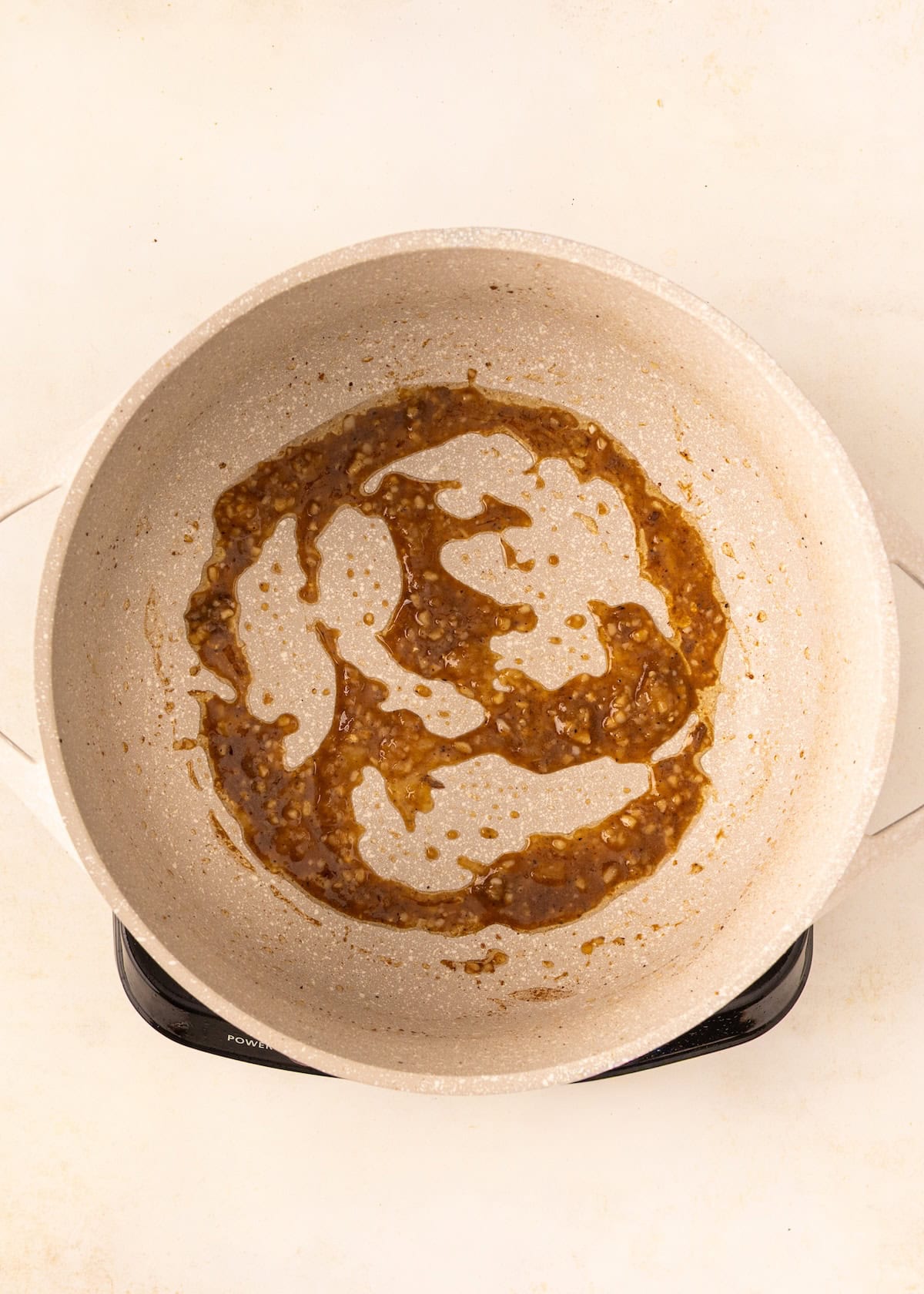
- Step 2: In the same pot, add the garlic and ginger. Sauté for about 1 minute, stirring frequently, until fragrant.
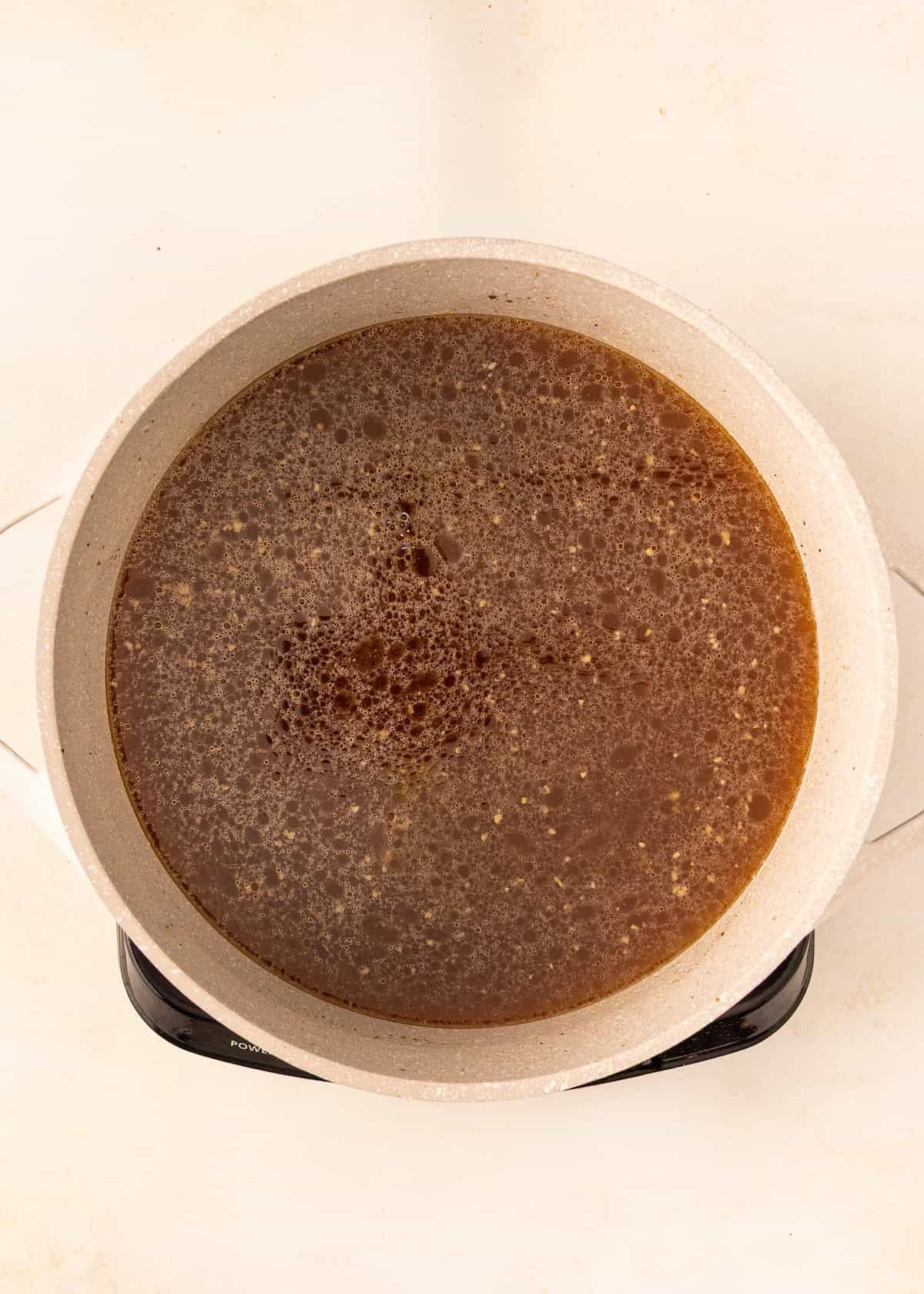
- Step 3: Pour in the beef broth, soy sauce, rice vinegar, and sesame oil. Bring the mixture to a gentle simmer.
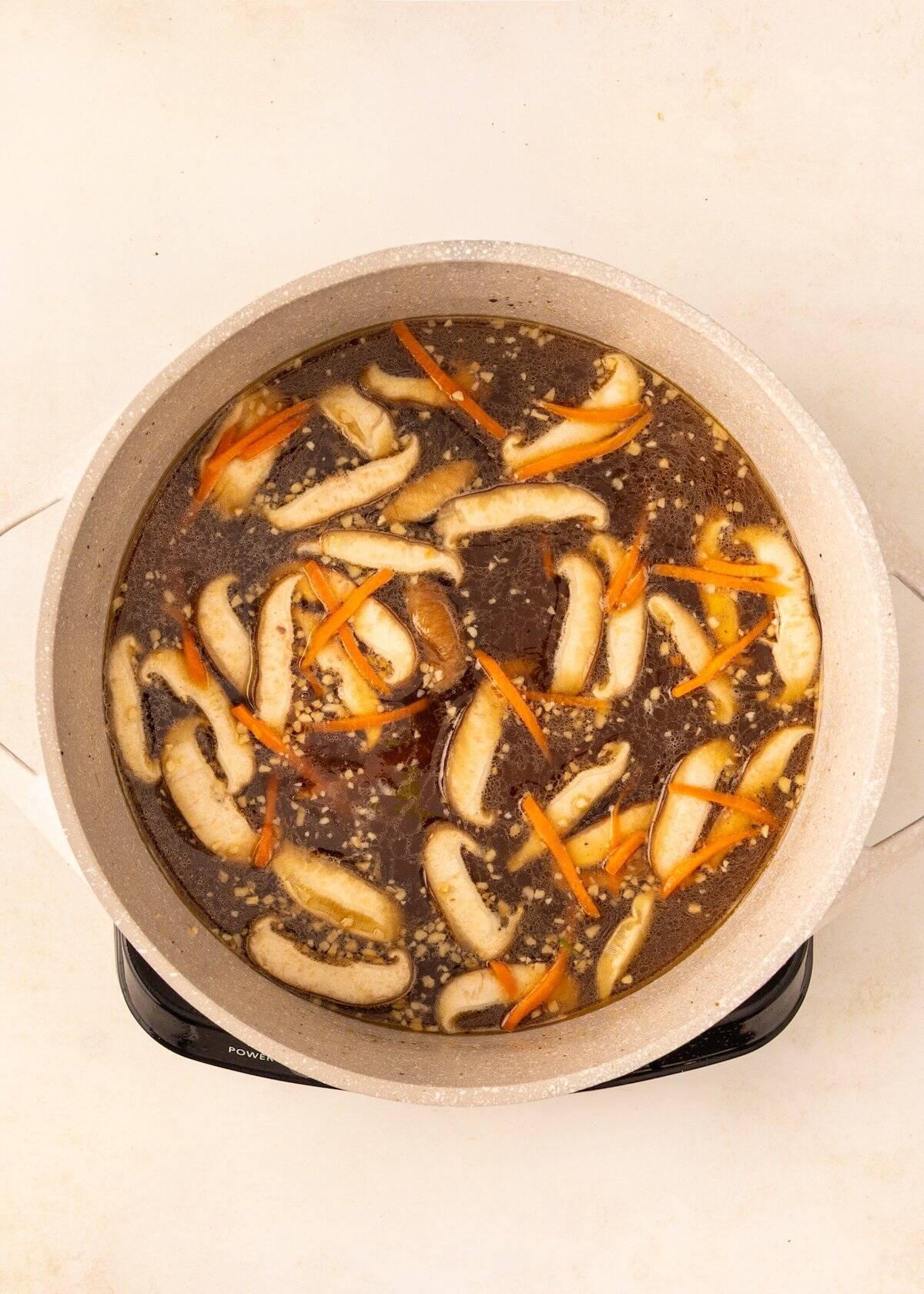
- Step 4: Add the sliced mushrooms and shredded carrots. Simmer for 5-7 minutes, or until the vegetables are tender.
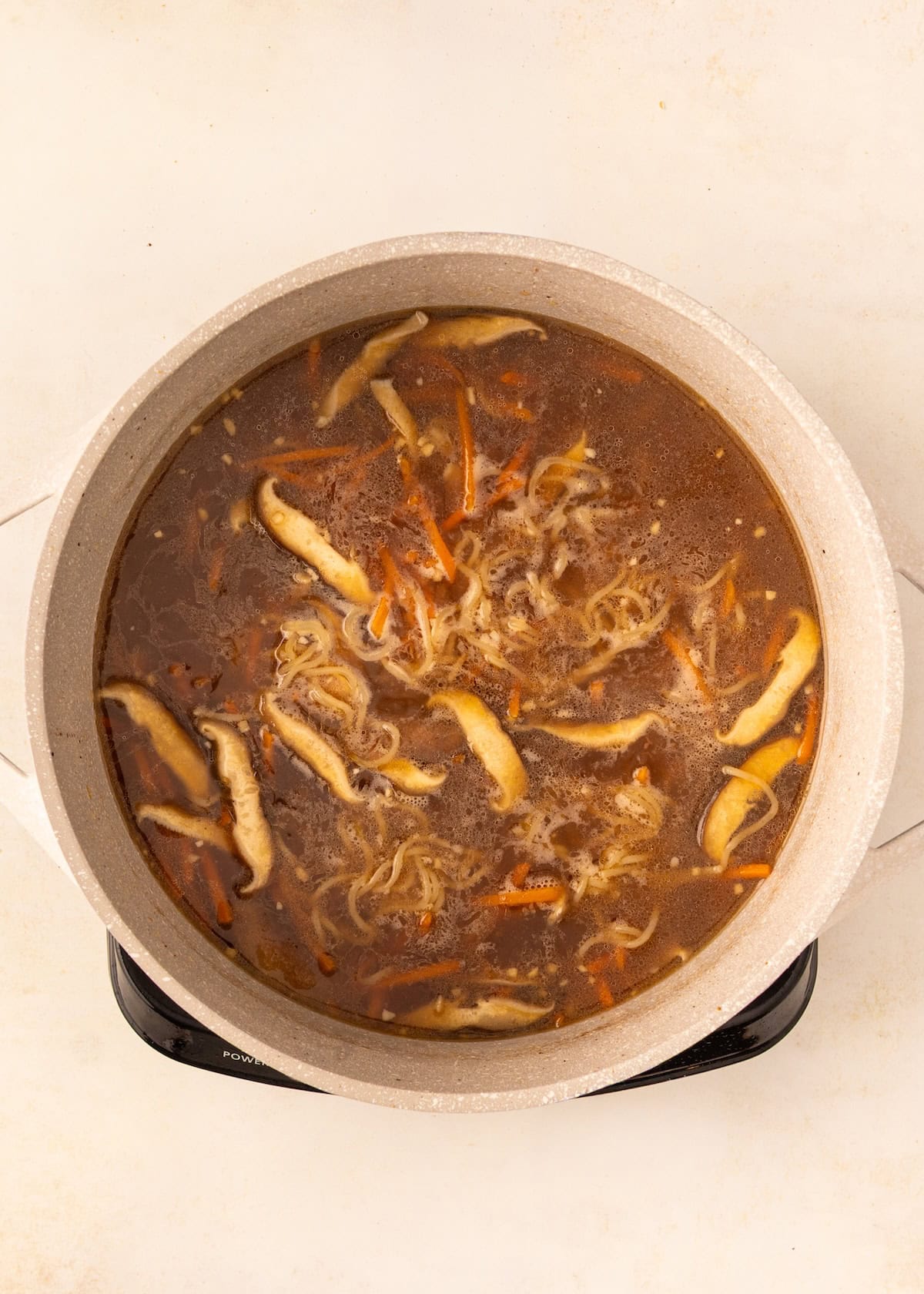
- Step 5: Add the ramen noodles directly to the pot. Cook according to package directions, usually 3-5 minutes, until the noodles are soft.
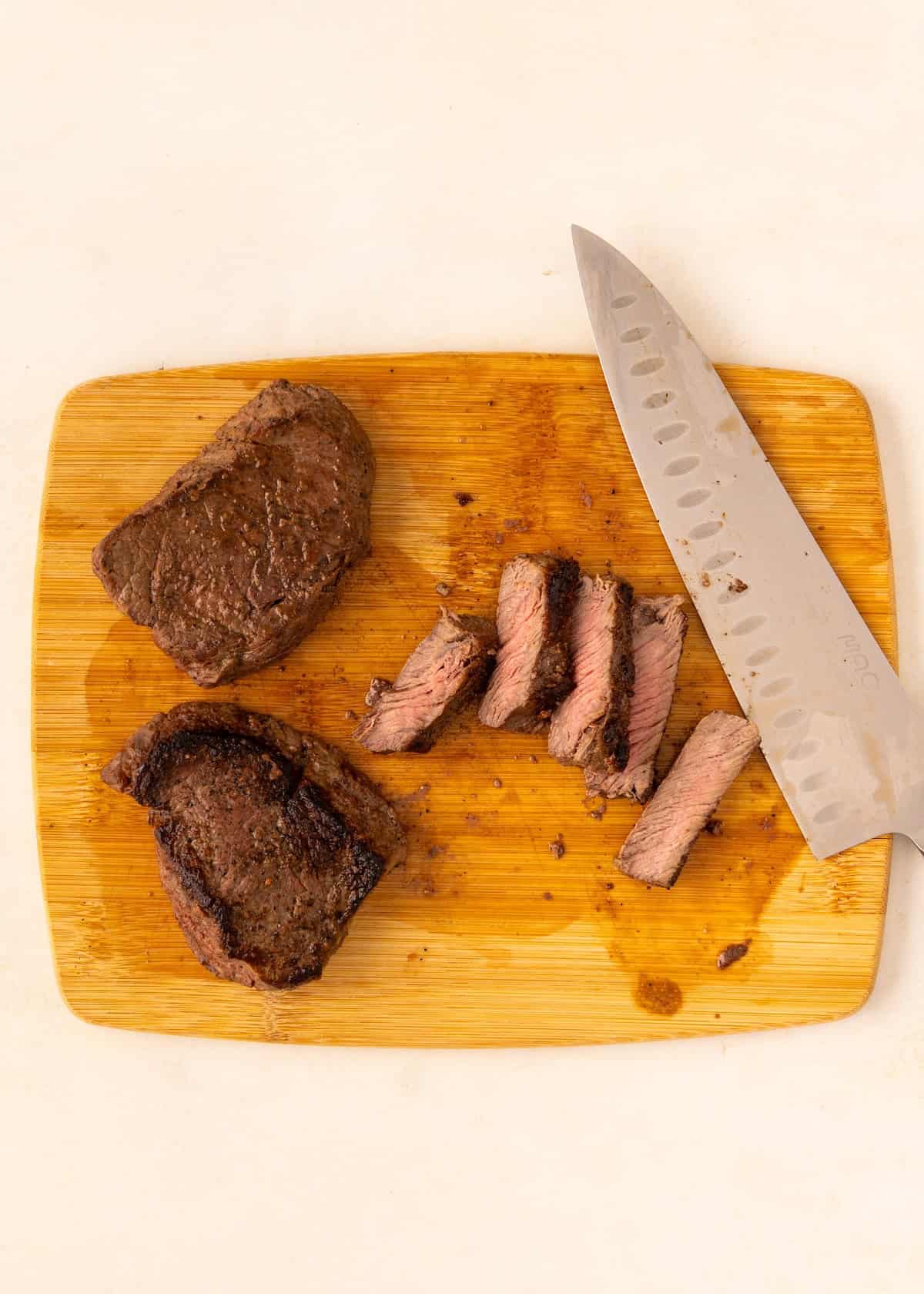
- Step 6: Thinly slice the seared steak. Ladle the ramen into bowls and top with sliced steak, green onions, and sesame seeds.
Recipe Notes & Tips:
- Cook the noodles at the very end: Add the ramen only when the broth is ready and simmer just until tender; overcooking will make the noodles soft and gummy.
- Taste and adjust the broth: Balance the flavor by adding extra soy sauce for saltiness, a splash of vinegar for brightness, or chili flakes for heat.
- Make a low-carb version: Swap the ramen noodles for zucchini noodles (zoodles) and add them during the last minute of cooking so they stay firm.
- Turn up the heat: Stir in chili paste, chili crisp, or sriracha to turn this into a spicy beef ramen with minimal effort.
- Boost the vegetables: Add snow peas, bok choy, spinach, or bean sprouts during the final minutes of simmering for extra texture, color, and nutrition.
How to Store:
Refrigerator: Let the ramen cool completely, then store in an airtight container for up to 3 days. For best texture, store noodles separately if possible.
Reheat: Warm gently on the stovetop over medium heat or microwave in short intervals. Add a splash of broth or water to loosen the soup if needed.
Not freezer-friendly: This dish is best enjoyed fresh, freezing can affect the texture of the noodles and vegetables.
Beef Ramen FAQs:
Yes, instant ramen noodles work for homemade beef ramen-just discard the seasoning packet. The noodles cook quickly and absorb the flavor of the broth.
Yes, beef ramen works well with many cuts, including flank steak, ribeye, sirloin, and thin-sliced stir-fry beef. The key is to sear the meat quickly and slice it thinly so it stays tender in the broth.
Beef ramen is not naturally gluten-free due to traditional noodles and soy sauce, but you can make it gluten-free by using gluten-free ramen or rice noodles and a gluten-free soy sauce alternative like tamari or coconut aminos.



Grab your free copy
Get a FREE Healthy Meal Planning Ebook
Tips, Tricks, and Recipes for Stress Free Meal Planning
Beef Ramen
Ingredients
- 1 pound sirloin steak
- 2 tablespoons olive oil
- 3 garlic cloves, minced
- 1 tablespoon fresh ginger, grated
- 4 cups beef broth
- 2 tablespoons soy sauce
- 2 tablespoons rice vinegar
- 1 teaspoon sesame oil
- 1 cup shiitake mushrooms, sliced
- 1 cup carrot, shredded
- 9 ounces ramen noodles,
- ½ cup green onions, sliced
Instructions
- Heat the olive oil in a large pot over medium-high heat. Season the steak with salt and pepper, then add it to the pot. Sear for 3-4 minutes until browned on the outside. Remove the steak and set aside.
- In the same pot, add the garlic and ginger. Sauté for about 1 minute, stirring frequently, until fragrant.
- Pour in the beef broth, soy sauce, rice vinegar, and sesame oil. Bring the mixture to a gentle simmer.
- Add the sliced mushrooms and shredded carrots. Simmer for 5-7 minutes, or until the vegetables are tender.
- Add the ramen noodles directly to the pot. Cook according to package directions, usually 3-5 minutes, until the noodles are soft.
- Thinly slice the seared steak. Taste the broth and adjust seasoning as needed. Ladle the ramen into bowls and top with sliced steak, green onions, and sesame seeds.
Video
Nutrition
Notes
- Cook the noodles at the very end: Add the ramen only when the broth is ready and simmer just until tender; overcooking will make the noodles soft and gummy.
- Taste and adjust the broth: Balance the flavor by adding extra soy sauce for saltiness, a splash of vinegar for brightness, or chili flakes for heat.
- Make a low-carb version: Swap the ramen noodles for zucchini noodles (zoodles) and add them during the last minute of cooking so they stay firm.
- Turn up the heat: Stir in chili paste, chili crisp, or sriracha to turn this into a spicy beef ramen with minimal effort.
- Boost the vegetables: Add snow peas, bok choy, spinach, or bean sprouts during the final minutes of simmering for extra texture, color, and nutrition.



Sofia says
This was easy and very good, will make again!
Kae says
My absolute favorite beef ramen recipe, soo good!
Marie says
I have always loved the instant Ramen but stopped eating it because I read it was unhealthy. This recipe tastes 100% better, and is better for you.
Shannon says
I have made this so many times it is now part of the family meal rotation. I wanted to add that I substitute apple cider vinegar for the rice wine vinegar and for some reason it makes it taste so much better. Thanks for this!!
Yvonne says
So quick and easy! My husband LOVED this recipe! Thanks!
Paul says
Oriental is a much more beautiful and descriptive word than "Asian." Russians are Asian for crying out loud. This PC garbage is created by people who like to lord it over others and tell them what to say, what to write, and, most of all, how to think. No thanks. When I visit Japan, China, or Korea, I visit the Orient, not just Asia.
Angela says
The recipe looks delicious and I can't wait to try it!
Just wanted to confirm that "oriental" is no longer considered an appropriate term to use for Asian culture. It is better to use the term "Asian section of the grocery store" instead.
Teresa says
Sooooo sooo good. Wish I had done the steak a little different to make it more tender. I'm such a noodle fanatic- and this hit the spot!
Shay says
Glad you liked it! 🙂
Shay says
Hi Patty 🙂 Unfortunately I unable to provide nutritional information on my recipes as I am not a registered dietitian/nutritionist. There are lots of website you'll be able to find with through a google search that allows you to enter a recipe and then gives you an estimate of the calories.