
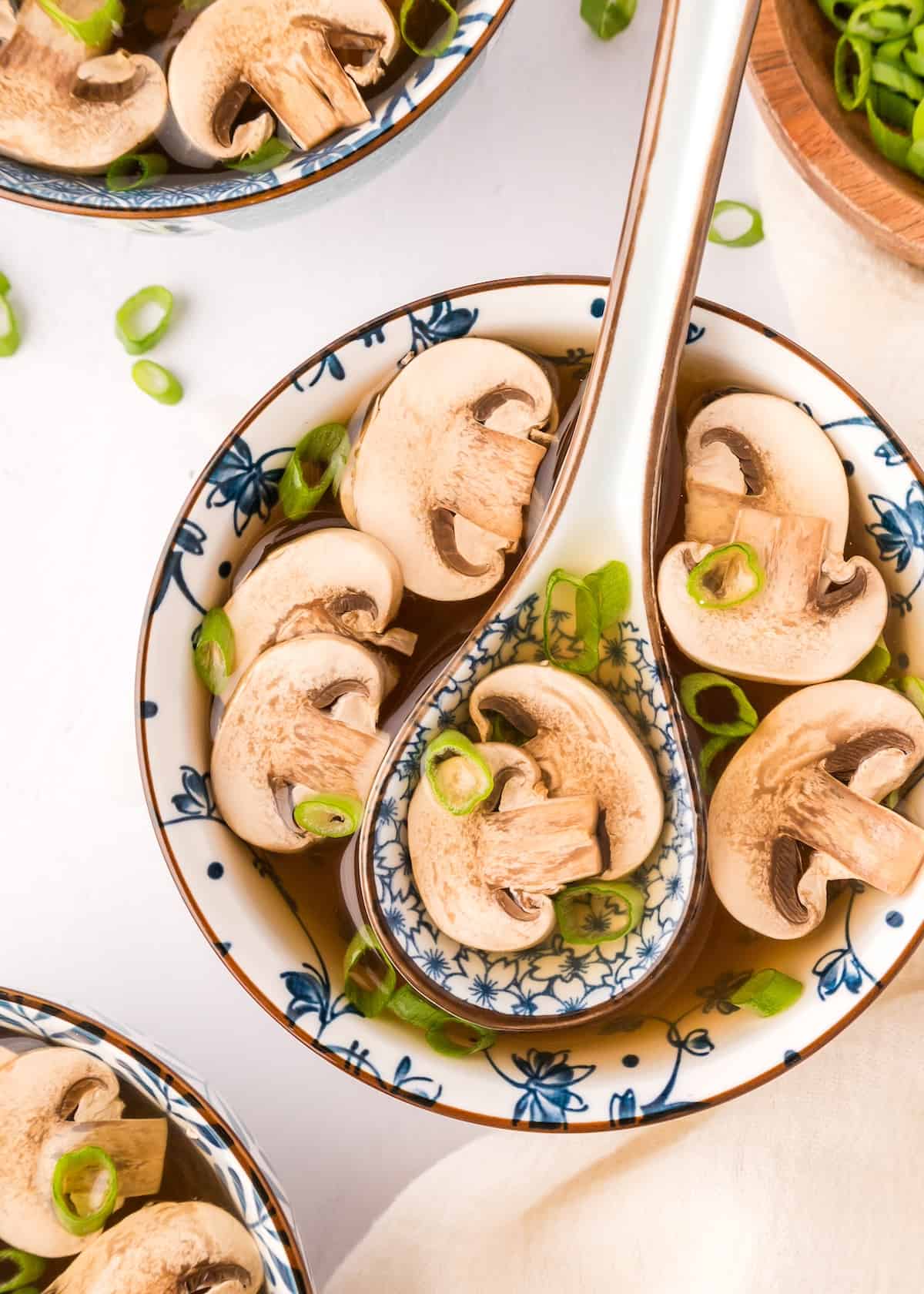
Japanese Clear Onion Soup, also called hibachi onion soup, Japanese clear soup, or Benihana onion soup, is a light, broth-forward soup made with simple aromatics, onions, celery, and carrots simmered until the flavors deepen.
A Quick Look at the Recipe
✅ Recipe Name: Japanese Clear Onion Soup
🕒 Ready In: ~40 minutes
👪 Serves: 4 servings
🍽 Calories: ~88 calories per serving
🥣 Main Ingredients: Vegetable broth, onion, mushrooms, green onions
📖 Dietary Info: Gluten-free, dairy-free, light and low-calorie, vegetarian/vegan
👌 Difficulty: Extremely easy - quick prep, simple simmer, authentic hibachi-style flavor
SUMMARIZE & SAVE THIS CONTENT ON
It's the same warm, soothing starter you're served at hibachi restaurants, and it takes just minutes of prep at home. This version uses clean, whole-food ingredients and delivers the same savory, umami flavor while staying naturally low-calorie and easy to pair with weeknight meals.
Enjoy it as a cozy appetizer, or serve it alongside a simple salad like Asian Cucumber Noodle Salad or with homemade Veggie Spring Rolls for a complete takeout-style dinner.
Jump to:
- A Quick Look at the Recipe
- Why You'll Love this Japanese Clear Onion Soup:
- Key Ingredients:
- Easy Substitutions & Variations:
- How to Make Japanese Clear Onion Soup:
- Recipe Notes & Tips:
- How to Store:
- Japanese Clear Onion Soup FAQs:
- More Asian Recipes You'll Love
- Get a FREE Healthy Meal Planning Ebook
- Japanese Clear Onion Soup
⭐️⭐️⭐️⭐️⭐️
This was amazing to try! I had always wanted to make Japanese food and this is what got me started! It was so simple and easy!
- Melody
Why You'll Love this Japanese Clear Onion Soup:
Light & Nourishing: A warm, comforting broth packed with fresh vegetables and aromatics.
Easy to Make: Simple ingredients and minimal prep make this a quick and fuss-free recipe.
Customizable: Add extra mushrooms, tofu, or your favorite vegetables for a heartier soup.
Naturally Vegan & Gluten-Free: Perfect for various dietary needs; just skip soy sauce or use tamari for a gluten-free option.
Flavorful & Aromatic: Fresh ginger, garlic, and sesame oil create a deep, rich taste.
Key Ingredients:
- vegetable broth. Use homemade or store-bought vegetable broth for the best flavor. You can use homemade chicken broth or beef broth as well.
- onion. Yellow or white onions work best for their natural sweetness, which enhances the broth.
- carrots & celery. These add a classic depth of flavor. Chop them evenly to ensure they cook at the same rate.
- scallions. Fresh scallions add a bright, slightly spicy contrast to the warm broth. Use both the white and green parts.
- sriracha (optional). Adds a spicy kick; adjust the amount to your heat preference.
Scroll to the recipe card at the bottom of this page for exact quantities.
Easy Substitutions & Variations:
- Try different mushrooms: If you can't find button mushrooms, substitute baby bella, cremini, or shiitake mushrooms.
- Use Tamari for a Gluten-Free Option: If you prefer the soup gluten-free, replace soy sauce with tamari or coconut aminos. Or omit it altogether, the soup is flavorful without it.
- Add proteins for a fuller soup: While Japanese clear onion soup is traditionally simple, you can add cubed tofu, sliced cooked chicken, shrimp, or even thin-sliced beef to turn it into a full meal.
- Brighten it up: A squeeze of lemon juice, extra green onions, or a small handful of fresh parsley can add freshness right before serving.
How to Make Japanese Clear Onion Soup:
- Heat a little oil in a large pot over medium heat. Add the diced onions and cook for about 10 minutes, stirring occasionally, until they become soft and slightly caramelized.
- Stir in the carrots, celery, garlic, and ginger. Pour in the sesame oil and vegetable broth. Season with salt and pepper to taste.
- Bring the mixture to a boil, then reduce the heat to a simmer. Let it cook uncovered for 30 minutes to allow the flavors to develop.
- Use a fine-mesh strainer or slotted spoon to remove the vegetables, leaving a clear broth. Discard the solids or save them for another use.
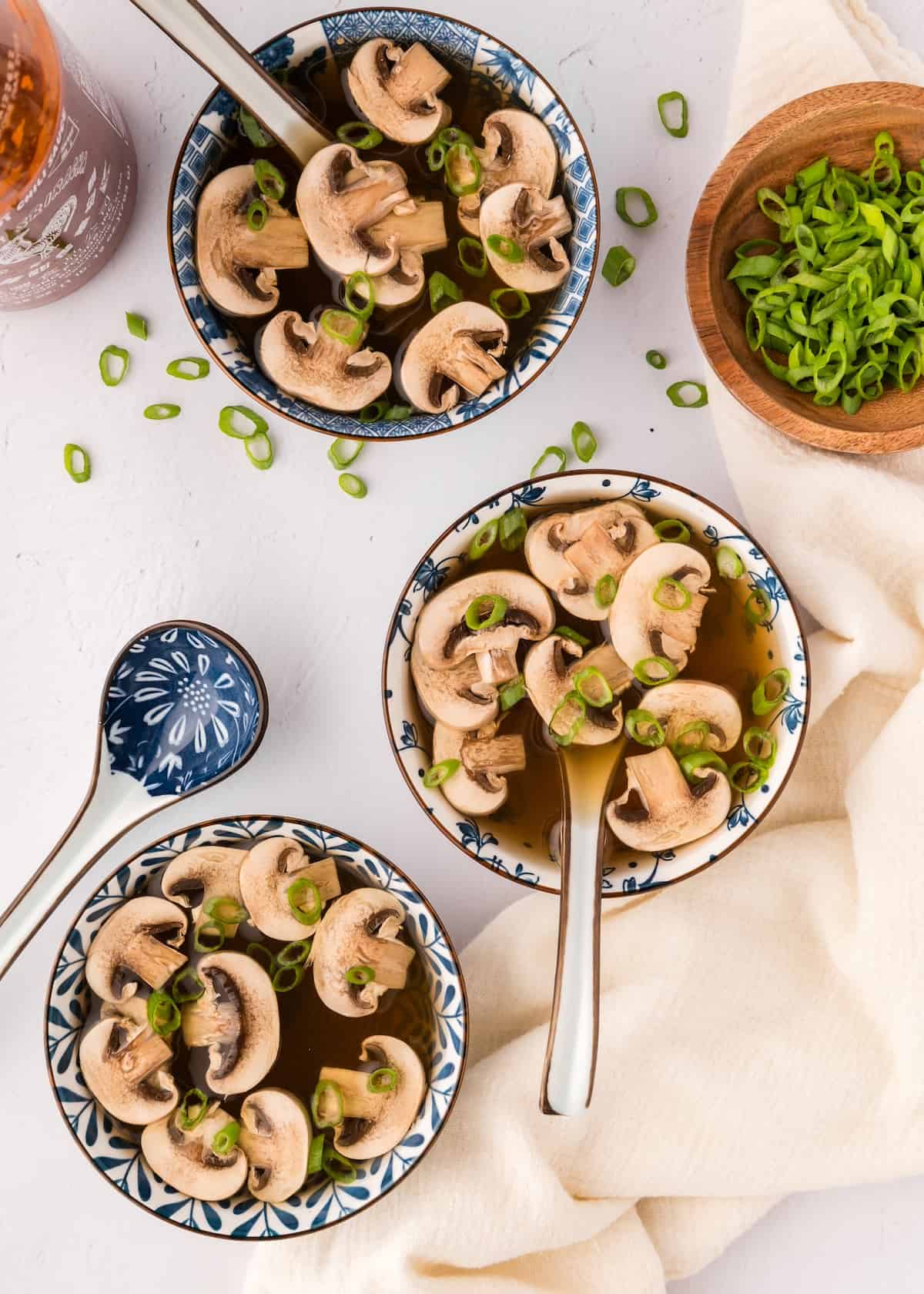
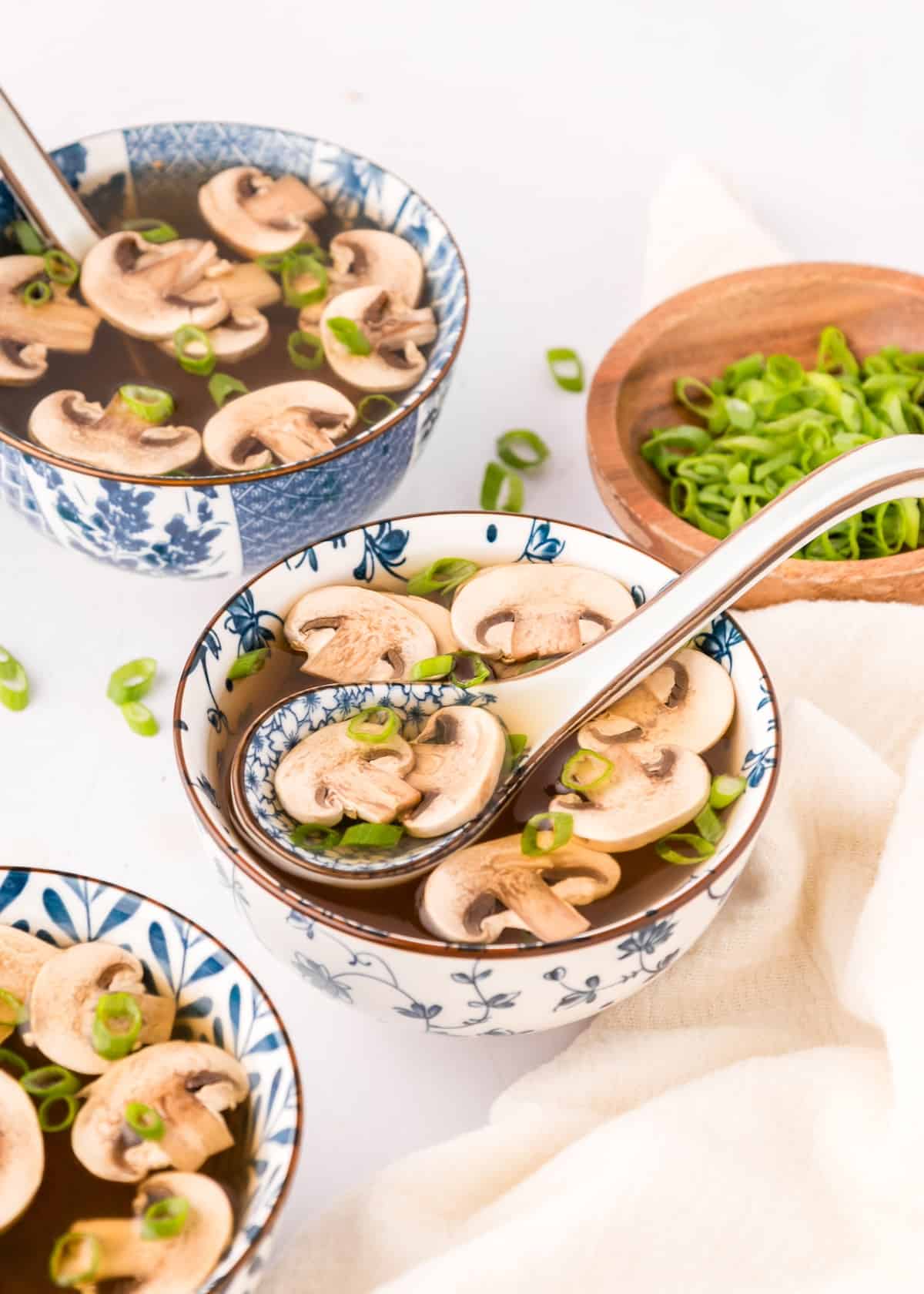
- Place a handful of thinly sliced mushrooms and scallions into serving bowls.
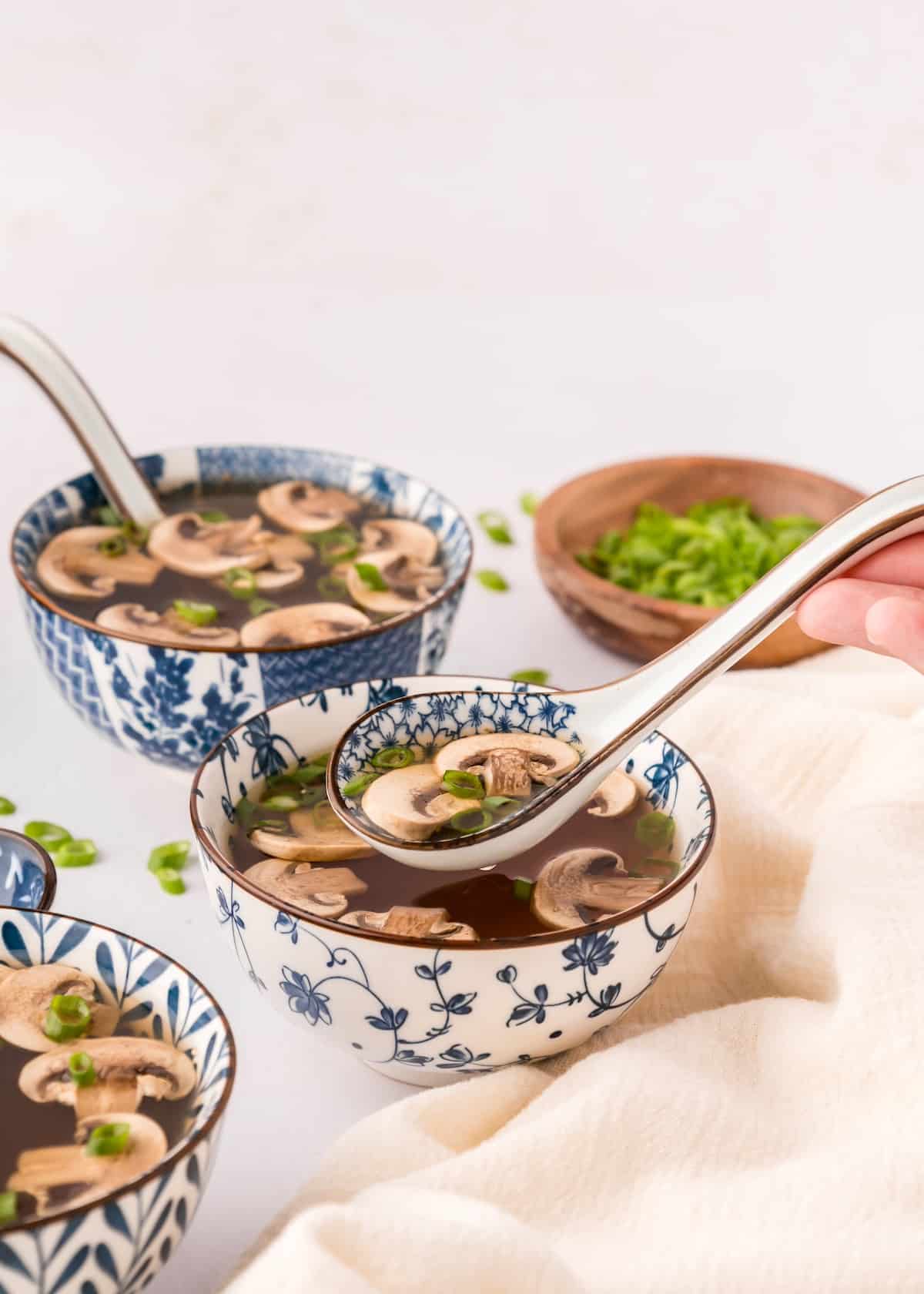
- Pour the hot broth over the mushrooms and scallions, allowing them to soften slightly in the heat.
- Add a splash of soy sauce for extra depth or sriracha for a spicy kick.
Save this Recipe
Recipe Notes & Tips:
- Gentle Heat for Mushrooms: Pouring hot broth over raw mushrooms lets them soften naturally while keeping their texture intact.
- Prevent Cloudy Broth: Simmer gently and avoid boiling too hard, as rapid boiling can break down vegetables and create murkiness.
- Clear Broth Tip: Strain the vegetables well using a fine-mesh strainer for a smooth, clean broth.
- Make It Heartier: Add rice noodles, bok choy, or extra mushrooms for a more filling dish.
- Spice It Up: A drizzle of sriracha or chili oil adds heat, while a dash of rice vinegar gives a bright, tangy contrast.
- Balanced Seasoning: Start with a small amount of salt and pepper and adjust after simmering, especially if adding soy sauce later.
How to Store:
Refrigerate: Let the broth cool completely, then store it in an airtight container in the fridge for up to 4 days. Keep the broth separate from the mushrooms and scallions for the best texture.
Freeze: Pour the broth into a freezer-safe container or ice cube trays for portioned servings. Freeze for up to 3 months. Mushrooms and scallions lose texture when frozen, so always add them fresh after reheating.
Reheating: Warm the broth on the stovetop over medium heat until hot, or microwave in 30-second intervals, stirring in between. Add fresh mushrooms and scallions when serving for the best texture.
Japanese Clear Onion Soup FAQs:
Japanese clear onion soup is made from a light broth base, typically beef broth or vegetable broth, simmered with fresh onion, celery, carrots, garlic, and ginger to build flavor. The vegetables are removed after simmering, leaving a clean, clear broth. Many hibachi-style restaurants finish the soup with sliced mushrooms and green onions. This recipe follows the same traditional method, using whole fresh ingredients for the most authentic flavor.
To make Japanese clear onion soup taste like hibachi-style soup, you need a clear, deeply flavored broth. The key is simmering fresh onion, carrot, celery, garlic, and ginger long enough to extract flavor before straining. Using a combination of broths (such as beef + vegetable) also helps replicate the signature depth. Finishing the soup with mushrooms and green onions in the bowl adds the classic Japanese steakhouse flavor.
Yes, you can make Japanese clear onion soup with vegetable broth instead of beef broth. Beef broth adds richness similar to hibachi restaurant versions, but a high-quality vegetable broth still produces a clean, savory soup. If you want to keep the soup vegetarian, use vegetable broth and ensure your soy sauce or tamari is also vegetarian.



Grab your free copy
Get a FREE Healthy Meal Planning Ebook
Tips, Tricks, and Recipes for Stress Free Meal Planning
Japanese Clear Onion Soup
Ingredients
- 6 cups vegetable broth
- 2 cups onions, diced
- 1 cup celery, diced
- 1 cup carrots, peeled and diced
- 3 garlic cloves, minced
- 1 teaspoon fresh ginger, minced
- 1 teaspoon sesame oil
- 1 cup button mushrooms, thinly sliced
- ½ cup green onions, sliced
- soy sauce (optional)
- sriracha (optional)
Instructions
- Heat a little oil in a large pot over medium heat. Add the diced onions and cook for about 10 minutes, stirring occasionally, until they become soft and slightly caramelized.
- Stir in the carrots, celery, garlic, and ginger. Pour in the sesame oil and vegetable broth. Season with salt and pepper to taste.
- Bring the mixture to a boil, then reduce the heat to a simmer. Let it cook uncovered for 30 minutes to allow the flavors to develop.
- Use a fine-mesh strainer or slotted spoon to remove the vegetables, leaving a clear broth. Discard the solids or save them for another use.
- Place a handful of thinly sliced mushrooms and scallions into serving bowls.
- Pour the hot broth over the mushrooms and scallions, allowing them to soften slightly in the heat.
- Add a splash of soy sauce for extra depth or sriracha for a spicy kick.
Nutrition
Notes
- Gentle Heat for Mushrooms: Pouring hot broth over raw mushrooms lets them soften naturally while keeping their texture intact.
- Prevent Cloudy Broth: Simmer gently and avoid boiling too hard, as rapid boiling can break down vegetables and create murkiness.
- Clear Broth Tip: Strain the vegetables well using a fine-mesh strainer for a smooth, clean broth.
- Make It Heartier: Add rice noodles, bok choy, or extra mushrooms for a more filling dish.
- Spice It Up: A drizzle of sriracha or chili oil adds heat, while a dash of rice vinegar gives a bright, tangy contrast.
- Balanced Seasoning: Start with a small amount of salt and pepper and adjust after simmering, especially if adding soy sauce later.



Lisa says
I recently discovered a mushroom farm where I can buy shiitakes so fresh they are still on the log. Needless to say I was very excited! I used this recipe to the letter but subbed in the shiitakes and the recipe is AMAZING! Thank you so much for sharing. I make this at least once a week.
Roche Woodworth says
Thank you for the great review, Lisa! Glad you enjoy the recipe:)
D Vasta says
Why does everyone in the US and Europe think SOY SAUCE is bad for you? It's the perfect fermented item to season food with, hell of a lot better than salt.
Roche Woodworth says
Hi! It's not that we (and I'm talking about us running the blog) think soy sauce is "bad" for you, but since we are a healthy low-carb blog and soy sauce is made from a legume (which is high carb and inflammatory). We recommend Coconut Aminos to people that are on a strict low carb diet.
Gabrielle says
I'd also say, D Vasta, that US soy sauce is typically NOT fermented. The process is sped up with hydrochloric acid and tons of crappy cheap salt, MSG, and caramel color is dumped in it so that what for some people can be a healthy food is now total and complete garbage. This is known as acid hydrolyzed soy sauce and accounts for most of what is sold in the US and many Asian countries as well. Plus GMO soy beans here in the US. Don't forget that part.
However, if you can find organic shoyu or tamari you're good to go! That's brewed with traditional methods using koji cultures and is either made with or without wheat depending on which type you get.
Melody says
This was amazing to try! I had always wanted to make Japanese food and this is what got me started! It was so simple and easy! I've had it several ways, I've even left the veggies in it and added chicken to it! It made a great chicken veggie soup!
Mark says
Love this soup. I added some red pepper flakes and left the veggies in the broth for extra flavor.
Carla says
How many carbs are in this? Is this truly a Keto friendly soup? I’m new to all this Keto stuff. Thanks.
Cathy Frauenhoffer says
Our restaurant use tempura for the flakes drizzled in oil then drained
Lizette says
I was wondering where the vitamin D comes from?
Other than that..., This recipe is awesome !
I had to move far away from my favorite sushi restaurant but now I can make this soup myself thanks to ya'll, (:
Also for people wondering what to do with the veggies, I left them in the soup for fiber content.
(other details: I made mine with red onions and I just used water bc I didn't like the veggie broth I bought... btw, there's gluten free soy sauce out there, I bought mine at whole foods)
Tasted delicious!!
Mike says
The vitamin D comes from the mushrooms. The caveat is that the mushrooms have to be exposed to ultraviolet light prior to harvest to increase the Vitamin D level. There’s no way of knowing if the grower went to the trouble to expose the mushrooms to sunlight or ultraviolet growing lights.
Hayley says
I have made tons of recipes for this soup. This one takes the CAKE!! When it gets cold I love to make soups each week to have with dinner. This soup will go into our rotation!
Roche Woodworth says
Hi Hayley! Thank you so much for the feedback. So glad you like the recipe 🙂
Vanessa says
Thanks for sharing! Does it keep long?
Roche Woodworth says
Hi Vanessa! The broth should last up to a week in the fridge and months in the freezer. I would add the mushrooms and scallions fresh each time though 🙂
Debbie Heath says
Ok made this tonight. It is a little bland compared to the Japanese restaurant down the street!
I added water and that may be the issue. I’ll try it again with vegetable stock.
Shay says
Thanks for the feedback. Since I was not in the kitchen with you, it's hard for me to judge why yours came out bland. In a lot of cases though, blandness is simply a case of too little salt. But, we will throw this recipe into our line-up for retesting to be sure.
H says
This recipe make onion water. No Japenese Steakhouse would serve this.
Shay says
We meticulously test our recipes and always revisit old ones for retesting if we see any negative feedback. Since I was not in the kitchen with you while you made this recipe, it's impossible to troubleshoot why it came out as "onion water" for you. My guess is that you likely didn't season it enough. Thanks for the feedback.
CAOS says
Just out of curiosity if following this recipe as is where is the amount of protein listed in the nutritional values come from? Making it right now and it smells amazing. I did add a beef bone (daughter just had wisdom teeth extraction and I felt she needed for nutritional value). Thank you.
John X. Ellis Sr. says
I haven't made this soup yet hence why I'm here. I will make some suggestions though as I will be making some changes to it. Use home made stock without salt so that you can use the soy sauce without being overly salty right out of the gate if you intend on using soy sauce. Always add your salt at the end. Lamb or chicken broth will give you a change in both flavor depth and profiles for changing up the basic soup. Start with a Dashi base if possible for your home made broth for better umami flavors. If you don't like sriracha then try adding a few (to taste) korean red peppers, red pepper flakes, S&B Japanese Style Shichimi Chili Paste, or Gochujang sauce/paste if you prefer those flavors. These peppers and paste may overwhelm the subtle flavors in the soup so be careful and use sparingly especially if you heat them since peppers will intensify in flavor when heated. Also, our local restaurant uses a chicken broth with bread crumbs and minced onions remaining in the bowl for an awesome flavor without any hot peppers or sauce.
Karen Latimer says
Veggie broth covers a world of options and since it is the primary flavoring, may I ask WHAT vegetable broth is being used? A can? A box? Better than Bouillion? Homemade? Those people who did not care for it may have used plain water.
Laura says
My husband is Filapino. We use this broth, minus the srircha, (because it is soooooo tasty) with pancit bihon rice noodles and shrimp or chicken. It is a great broth on its own, but can also be used to make a heartier meal. Thank you for the awesome recipe!
Shay says
Awesome! Glad you like the broth! 🙂