
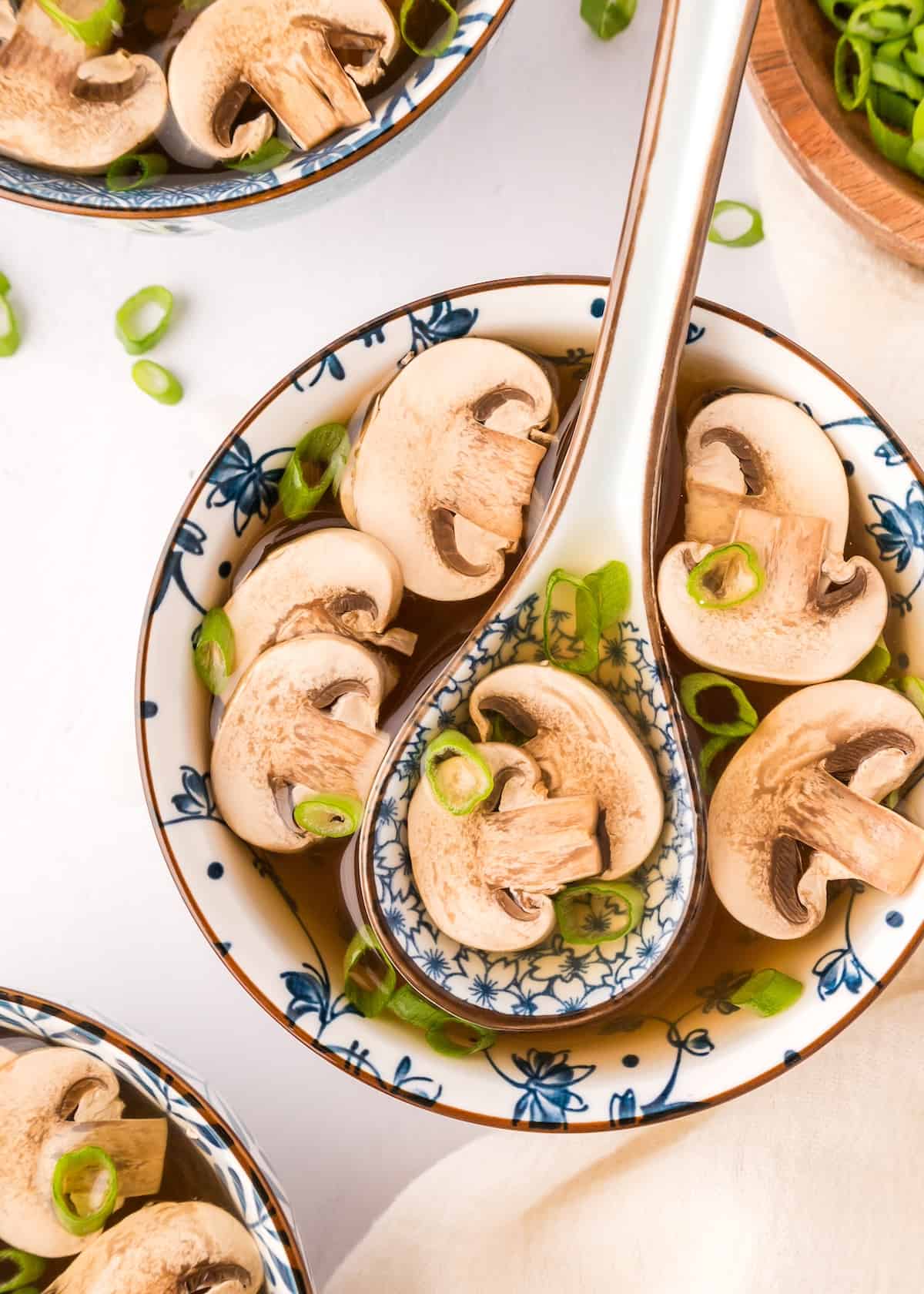
Japanese Clear Onion Soup, also called hibachi onion soup, Japanese clear soup, or Benihana onion soup, is a light, broth-forward soup made with simple aromatics, onions, celery, and carrots simmered until the flavors deepen.
A Quick Look at the Recipe
✅ Recipe Name: Japanese Clear Onion Soup
🕒 Ready In: ~40 minutes
👪 Serves: 4 servings
🍽 Calories: ~88 calories per serving
🥣 Main Ingredients: Vegetable broth, onion, mushrooms, green onions
📖 Dietary Info: Gluten-free, dairy-free, light and low-calorie, vegetarian/vegan
👌 Difficulty: Extremely easy - quick prep, simple simmer, authentic hibachi-style flavor
SUMMARIZE & SAVE THIS CONTENT ON
It's the same warm, soothing starter you're served at hibachi restaurants, and it takes just minutes of prep at home. This version uses clean, whole-food ingredients and delivers the same savory, umami flavor while staying naturally low-calorie and easy to pair with weeknight meals.
Enjoy it as a cozy appetizer, or serve it alongside a simple salad like Asian Cucumber Noodle Salad or with homemade Veggie Spring Rolls for a complete takeout-style dinner.
Jump to:
- A Quick Look at the Recipe
- Why You'll Love this Japanese Clear Onion Soup:
- Key Ingredients:
- Easy Substitutions & Variations:
- How to Make Japanese Clear Onion Soup:
- Recipe Notes & Tips:
- How to Store:
- Japanese Clear Onion Soup FAQs:
- More Asian Recipes You'll Love
- Get a FREE Healthy Meal Planning Ebook
- Japanese Clear Onion Soup
⭐️⭐️⭐️⭐️⭐️
This was amazing to try! I had always wanted to make Japanese food and this is what got me started! It was so simple and easy!
- Melody
Why You'll Love this Japanese Clear Onion Soup:
Light & Nourishing: A warm, comforting broth packed with fresh vegetables and aromatics.
Easy to Make: Simple ingredients and minimal prep make this a quick and fuss-free recipe.
Customizable: Add extra mushrooms, tofu, or your favorite vegetables for a heartier soup.
Naturally Vegan & Gluten-Free: Perfect for various dietary needs; just skip soy sauce or use tamari for a gluten-free option.
Flavorful & Aromatic: Fresh ginger, garlic, and sesame oil create a deep, rich taste.
Key Ingredients:
- vegetable broth. Use homemade or store-bought vegetable broth for the best flavor. You can use homemade chicken broth or beef broth as well.
- onion. Yellow or white onions work best for their natural sweetness, which enhances the broth.
- carrots & celery. These add a classic depth of flavor. Chop them evenly to ensure they cook at the same rate.
- scallions. Fresh scallions add a bright, slightly spicy contrast to the warm broth. Use both the white and green parts.
- sriracha (optional). Adds a spicy kick; adjust the amount to your heat preference.
Scroll to the recipe card at the bottom of this page for exact quantities.
Easy Substitutions & Variations:
- Try different mushrooms: If you can't find button mushrooms, substitute baby bella, cremini, or shiitake mushrooms.
- Use Tamari for a Gluten-Free Option: If you prefer the soup gluten-free, replace soy sauce with tamari or coconut aminos. Or omit it altogether, the soup is flavorful without it.
- Add proteins for a fuller soup: While Japanese clear onion soup is traditionally simple, you can add cubed tofu, sliced cooked chicken, shrimp, or even thin-sliced beef to turn it into a full meal.
- Brighten it up: A squeeze of lemon juice, extra green onions, or a small handful of fresh parsley can add freshness right before serving.
How to Make Japanese Clear Onion Soup:
- Heat a little oil in a large pot over medium heat. Add the diced onions and cook for about 10 minutes, stirring occasionally, until they become soft and slightly caramelized.
- Stir in the carrots, celery, garlic, and ginger. Pour in the sesame oil and vegetable broth. Season with salt and pepper to taste.
- Bring the mixture to a boil, then reduce the heat to a simmer. Let it cook uncovered for 30 minutes to allow the flavors to develop.
- Use a fine-mesh strainer or slotted spoon to remove the vegetables, leaving a clear broth. Discard the solids or save them for another use.
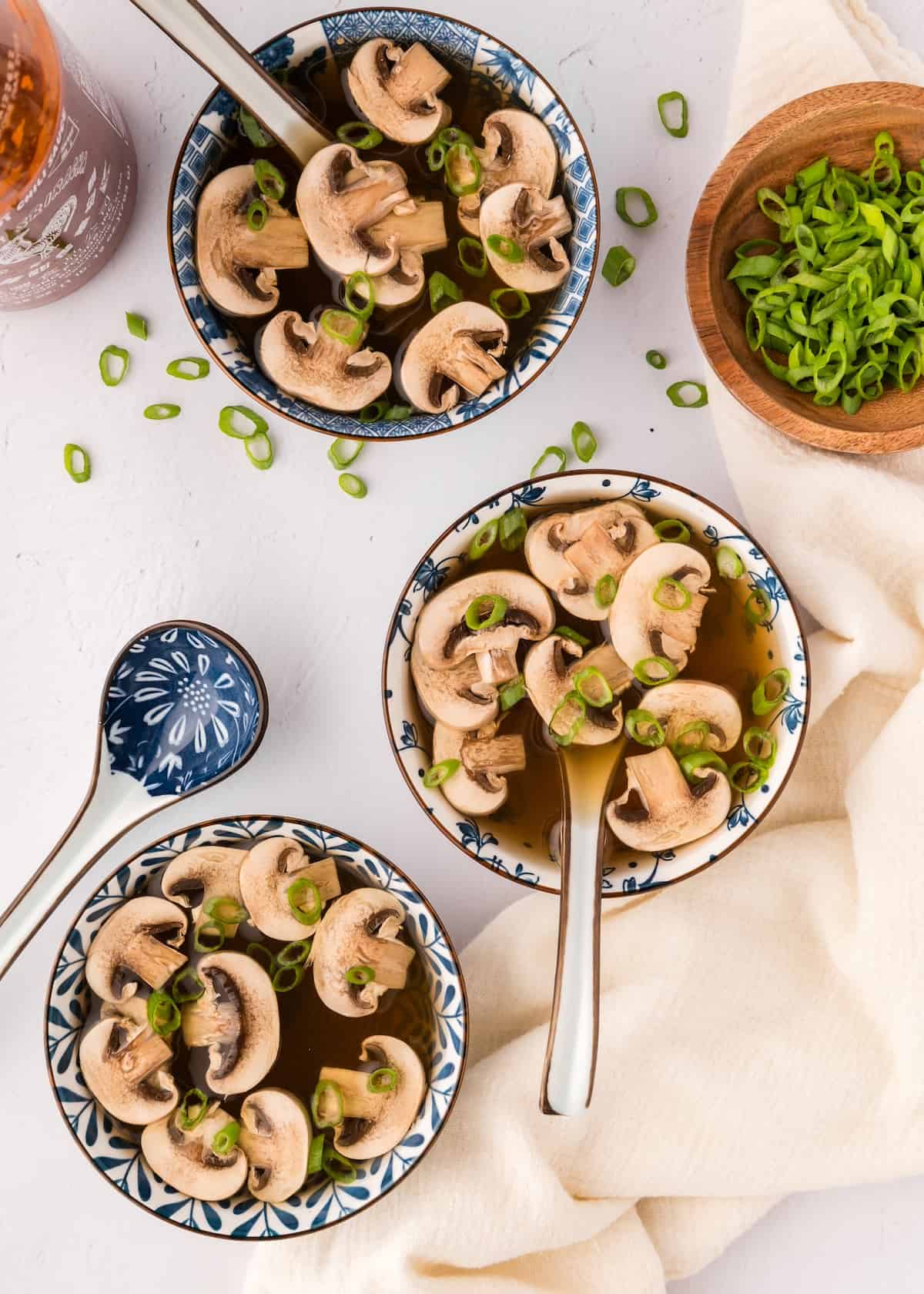
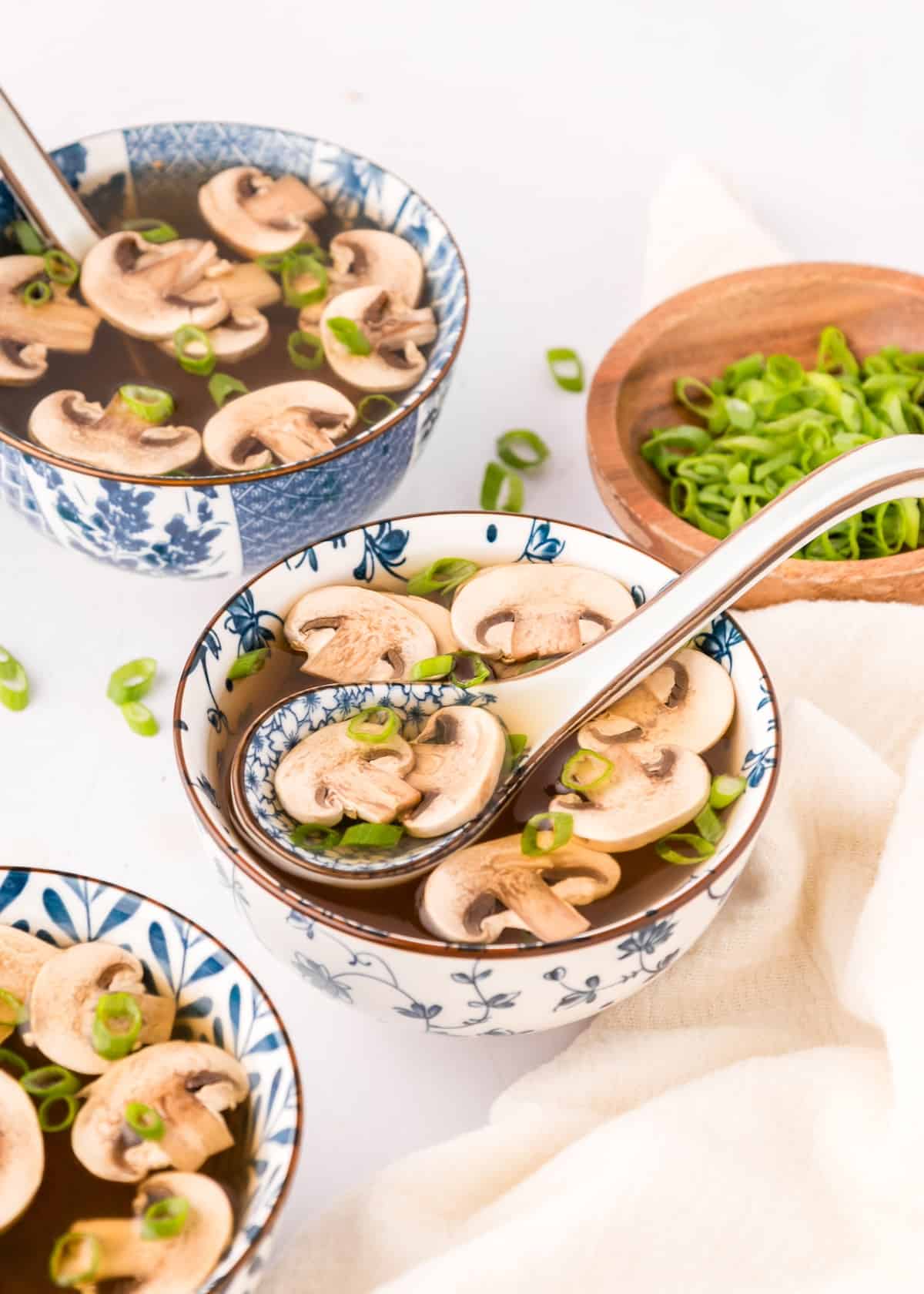
- Place a handful of thinly sliced mushrooms and scallions into serving bowls.
- Pour the hot broth over the mushrooms and scallions, allowing them to soften slightly in the heat.
- Add a splash of soy sauce for extra depth or sriracha for a spicy kick.
Save this Recipe
Recipe Notes & Tips:
- Gentle Heat for Mushrooms: Pouring hot broth over raw mushrooms lets them soften naturally while keeping their texture intact.
- Prevent Cloudy Broth: Simmer gently and avoid boiling too hard, as rapid boiling can break down vegetables and create murkiness.
- Clear Broth Tip: Strain the vegetables well using a fine-mesh strainer for a smooth, clean broth.
- Make It Heartier: Add rice noodles, bok choy, or extra mushrooms for a more filling dish.
- Spice It Up: A drizzle of sriracha or chili oil adds heat, while a dash of rice vinegar gives a bright, tangy contrast.
- Balanced Seasoning: Start with a small amount of salt and pepper and adjust after simmering, especially if adding soy sauce later.
How to Store:
Refrigerate: Let the broth cool completely, then store it in an airtight container in the fridge for up to 4 days. Keep the broth separate from the mushrooms and scallions for the best texture.
Freeze: Pour the broth into a freezer-safe container or ice cube trays for portioned servings. Freeze for up to 3 months. Mushrooms and scallions lose texture when frozen, so always add them fresh after reheating.
Reheating: Warm the broth on the stovetop over medium heat until hot, or microwave in 30-second intervals, stirring in between. Add fresh mushrooms and scallions when serving for the best texture.
Japanese Clear Onion Soup FAQs:
Japanese clear onion soup is made from a light broth base, typically beef broth or vegetable broth, simmered with fresh onion, celery, carrots, garlic, and ginger to build flavor. The vegetables are removed after simmering, leaving a clean, clear broth. Many hibachi-style restaurants finish the soup with sliced mushrooms and green onions. This recipe follows the same traditional method, using whole fresh ingredients for the most authentic flavor.
To make Japanese clear onion soup taste like hibachi-style soup, you need a clear, deeply flavored broth. The key is simmering fresh onion, carrot, celery, garlic, and ginger long enough to extract flavor before straining. Using a combination of broths (such as beef + vegetable) also helps replicate the signature depth. Finishing the soup with mushrooms and green onions in the bowl adds the classic Japanese steakhouse flavor.
Yes, you can make Japanese clear onion soup with vegetable broth instead of beef broth. Beef broth adds richness similar to hibachi restaurant versions, but a high-quality vegetable broth still produces a clean, savory soup. If you want to keep the soup vegetarian, use vegetable broth and ensure your soy sauce or tamari is also vegetarian.




Grab your free copy
Get a FREE Healthy Meal Planning Ebook
Tips, Tricks, and Recipes for Stress Free Meal Planning
Japanese Clear Onion Soup
Ingredients
- 6 cups vegetable broth
- 2 cups onions, diced
- 1 cup celery, diced
- 1 cup carrots, peeled and diced
- 3 garlic cloves, minced
- 1 teaspoon fresh ginger, minced
- 1 teaspoon sesame oil
- 1 cup button mushrooms, thinly sliced
- ½ cup green onions, sliced
- soy sauce (optional)
- sriracha (optional)
Instructions
- Heat a little oil in a large pot over medium heat. Add the diced onions and cook for about 10 minutes, stirring occasionally, until they become soft and slightly caramelized.
- Stir in the carrots, celery, garlic, and ginger. Pour in the sesame oil and vegetable broth. Season with salt and pepper to taste.
- Bring the mixture to a boil, then reduce the heat to a simmer. Let it cook uncovered for 30 minutes to allow the flavors to develop.
- Use a fine-mesh strainer or slotted spoon to remove the vegetables, leaving a clear broth. Discard the solids or save them for another use.
- Place a handful of thinly sliced mushrooms and scallions into serving bowls.
- Pour the hot broth over the mushrooms and scallions, allowing them to soften slightly in the heat.
- Add a splash of soy sauce for extra depth or sriracha for a spicy kick.
Nutrition
Notes
- Gentle Heat for Mushrooms: Pouring hot broth over raw mushrooms lets them soften naturally while keeping their texture intact.
- Prevent Cloudy Broth: Simmer gently and avoid boiling too hard, as rapid boiling can break down vegetables and create murkiness.
- Clear Broth Tip: Strain the vegetables well using a fine-mesh strainer for a smooth, clean broth.
- Make It Heartier: Add rice noodles, bok choy, or extra mushrooms for a more filling dish.
- Spice It Up: A drizzle of sriracha or chili oil adds heat, while a dash of rice vinegar gives a bright, tangy contrast.
- Balanced Seasoning: Start with a small amount of salt and pepper and adjust after simmering, especially if adding soy sauce later.


Jake says
This is very flavorful, onions are simple but amazing!!