
Korean Beef Bowls are a fast, flavor-packed way to enjoy the savory depth of Korean beef in an easy bibimbap-style meal you can make any night of the week. This recipe keeps all the bold soy-ginger-sesame flavor while adding a vibrant, veggie-forward twist.

This post may contain affiliate links which won't change your price but will share some commission.
A Quick Look at the Recipe
✅ Recipe Name: Korean Beef Bowls
🕒 Ready In: ~30 minutes
👪 Serves: 4 bowls
🍽 Calories: ~430 per serving (estimated)
🥣 Main Ingredients: Ground beef, carrots, red cabbage, shiitake mushrooms, rice
📖 Dietary Info: Naturally dairy-free; adapt for gluten-free and low-carb variations
👌 Difficulty: Easy - cook veggies, brown the beef, add sauce, and build your bowl
SUMMARIZE & SAVE THIS CONTENT ON
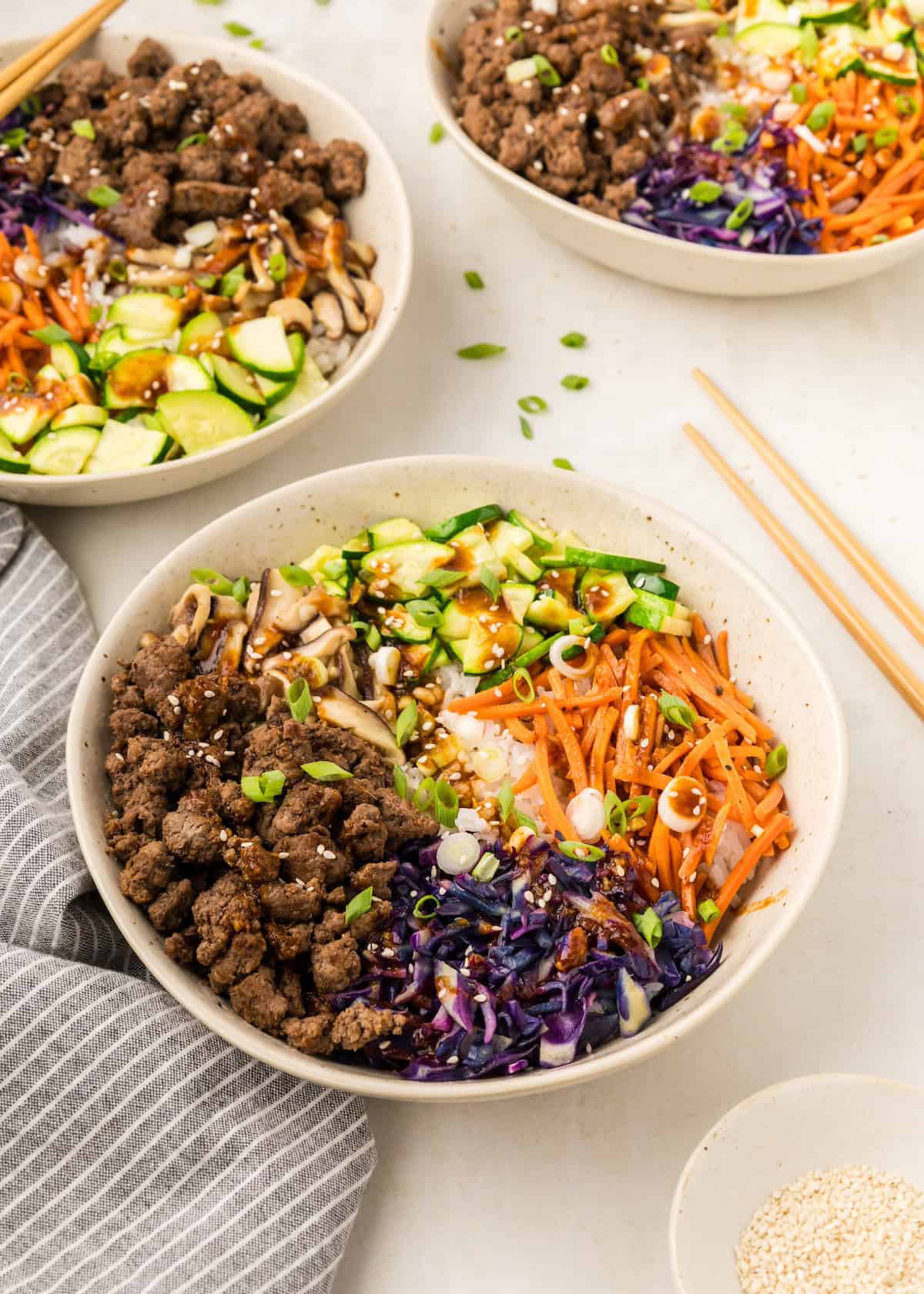
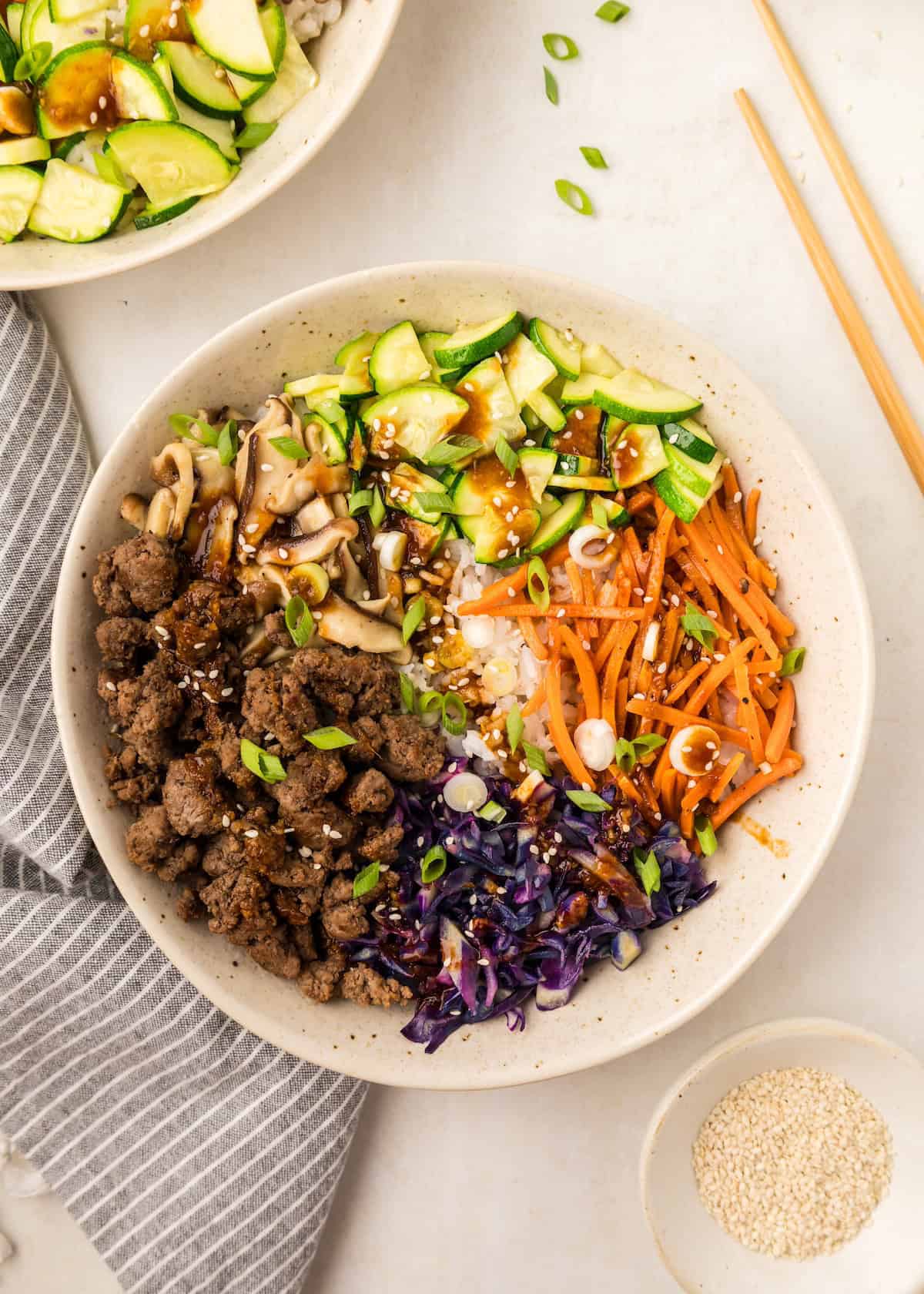
Ground beef simmers in a simple Korean-inspired sauce, then gets layered with colorful sautéed vegetables for a balanced bowl that's hearty, nourishing, and ready in about 30 minutes. It captures the classic taste of Korean beef, without marinating or long cook times, and offers a lighter, wholesome take compared to traditional bulgogi bowls.
If you love quick dinners like these Korean Beef Bowls, you'll also enjoy a few of our other easy weeknight recipes. Try our Firecracker Meatballs, Sun-Dried Tomato Chicken, Smoked Salmon Salad, or Tuna Poke Bowl for fast, wholesome meals that fit perfectly into your weekly rotation.
Jump to:
Why You'll Love these Korean Beef Bowls:
Quick and easy: Ready in about 30 minutes, perfect for busy weeknights.
Flavor-packed: Savory, spicy, tangy, and just the right amount of sweetness from the sauce.
Colorful and nourishing: Loaded with vibrant veggies and satisfying protein.
Customizable: Swap in ground turkey, brown rice, or your favorite vegetables.
Leftovers reheat well: Tastes just as good (or better) the next day!
Key Ingredients
- matchstick carrots. Matchstick-cut for quick cooking and a bit of crunch.
- red cabbage. Adds color and texture, green cabbage is a fine substitute.
- zucchini. Sliced and quartered so it doesn't turn mushy.
- shiitake mushrooms. Bring deep umami flavor, baby bella or cremini are good alternatives.
- ground beef. Use lean ground beef for a good balance of flavor and less excess grease. Ground turkey or chicken also work well.
- white rice. White rice soaks up the sauce perfectly, but brown rice or cauliflower rice are great swaps.
Scroll to the recipe card at the bottom of this page for exact quantities.
Easy Substitutions & Variations:
- Protein Options: Swap the ground beef for ground turkey, chicken, or pork. For a more traditional Korean beef flavor, you can use thinly sliced steak and sear it quickly for a bulgogi-style bowl.
- Vegetable Swaps: Use any mix of carrots, cabbage, zucchini, mushrooms, or add extras like bell peppers, snap peas, or spinach. Frozen stir-fry vegetables also work if you're short on prep time.
- Make It Gluten-Free: Replace soy sauce with tamari or coconut aminos to keep the same rich Korean beef flavor without gluten.
- Low-Carb Variation: Serve the Korean beef mixture over cauliflower rice, sautéed cabbage, or a mix of both for a lighter, low-carb bowl.
- Spice Level: Add more sriracha or a spoonful of gochujang for a spicier, deeper Korean-style heat.
- Bibimbap-Style Twist: Top your bowl with a fried egg, kimchi, sesame seeds, or additional sautéed veggies for a more authentic bibimbap-inspired experience.
How to Make Korean Beef Bowls:
- Place the white parts of the green onions in a small bowl with the rice vinegar. Let them sit and pickle while you prepare the rest of the dish.
- Heat a skillet or wok over medium-high heat. Add the olive oil, then toss in the matchstick carrots, red cabbage, zucchini, and shiitake mushrooms. Cook for 4-5 minutes until vegetables are slightly tender but still vibrant. Remove from heat and set aside.
- In the same skillet, add the ground beef. Cook over medium-high heat, breaking it apart until browned, about 5-7 minutes. Add 2 tablespoons of soy sauce and stir to coat.
- In a small bowl, whisk together 1 tablespoon soy sauce, ginger paste, sesame oil and sriracha.
- Add the vegetables back to the skillet with the beef. Add the sauce and stir until everything is evenly coated. Serve the beef and vegetable mixture over bowls of cooked white rice. Garnish with the pickled green onion whites and chopped green onion greens.
Recipe Notes & Tips:
- Cook veggies first: Sauté the vegetables before the beef so they stay tender-crisp and don't overcook.
- Don't overcrowd the pan: If your skillet is small, cook the veggies in batches to get better texture and color.
- Adjust spice to taste: Add more or less sriracha depending on your heat preference, or serve it on the side.
- Make it gluten-free: Use tamari or coconut aminos instead of soy sauce, and double-check that your sriracha is gluten-free.
- Use leftover rice: Cold, day-old rice works great here and saves time, just reheat before serving.
- Meal prep friendly: Store components separately or fully assembled for easy lunches all week.
How to Store:
Refrigerator: Store leftovers in an airtight container for up to 4 days. Keep rice and beef-veggie mixture separate if possible to maintain texture.
Freezer: Freeze the cooked beef and vegetables (without rice) for up to 3 months. Thaw overnight in the fridge and reheat before serving over fresh rice.
Reheat: Warm in the microwave or on the stovetop with a splash of water or broth to loosen the sauce and keep everything moist.
Korean Beef Bowls FAQs:
Korean Beef Bowls are quick rice bowls made with seasoned ground Korean beef, sautéed vegetables, and a simple soy-ginger sauce. Traditional Korean bibimbap uses thinly sliced marinated beef (bulgogi) and separately cooked vegetables arranged over rice with a fried egg. This recipe keeps the same bibimbap-style format but uses ground beef to make the Korean beef quicker, easier, and weeknight-friendly.
Yes. To make Korean Beef Bowls with sliced beef, use thinly sliced steak (such as sirloin or ribeye) and briefly marinate it in soy sauce, garlic, ginger, and a little sesame oil. Sear it over high heat until browned, then build your bowl as usual. This variation tastes closer to traditional bulgogi-style Korean beef while keeping the convenience of a bowl meal.
To make gluten-free Korean Beef Bowls, replace soy sauce with tamari or coconut aminos and ensure your rice vinegar and sesame oil are certified gluten-free. All the vegetables and ground beef are naturally gluten-free, so simply swapping the sauce ingredient keeps the Korean beef flavor while making the dish fully GF-friendly.
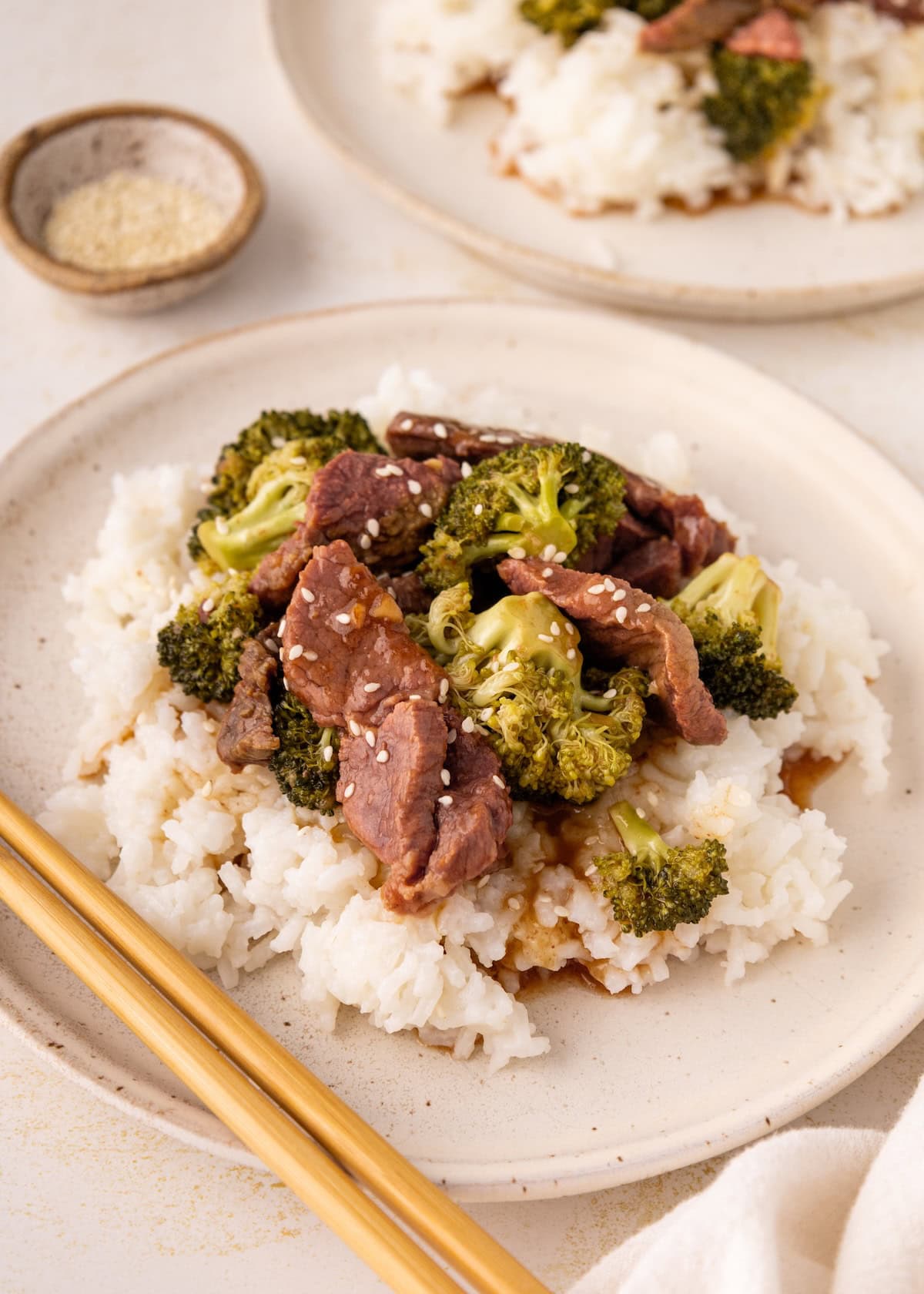
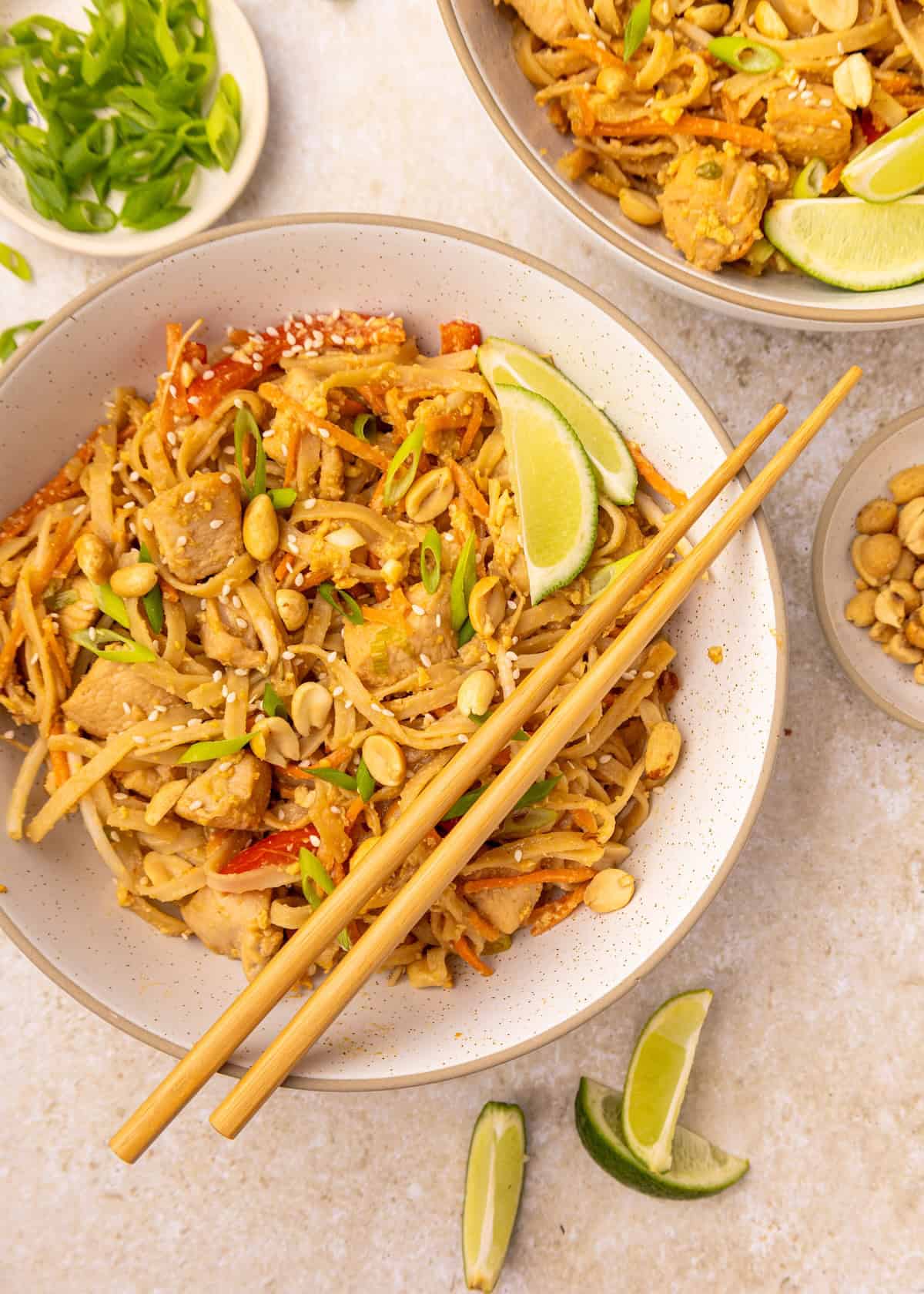
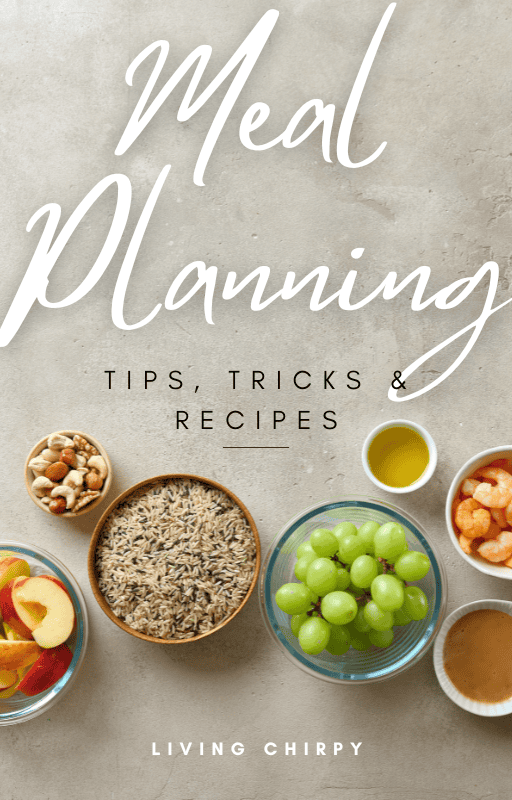
Grab your free copy
Get a FREE Healthy Meal Planning Ebook
Tips, Tricks, and Recipes for Stress Free Meal Planning
Korean Beef Bowls
Ingredients
- 1 tablespoon olive oil
- 1 ½ cups matchstick carrots
- 1 ½ cups red cabbage, shredded
- 1 medium zucchini, sliced and quartered
- 8 ounces shiitake mushrooms, sliced
- 1 pound ground beef
- 2 green onions
- 1 tablespoon rice vinegar
- 3 tablespoons soy sauce
- 1 tablespoon ginger paste
- 1 tablespoon sesame oil
- 1 tablespoon sriracha
- 3 cups white rice
Instructions
- Place the white parts of the green onions in a small bowl with the rice vinegar. Let them sit and pickle while you prepare the rest of the dish.
- Heat a skillet or wok over medium-high heat. Add the olive oil, then toss in the matchstick carrots, red cabbage, zucchini, and shiitake mushrooms. Cook for 4-5 minutes until vegetables are slightly tender but still vibrant. Remove from heat and set aside.
- In the same skillet, add the ground beef. Cook over medium-high heat, breaking it apart until browned, about 5-7 minutes. Add 2 tablespoons of soy sauce and stir to coat.
- In a small bowl, whisk together 1 tablespoon soy sauce, ginger paste, sesame oil and sriracha.
- Add the vegetables back to the skillet with the beef. Add the sauce and stir until everything is evenly coated. Serve the beef and vegetable mixture over bowls of cooked white rice. Garnish with the pickled green onion whites and chopped green onion greens.
Nutrition
Notes
- Cook veggies first: Sauté the vegetables before the beef so they stay tender-crisp and don't overcook.
- Don't overcrowd the pan: If your skillet is small, cook the veggies in batches to get better texture and color.
- Adjust spice to taste: Add more or less sriracha depending on your heat preference, or serve it on the side.
- Make it gluten-free: Use tamari or coconut aminos instead of soy sauce, and double-check that your sriracha is gluten-free.
- Use leftover rice: Cold, day-old rice works great here and saves time, just reheat before serving.
- Meal prep friendly: Store components separately or fully assembled for easy lunches all week.
Jake P says
A ton of different flavors in every bite. This is by far one of my favorite dishes to make. The crispy soy beef is the best.