
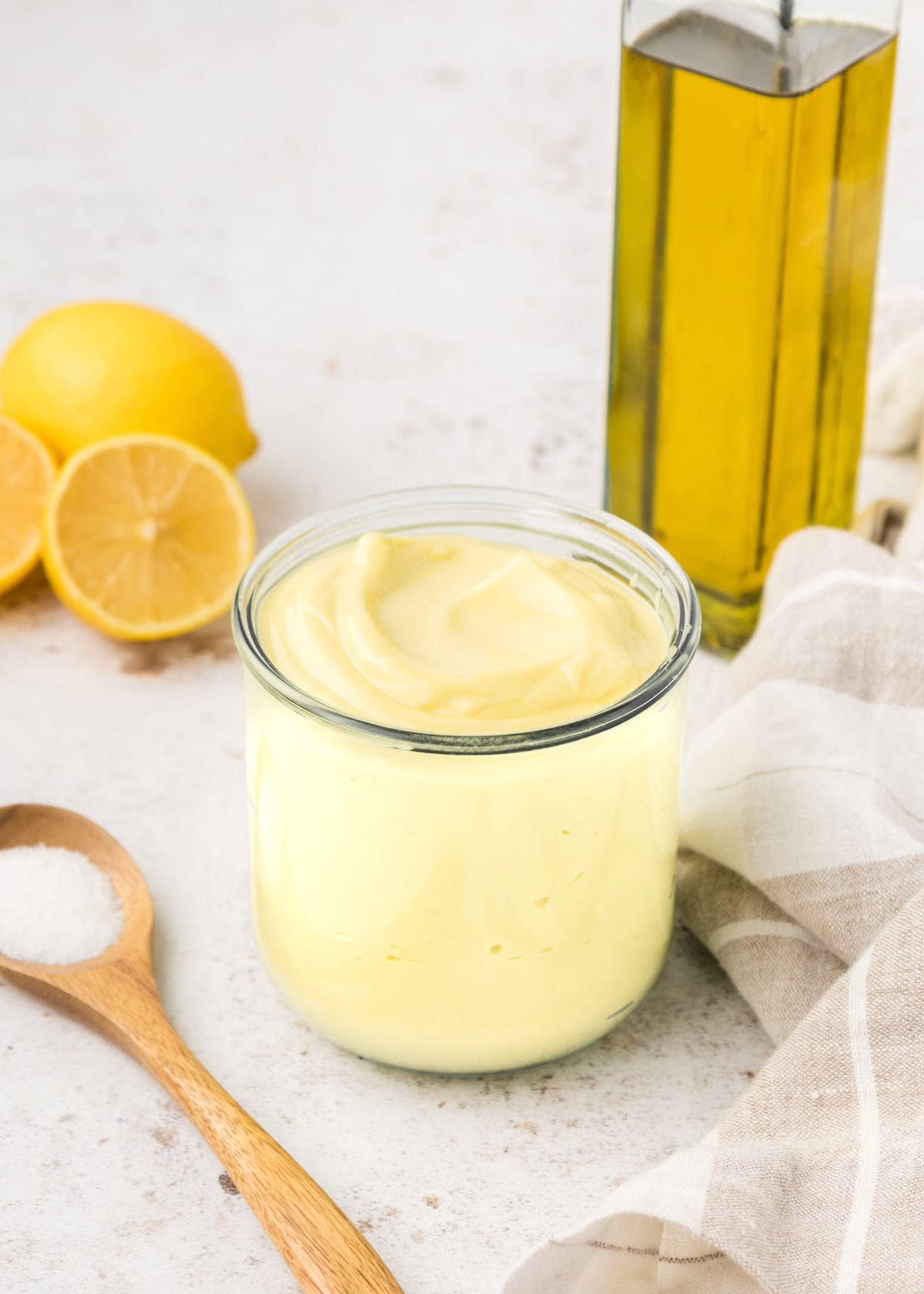
Homemade mayonnaise is a smooth, creamy condiment made with simple pantry ingredients and an immersion blender. This method creates a stable emulsion in minutes without any complicated steps.
A Quick Look at the Recipe
✅ Recipe Name: Homemade Mayonnaise
🕒 Ready In: ~5 minutes
👪 Serves: About 1¼ cups
🍽 Calories: ~100 per tablespoon (estimated)
🥣 Main Ingredients: Egg, olive oil, lemon juice, Dijon mustard
📖 Dietary Info: Gluten-free; dairy-free
👌 Difficulty: Easy - blend and emulsify
SUMMARIZE & SAVE THIS CONTENT ON
Using a tall jar and blending from the bottom allows the egg and oil to emulsify quickly, resulting in thick, spoonable mayo every time. Light olive oil keeps the flavor neutral while lemon juice and vinegar add balance.
If you enjoy making kitchen staples from scratch, you might also like our Homemade BBQ Sauce, Red Chile Sauce, or Romesco Sauce. These recipes pair well with sandwiches, salads, and everyday meals.
Jump to:
Why You'll Love this Homemade Mayonnaise:
Ready in Minutes: Comes together in about 5 minutes using an immersion blender.
Thick & Creamy: Creates a stable emulsion with a smooth, spreadable texture.
Simple Ingredients: Made with pantry staples and no preservatives.
Customizable Flavor: Easy to adjust acidity, sweetness, or seasoning to taste.
Naturally Gluten-Free & Dairy-Free: Works for a variety of dietary needs.
Key Ingredients:
- light olive oil. Use light-tasting olive oil for a neutral flavor. Extra virgin olive oil is too strong and can make the mayo bitter.
- egg. Use a fresh, room-temperature egg for the best emulsification.
- raw honey. A touch of natural sweetness balances the tanginess without overpowering the flavor.
- white vinegar. Provides extra tang and works with the lemon juice to give that classic mayo zing.
Scroll to the recipe card at the bottom of this page for exact quantities.
Easy Substitutions & Variations:
- Oil Swap: Use avocado oil instead of light olive oil for an even more neutral flavor.
- No Honey: Replace honey with maple syrup or omit it for a more traditional savory mayonnaise.
- Extra Tangy: Add an additional teaspoon of lemon juice or vinegar for brighter acidity.
- Garlic Mayo: Blend in 1 small clove of garlic for a quick homemade aioli.
- Herb Mayo: Stir in finely chopped fresh herbs like dill, parsley, or chives after blending.
How to Make Homemade Mayonnaise:
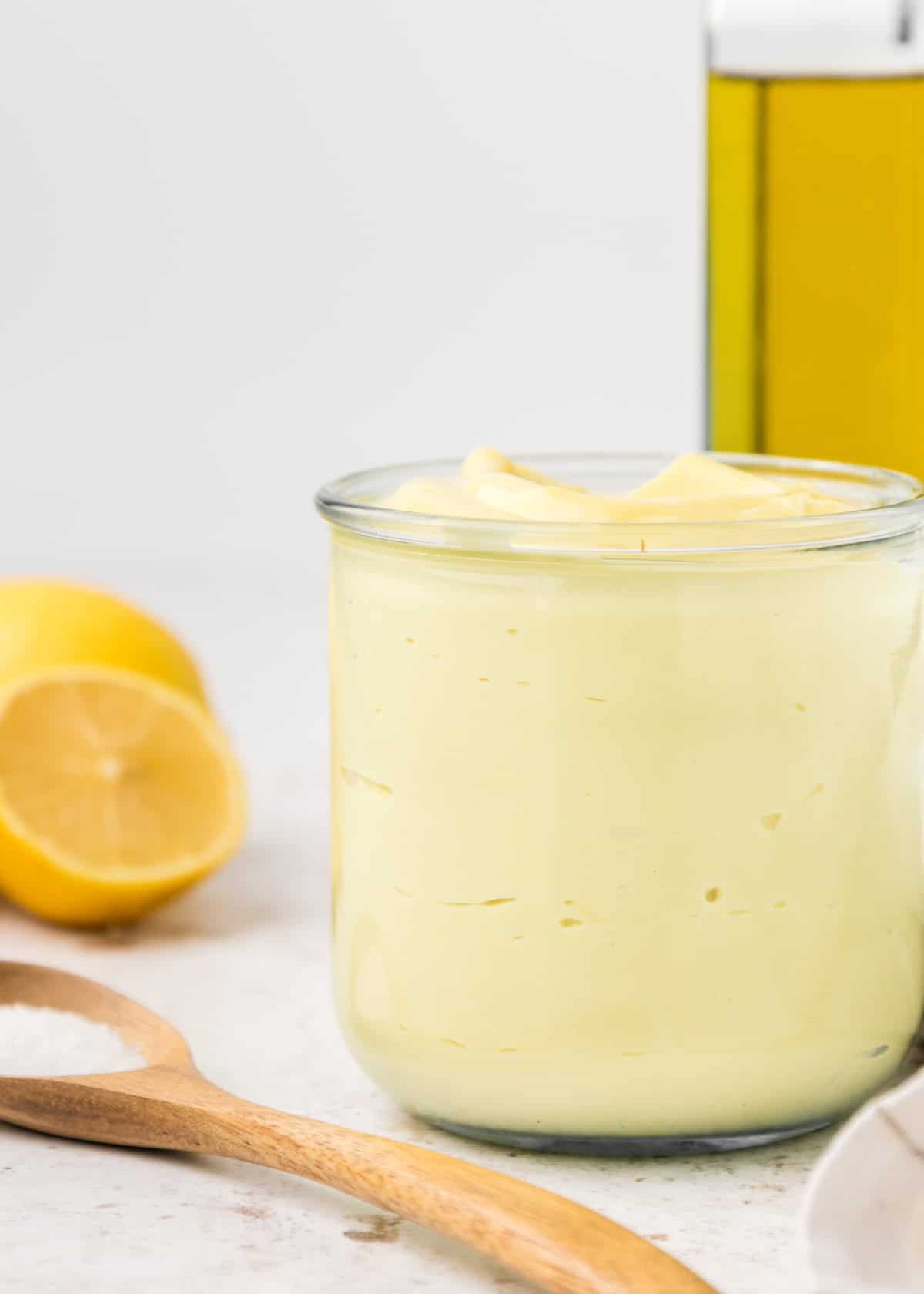
- Add the egg, lemon juice, honey, salt, dijon mustard, and white vinegar to a tall jar or container suitable for an immersion blender.
- Pour the olive oil on top. Let everything settle for a few seconds.
- Place the immersion blender at the bottom of the jar and blend on low speed without moving it for about 20 seconds, until the mixture starts to emulsify.
- Once it begins to thicken, slowly lift the blender to incorporate the remaining oil until smooth and creamy.
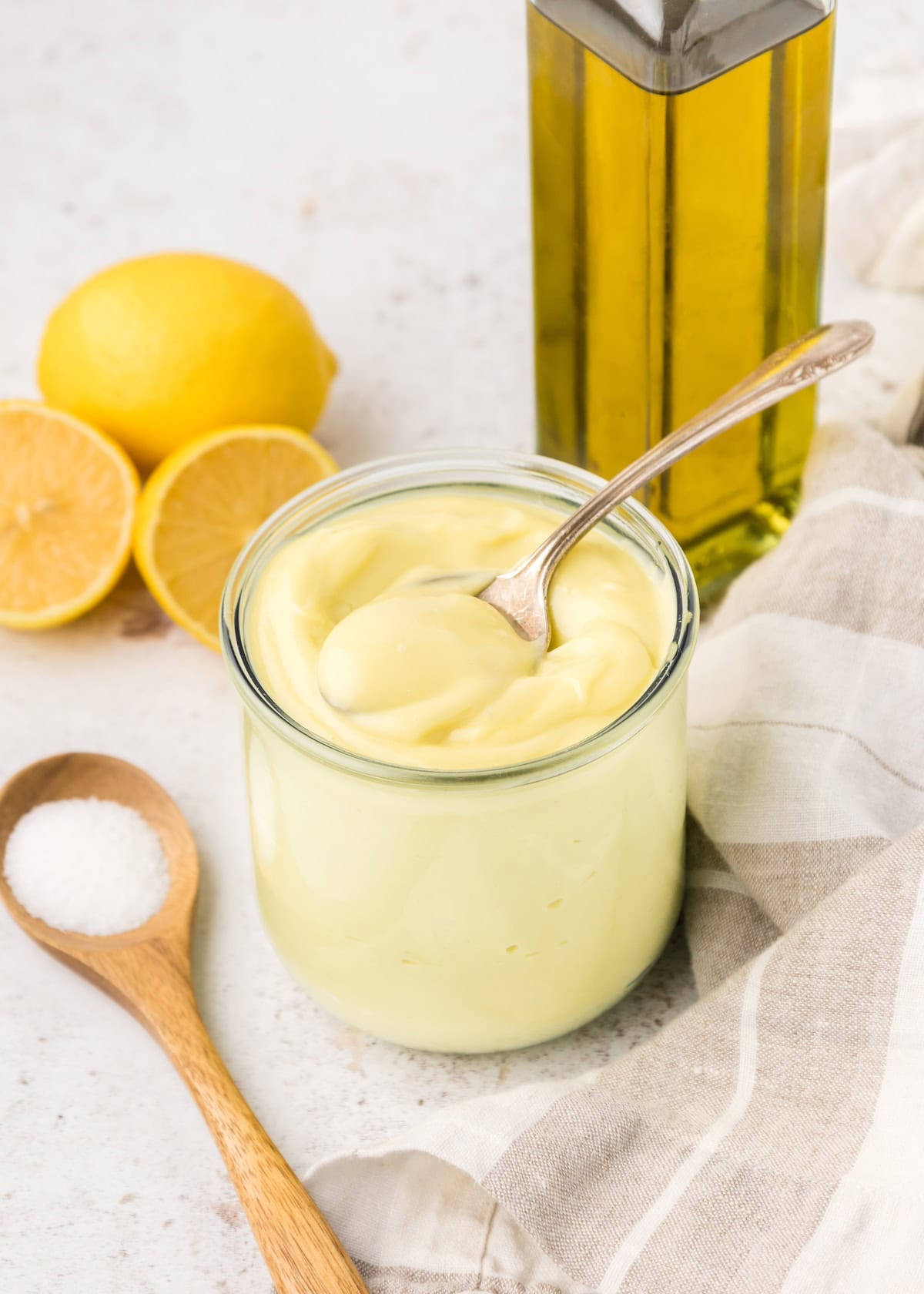
- Taste and adjust seasoning if needed. Store in an airtight container in the refrigerator for up to 1 week.
Save this Recipe
Recipe Notes & Tips:
- Use a Tall, Narrow Jar: This helps the immersion blender pull the egg and oil together quickly for a stable emulsion.
- Start at the Bottom: Keep the blender fully submerged at the bottom until the mayo begins to thicken before moving it.
- Room-Temperature Egg: A room-temperature egg emulsifies more easily than a cold one.
- Choose Mild Oil: Light olive oil or avocado oil prevents bitterness and keeps the flavor balanced.
- Fixing Broken Mayo: If the mayo doesn't thicken, blend in another egg or a tablespoon of water to help it emulsify.
How to Store:
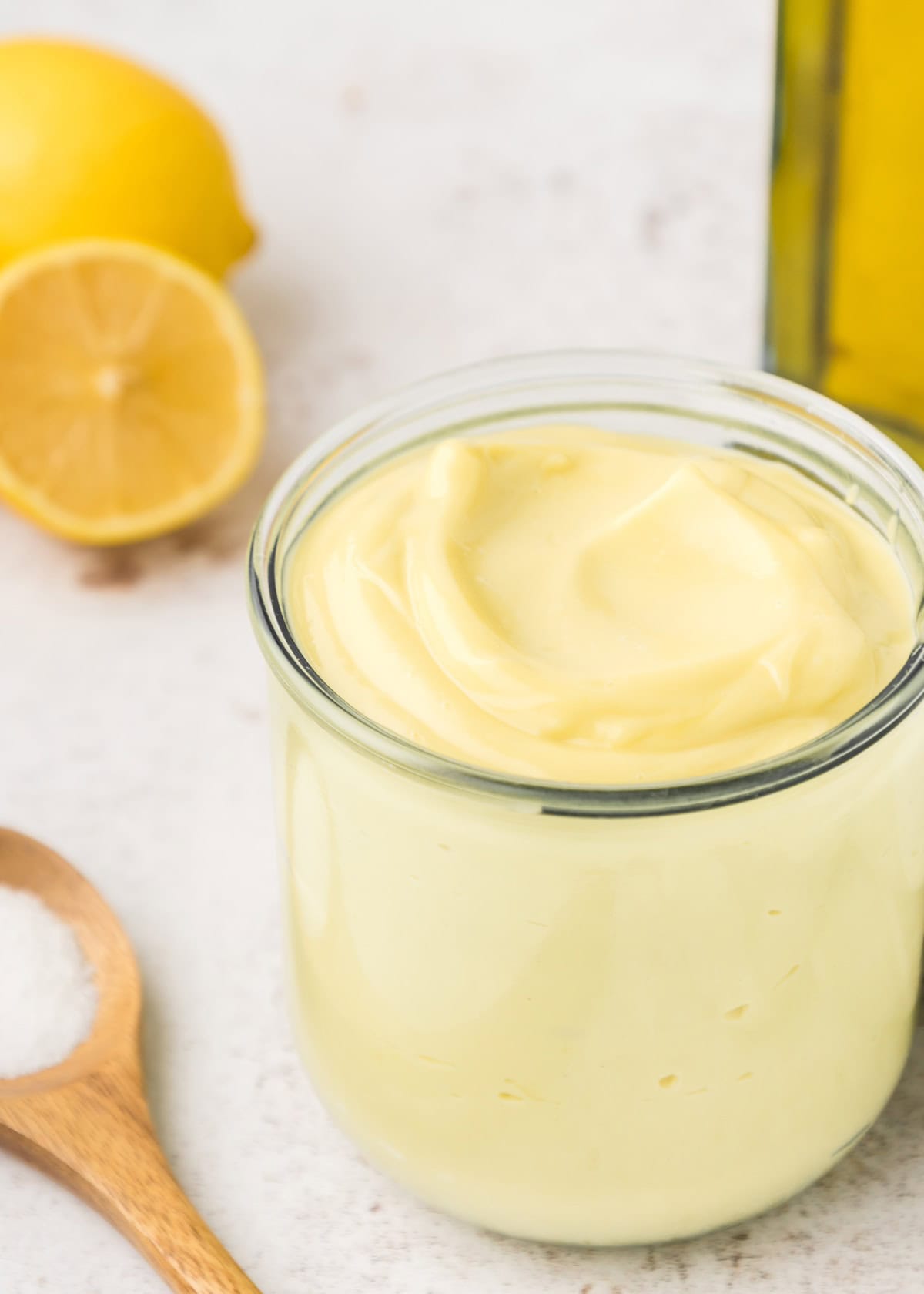
Refrigerate: Store the mayo in an airtight container or glass jar in the refrigerator for up to 1 week.
Do Not Freeze: Homemade mayo doesn't freeze well, as the emulsion will break when thawed, resulting in a separated and watery texture.
Label with Date: Since homemade mayo has no preservatives, it's helpful to label the jar with the date you made it to keep track of freshness.
Homemade Mayonnaise FAQs:
Homemade mayonnaise usually doesn't thicken if the oil is added too quickly or the immersion blender isn't kept at the bottom long enough. Using a tall jar and starting the blender at the base helps create a stable emulsion.
Homemade mayonnaise made with raw egg is generally safe when using fresh, high-quality eggs and keeping the mayo refrigerated. For extra safety, pasteurized eggs can be used.
Light olive oil or avocado oil works best for homemade mayonnaise because they have a mild flavor and emulsify easily. Strong oils can make the mayo taste bitter.

Grab your free copy
Get a FREE Healthy Meal Planning Ebook
Tips, Tricks, and Recipes for Stress Free Meal Planning
Homemade Mayonnaise
Ingredients
- 1 ¼ cup olive oil
- 1 large egg
- 1 tablespoon lemon juice
- 2 teaspoons honey
- 1 teaspoon salt
- 1 teaspoon dijon mustard
- 1 teaspoon white vinegar
Instructions
- Add the egg, lemon juice, honey, salt, dijon mustard, and white vinegar to a tall jar or container suitable for an immersion blender.
- Pour the olive oil on top. Let everything settle for a few seconds.
- Place the immersion blender at the bottom of the jar and blend on low speed without moving it for about 20 seconds, until the mixture starts to emulsify.
- Once it begins to thicken, slowly lift the blender to incorporate the remaining oil until smooth and creamy.
- Taste and adjust seasoning if needed. Store in an airtight container in the refrigerator for up to 1 week.
Nutrition
Notes
- Use a Tall, Narrow Jar: This helps the immersion blender pull the egg and oil together quickly for a stable emulsion.
- Start at the Bottom: Keep the blender fully submerged at the bottom until the mayo begins to thicken before moving it.
- Room-Temperature Egg: A room-temperature egg emulsifies more easily than a cold one.
- Choose Mild Oil: Light olive oil or avocado oil prevents bitterness and keeps the flavor balanced.
- Fixing Broken Mayo: If the mayo doesn't thicken, blend in another egg or a tablespoon of water to help it emulsify.

David P says
I never saw a follow up on the nutrition calculator. Any update? I make this about once a month to switch things up, and like it much better than any store bought mayo, but would also like to think I'm doing better on kcals lol
JenP says
That's funny, my experience with oils has been the opposite of yours. When I use olive oil, even the "extra light" olive oil - the mayo is bitter. When I use avocado oil, the taste and texture are perfect every time!
Roche Woodworth says
Hi Jen! To be honest, it’s hard to know for sure because there is variation between different oil brands. Some “light olive oil” brands we’ve tried does end up being slightly bitter, but definitely better than any result we’ve had with various brands of avocado oil. When refrigerated we found that our avocado oil mayo completely “hardened” and when “melting” back to room temperature turned into an oily puddle on the plate. We’re definitely keen to do more experimenting though!
Lisa says
My new favorite mayonnaise.
Yvonnr says
I’ve never made good homemade mayonnaise until I tried this recipe! Thank you so much for sharing!!
Bet says
What size serving is the nutritional value based on since the oil alone has over 1900 kcal?
Roche Woodworth says
I think our nutritional calculator has some kind of error with the oil, maybe only calculating the 1/4 cup. The serving size is about one tablespoon. I'll try to figure out the problem asap. Thanks for bringing this to my attention.
Elizabeth V says
I only have dry mustard powder (I don’t generally purchase prepared mustard since I prefer ketchup on things)...and apple cider vinegar. Could either one be subbed in this recipe?
Roche Woodworth says
Hi Elizabeth! I make this recipe at least once a week and have used both prepared and dried mustard (about a teaspoon), as well as a variety of different vinegars (whatever I have on hand). Although it won’t taste exactly the same as the original recipe, it will most likely still be yummy! Hope it turns out okay for you:)
Tanya says
How many days will this last before it goes bad? Thank you
Roche Woodworth says
It is states that homemade mayo should be used within 3-5 days, but we’ve had it over a week and it was still fine:) Hope that helps.
Ashanta Lopez says
Can this be made without honey?
Roche Woodworth says
Hi! The honey adds good depth of flavor, but it can definitely be made without it. 🙂