
Spring vegetable frittata is a fresh, simple egg bake packed with seasonal vegetables like asparagus, peas, spinach, and leek, finished with salty feta. It's light enough for brunch but filling enough for an easy lunch or dinner.
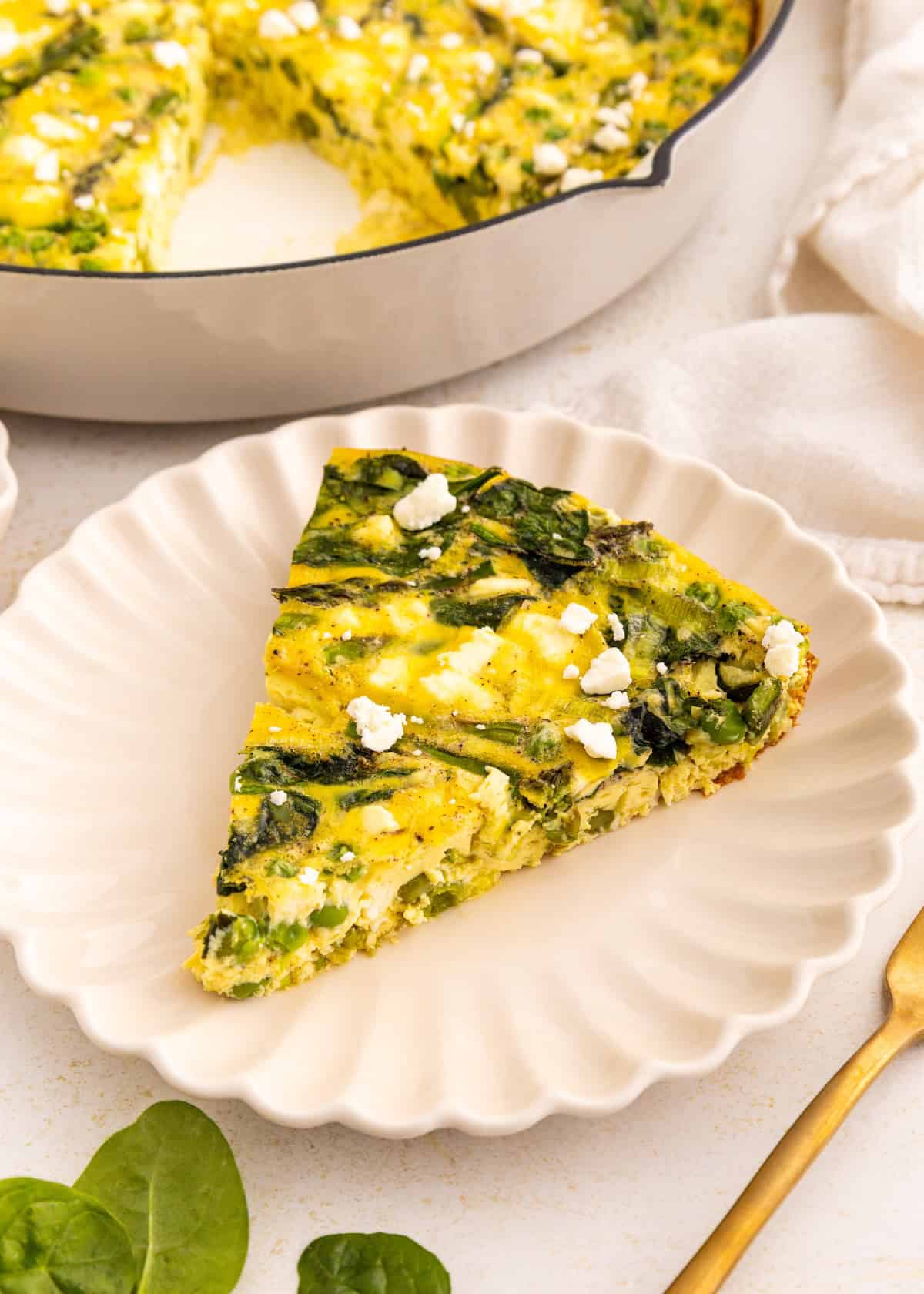
A Quick Look at the Recipe
✅ Recipe Name: Spring Vegetable Frittata
🕒 Ready In: ~40 minutes
👪 Serves: 8
🍽 Calories: ~250 per serving (estimated)
🥣 Main Ingredients: Eggs, leek, asparagus, spinach, peas, feta, milk
📖 Dietary Info: Vegetarian, gluten-free, low carb
👌 Difficulty: Easy - sauté then bake
SUMMARIZE & SAVE THIS CONTENT ON
The vegetables cook first so the frittata sets up properly and the flavor tastes balanced in every slice. It's also a great make-ahead option because it reheats well and slices cleanly.
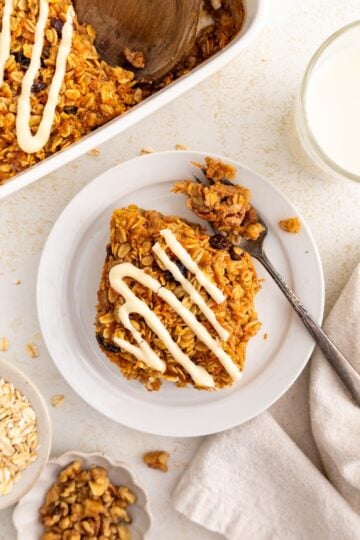
If you want more easy breakfast ideas, try our Sausage Mushroom Frittata, Egg White Quiche, Gluten-Free French Toast Casserole, or Carrot Cake Baked Oatmeal.
Jump to:
- A Quick Look at the Recipe
- Why You'll Love this Spring Vegetable Frittata:
- Key Ingredients:
- Easy Substitutions & Variations:
- How to Make Spring Vegetable Frittata:
- Recipe Notes & Tips:
- How to Store:
- Spring Vegetable Frittata FAQs:
- More Breakfast Recipes You'll Love
- Get a FREE Healthy Meal Planning Ebook
- Spring Vegetable Frittata
Why You'll Love this Spring Vegetable Frittata:
Fresh Spring Flavor: Leek, asparagus, peas, and spinach make it taste bright and seasonal.
Easy One Pan Meal: Everything cooks in one skillet and finishes in the oven.
Great for Meal Prep: It slices cleanly and reheats well for quick breakfasts and lunches.
Simple but Satisfying: Eggs and feta make it filling without feeling heavy.
Key Ingredients:
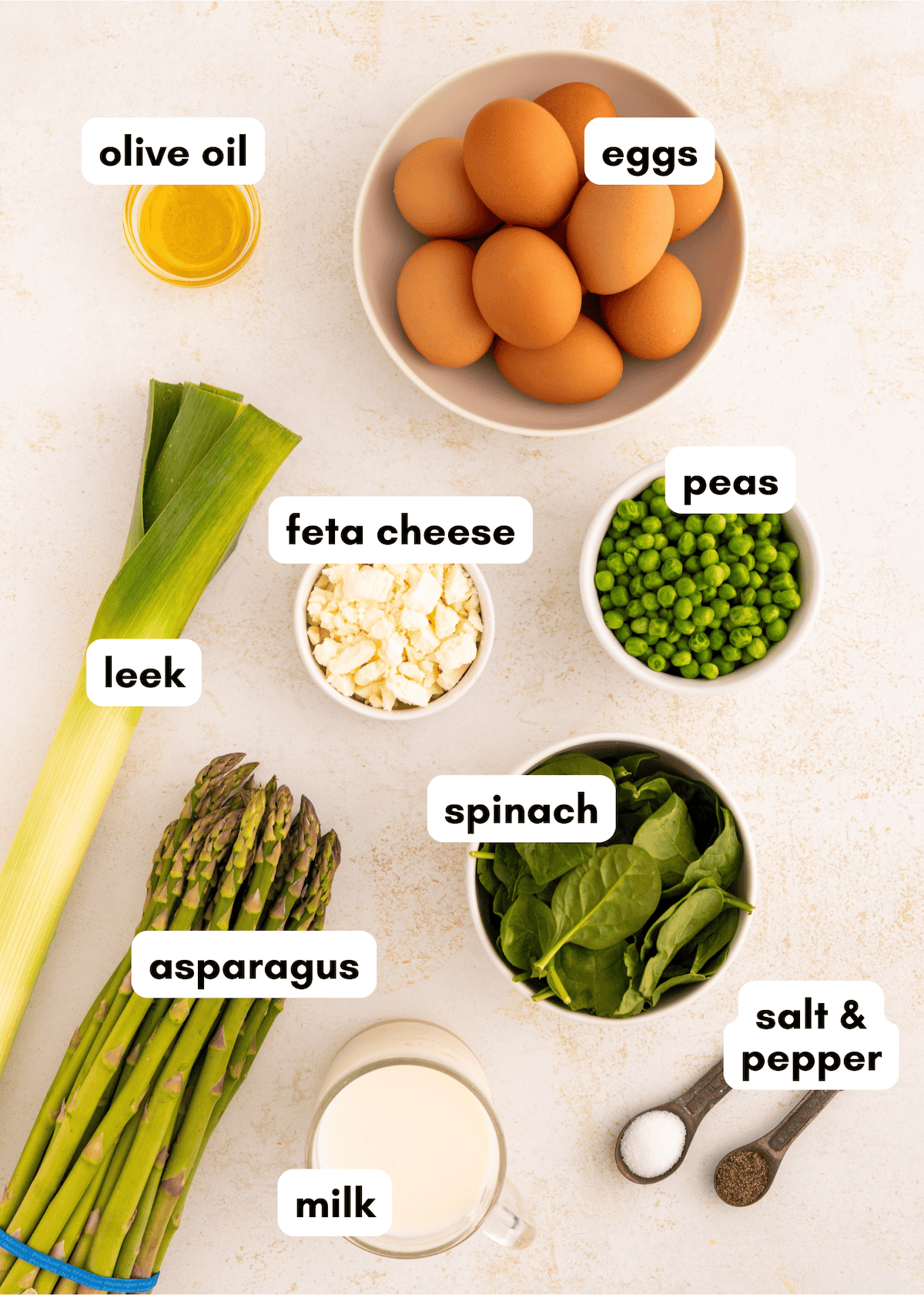
- eggs. Create the base and bake up fluffy while holding all the vegetables together.
- leek. Adds a mild, slightly sweet onion flavor that fits perfectly with spring vegetables.
- asparagus. Adds texture and a fresh bite that makes the frittata taste seasonal.
- peas. Add a subtle sweetness and a pop of color in every slice.
- feta cheese. Adds salty flavor that balances the vegetables and eggs.
Scroll to the recipe card at the bottom of this page for exact quantities.
Easy Substitutions & Variations:
- Cheese swap: Use goat cheese or shredded mozzarella instead of feta.
- Veggie swaps: Add mushrooms, zucchini, or bell pepper if you want to use what you have.
- Dairy-free option: Use dairy-free milk and skip the feta or use a dairy-free feta alternative.
- Add herbs: Stir in fresh dill, parsley, or chives for a fresher finish.
- More protein: Add cooked chicken or turkey sausage if you want a heartier frittata.
How to Make Spring Vegetable Frittata:
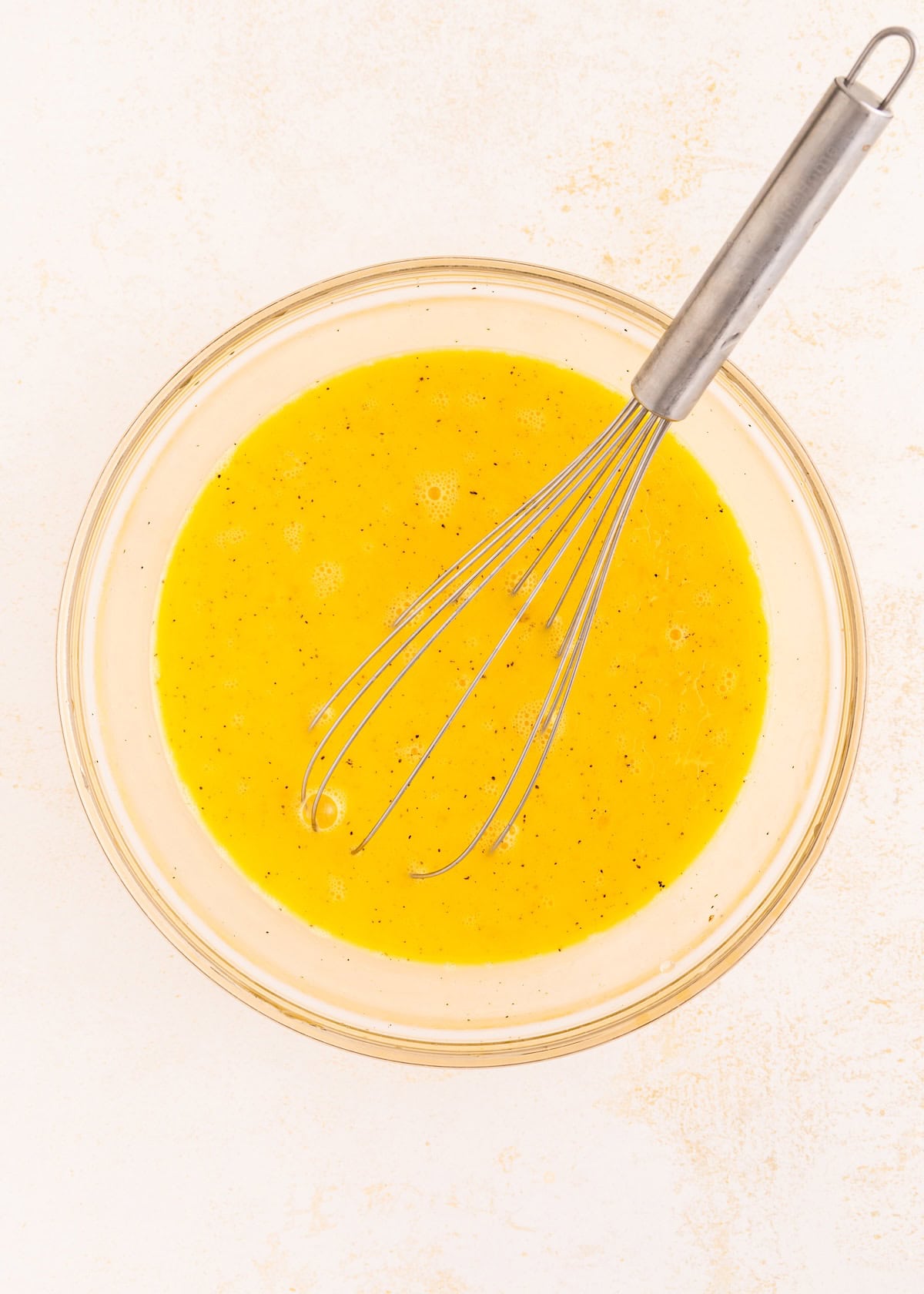
- Step 1: Preheat the oven to 375°F. In a bowl, whisk together the eggs and milk until smooth. Heat the olive oil in a large oven-safe skillet over medium heat. Add the sliced leek and cook until softened.
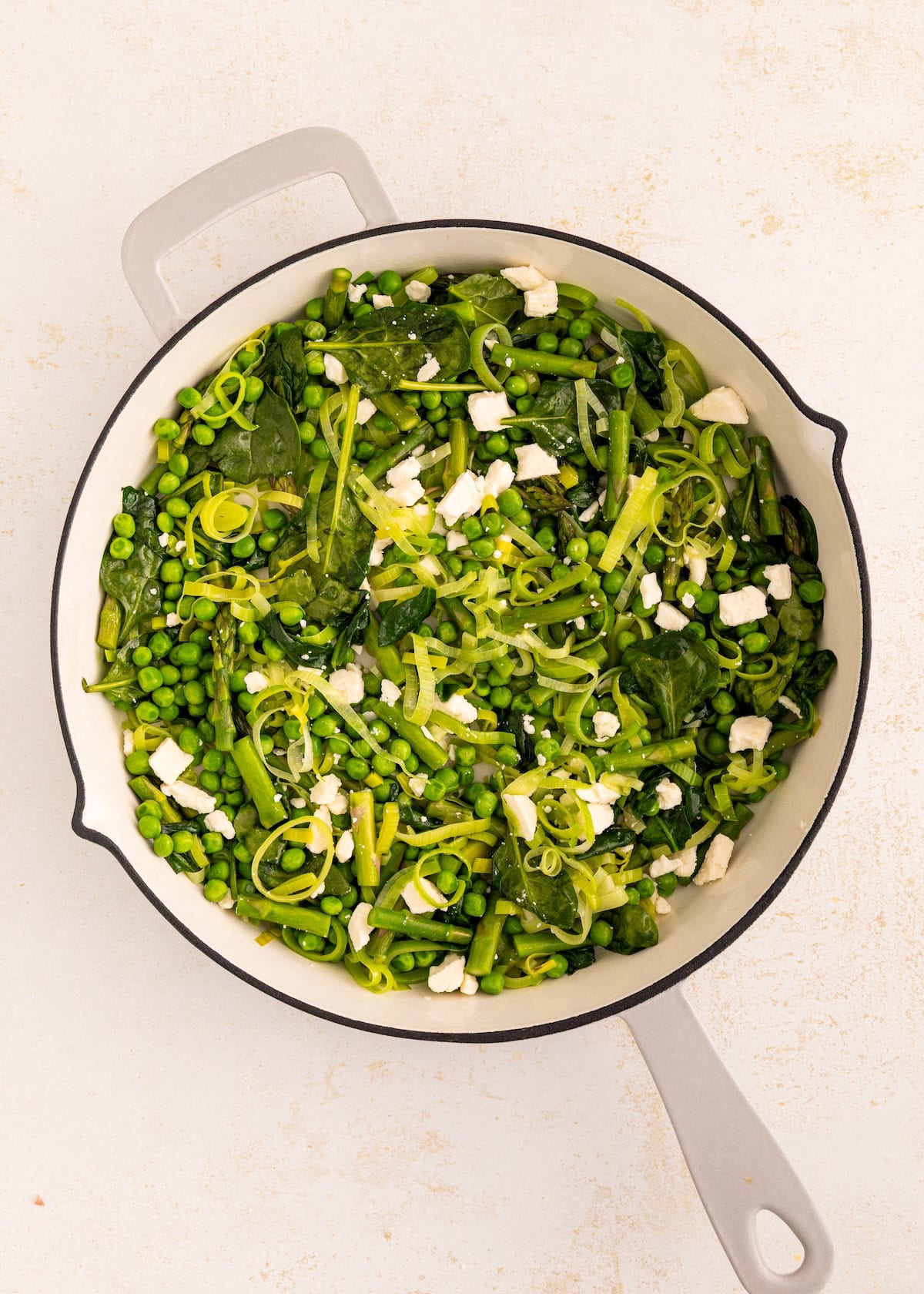
- Step 2: Add the asparagus and cook for a few minutes until it turns bright green. Stir in the spinach and peas and cook just until the spinach wilts.
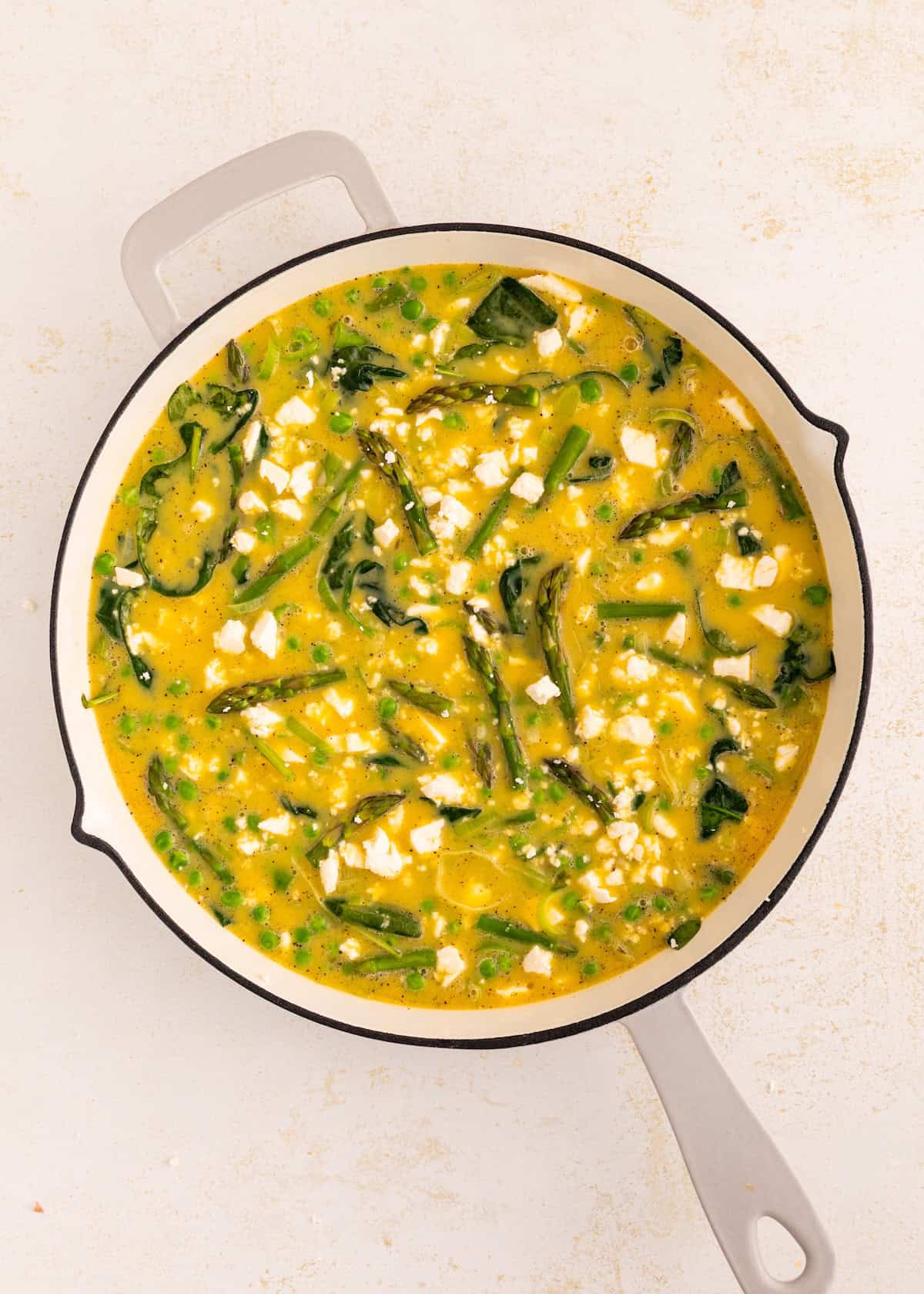
- Step 3: Pour the egg mixture into the skillet and stir gently to evenly distribute the vegetables. Sprinkle the feta over the top.
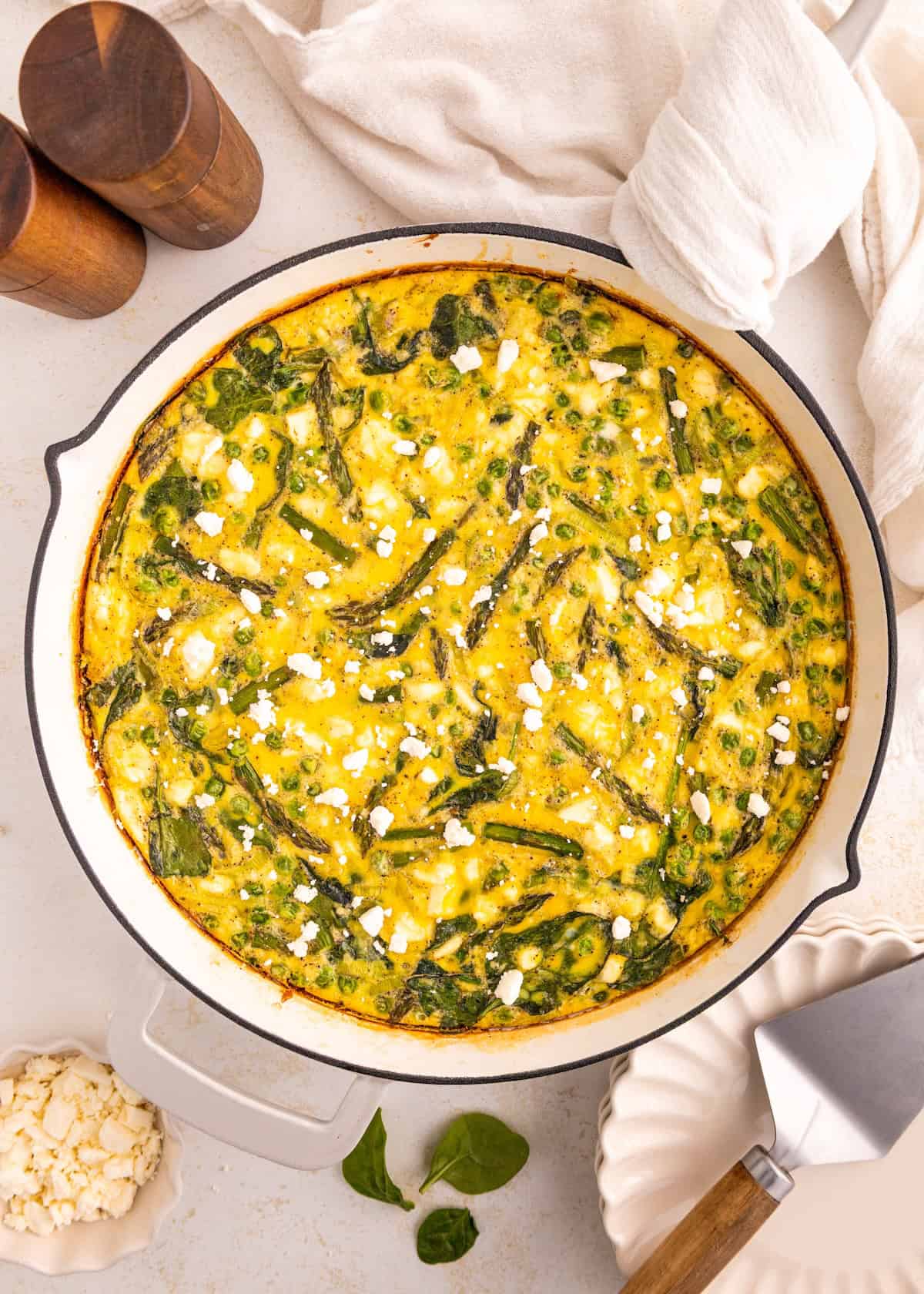
- Step 4: Cook for 2 to 3 minutes, just until the edges begin to set, then transfer the skillet to the oven. Bake for 20 minutes, or until the center is set.
Save this Recipe
Recipe Notes & Tips:
- Cook the vegetables first: Sautéing the leek and asparagus before adding eggs prevents a watery frittata and builds better flavor.
- Do not overcook the peas: Add peas near the end so they stay bright and do not turn dull.
- Sprinkle feta on top: Adding feta at the end gives you a salty bite throughout and a better finish.
- Pull when just set: The frittata will continue to firm up as it rests, so do not wait until it looks dry.
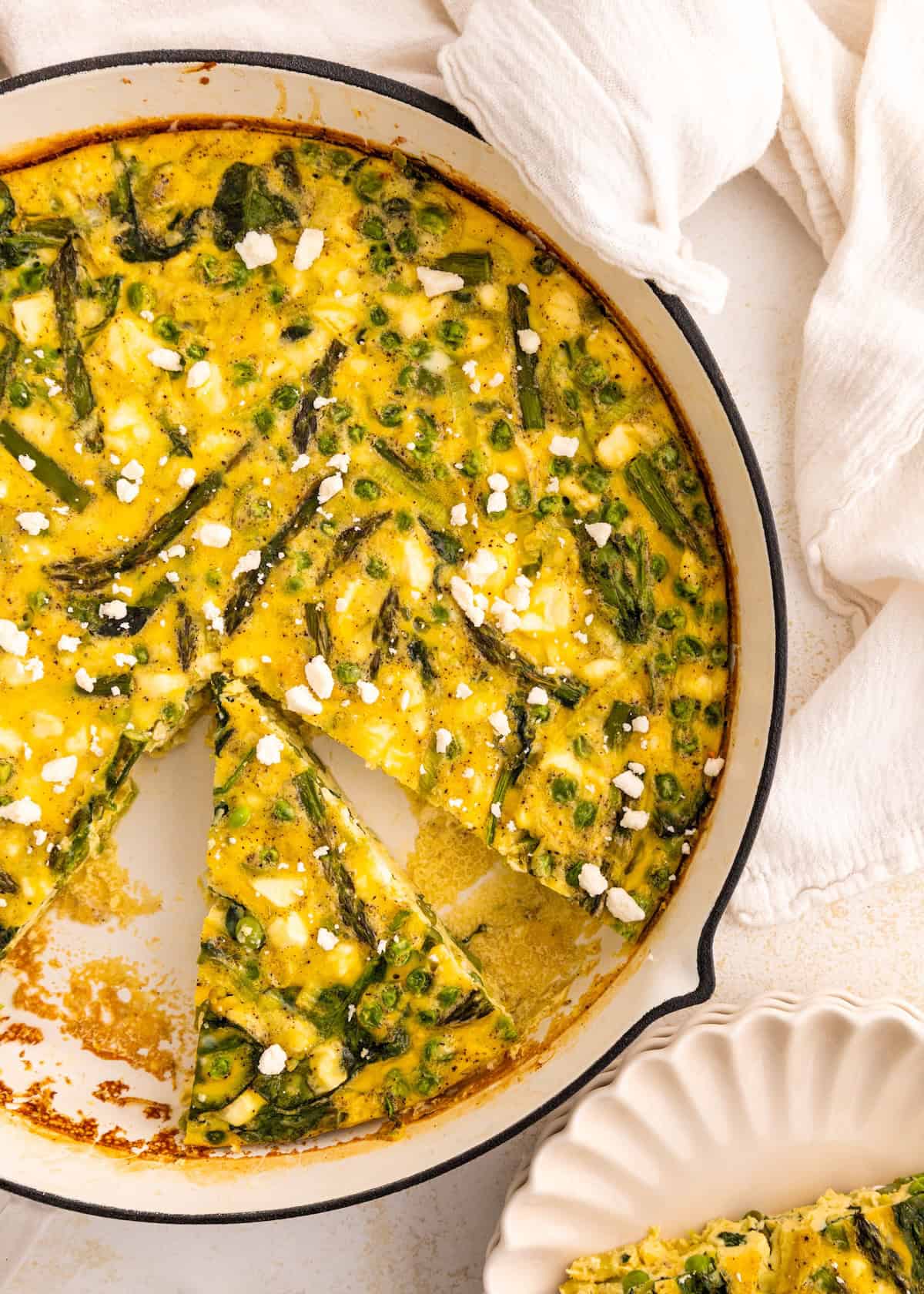
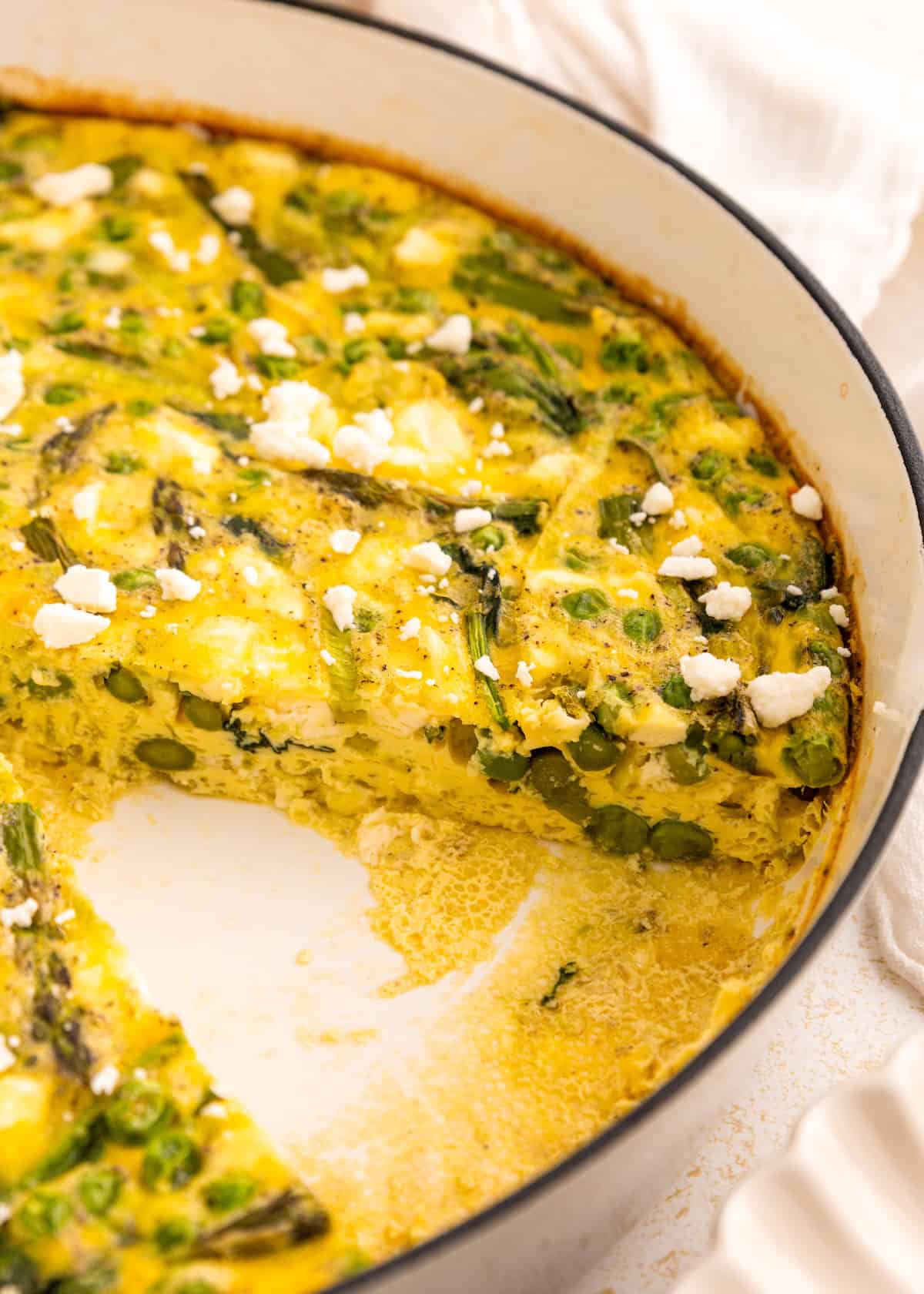
- Let it rest: Resting for a few minutes makes it easier to slice cleanly.
How to Store:
Refrigerator: Store spring vegetable frittata in an airtight container for up to 4 days.
Reheat: Warm slices in the microwave for 20 to 30 seconds, or reheat in a 325°F oven until heated through.
Freezer: Freeze individual slices for up to 2 months. Thaw overnight in the fridge, then reheat until warm.
Spring Vegetable Frittata FAQs:
To keep spring vegetable frittata from being watery, cook the vegetables first so excess moisture cooks off before adding the eggs. Avoid overcrowding the pan with vegetables and bake until the center is set.
Yes, spring vegetable frittata is great to make ahead. Bake it, cool, then refrigerate and reheat slices as needed for quick breakfasts or lunches.
Feta works especially well in spring vegetable frittata because it adds salty flavor that pairs well with asparagus and peas. Goat cheese or shredded mozzarella also work if you want a different flavor.


Grab your free copy
Get a FREE Healthy Meal Planning Ebook
Tips, Tricks, and Recipes for Stress Free Meal Planning
Spring Vegetable Frittata
Ingredients
- 10 eggs
- 1 cup milk
- 1 tablespoon olive oil
- 1 leek, sliced
- 8 ounces asparagus, sliced
- 2 cups fresh baby spinach
- 1 cup peas
- ½ cup feta cheese crumbles
Instructions
- Preheat the oven to 375°F.
- In a bowl, whisk together the eggs and milk until smooth.
- Heat the olive oil in a large oven-safe skillet over medium heat. Add the sliced leek and cook until softened.
- Add the asparagus and cook for a few minutes until it turns bright green.
- Stir in the spinach and peas and cook just until the spinach wilts.
- Pour the egg mixture into the skillet and stir gently to evenly distribute the vegetables.
- Sprinkle the feta over the top.
- Cook for 2 to 3 minutes, just until the edges begin to set, then transfer the skillet to the oven.
- Bake for 20 minutes, or until the center is set. Let rest a few minutes, then slice and serve.
Nutrition
Notes
- Cook the vegetables first: Sautéing the leek and asparagus before adding eggs prevents a watery frittata and builds better flavor.
- Do not overcook the peas: Add peas near the end so they stay bright and do not turn dull.
- Sprinkle feta on top: Adding feta at the end gives you a salty bite throughout and a better finish.
- Pull when just set: The frittata will continue to firm up as it rests, so do not wait until it looks dry.
- Let it rest: Resting for a few minutes makes it easier to slice cleanly.


Leave a Reply