
This Vegetable Lasagna is a comforting, oven-baked dinner layered with tender pasta, sautéed vegetables, creamy ricotta, and plenty of marinara and melted cheese. It's a classic meatless lasagna that feels familiar and satisfying, making it a great option for family dinners, meal prep, or entertaining.

A Quick Look at the Recipe
✅ Recipe Name: Vegetable Lasagna
🕒 Ready In: ~1 hour 15 minutes
👪 Serves: 6 servings
🍽 Calories: ~420 per serving
🥣 Main Ingredients: Lasagna noodles, vegetables, marinara sauce, ricotta cheese, mozzarella
📖 Dietary Info: Vegetarian; gluten-free option
👌 Difficulty: Medium - simple layering and oven-baked
SUMMARIZE & SAVE THIS CONTENT ON
Instead of overcomplicating the vegetable layers, this recipe focuses on simple, everyday produce like zucchini, mushrooms, bell pepper, and spinach, all cooked down for balanced flavor and texture. The result is a hearty, sliceable lasagna that holds together well and doesn't feel watery or bland.
If you enjoy cozy baked pasta dishes like this one, you may also like our Spinach Ricotta Stuffed Shells, Turkey Noodle Soup, or Spaghetti Squash Casserole that work well for busy weeks and leftovers.
Jump to:
Why You'll Love this Vegetable Lasagna:
Classic comfort food: Layers of pasta, vegetables, marinara, and cheese make this a familiar, satisfying dinner.
Hearty and filling: A generous mix of vegetables and creamy ricotta creates a lasagna that doesn't feel light or lacking.
Balanced vegetable flavor: The vegetables are cooked before layering, so the lasagna stays rich and not watery.
Great for make-ahead meals: This lasagna holds together well and reheats beautifully for leftovers.
Perfect for sharing: Ideal for family dinners, gatherings, or anytime you need a reliable baked pasta dish.
Key Ingredients:
- lasagna noodles. If using no-boil noodles, ensure your sauce is slightly more liquid to allow proper softening during baking.
- vegetables. Choose high-quality, crisp produce to ensure vibrant flavors and textures; washing and preparing them just before cooking preserves their natural taste and nutrients.
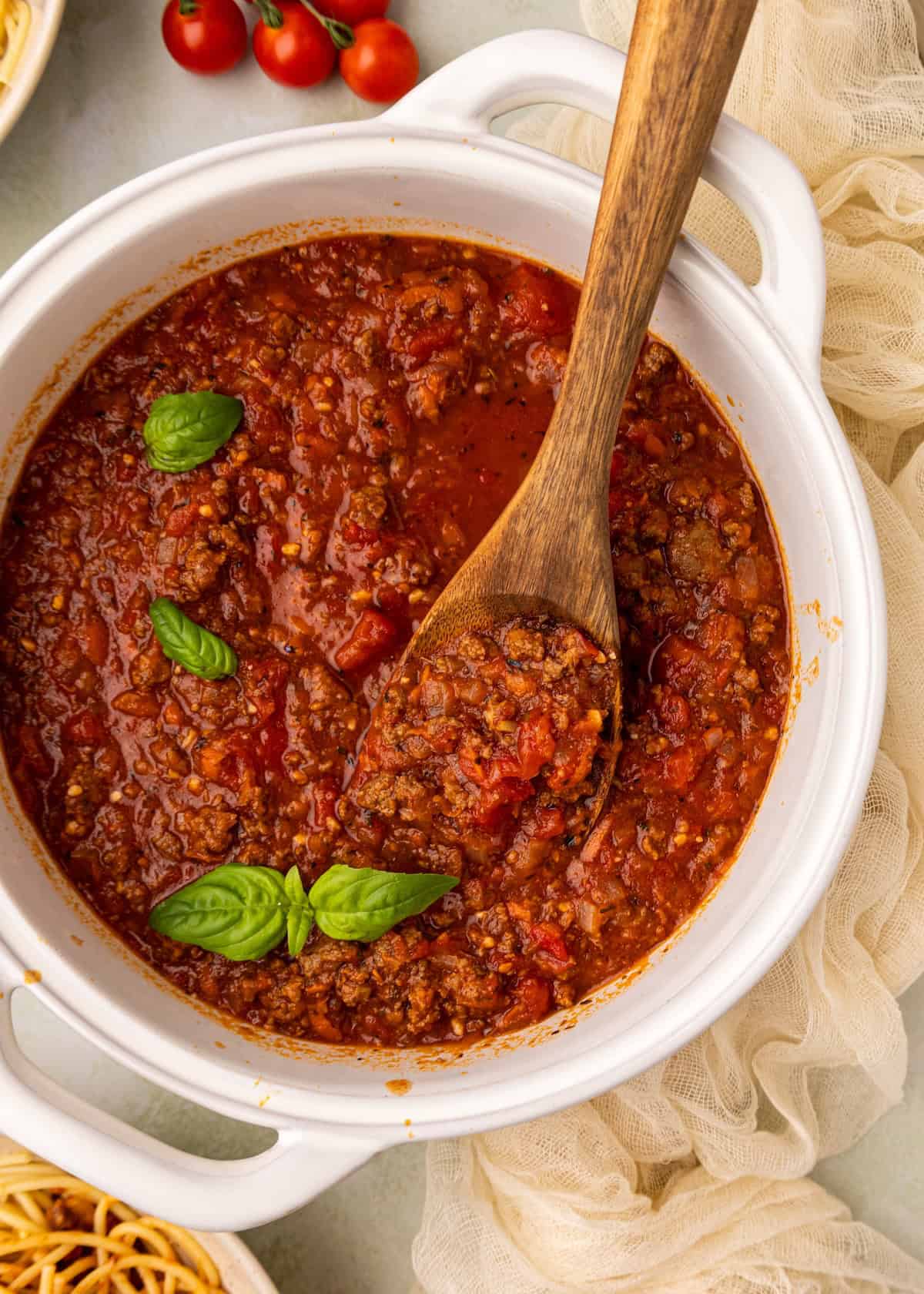
- marinara sauce. A hearty, well-seasoned marinara forms the foundation of your dish. Use Homemade Marinara Sauce for the best flavor.
- ricotta cheese. Use a full-fat variety for creamier texture, or opt for part-skim if you prefer a lighter version.
Scroll to the recipe card at the bottom of this page for exact quantities.
Easy Substitutions & Variations:
- Use oven-ready noodles: No-boil lasagna noodles work well here; add a little extra marinara to ensure they soften fully as they bake.
- Swap the vegetables: Broccoli, yellow squash, or eggplant can be used in place of zucchini or bell pepper based on what you have.
- Make it gluten-free: Use gluten-free lasagna noodles and bake according to the package instructions.
- Change the cheese blend: Cottage cheese can be used instead of ricotta, or add provolone for a richer, meltier layer.
- Boost the flavor: Stir a spoonful of pesto or a pinch of red pepper flakes into the marinara for added depth.
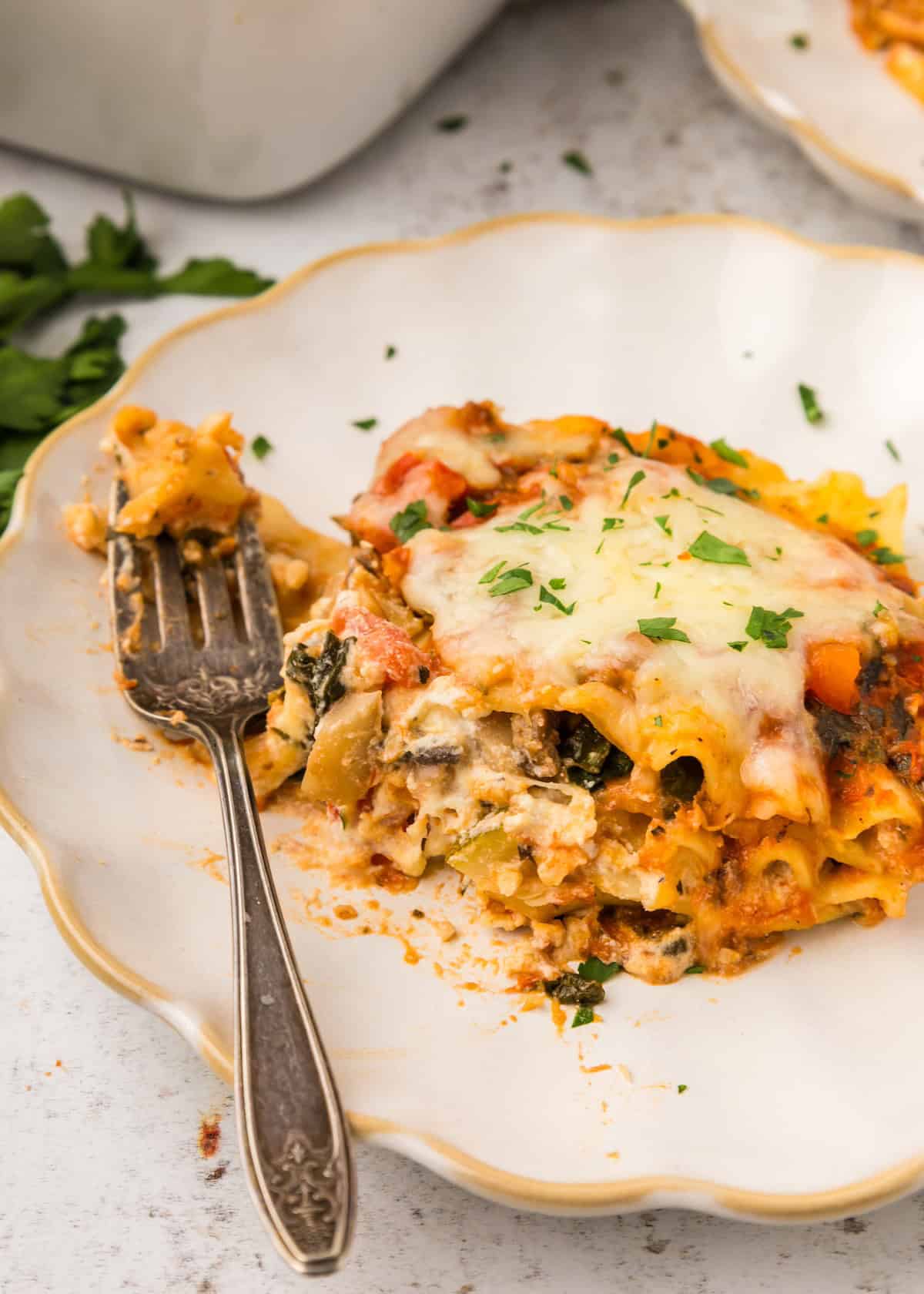
How to Make Vegetable Lasagna:
- Preheat the oven to 375°F. Lightly grease a 9×13-inch baking dish and set aside.
- Bring a large pot of salted water to a boil. Cook the lasagna noodles according to package directions until just al dente. Drain and lay flat to prevent sticking.
- Heat the olive oil in a large skillet over medium heat. Add the diced onion and cook for 2-3 minutes until softened. Stir in the garlic, red bell pepper, mushrooms, and zucchini. Cook for 5-7 minutes, until the vegetables are tender and most of the moisture has cooked off. Add the spinach and cook just until wilted. Stir in the oregano and basil, then remove from heat.
- In a medium bowl, mix together the ricotta cheese, egg, and Italian seasoning until smooth.
- Spread a thin layer of marinara sauce over the bottom of the prepared baking dish. Arrange a layer of noodles on top, followed by a portion of the ricotta mixture, sautéed vegetables, marinara sauce, and a sprinkle of mozzarella and parmesan. Repeat the layers until all ingredients are used, finishing with sauce and cheese on top.
- Cover the dish loosely with foil and bake for 35 minutes. Remove the foil and bake for an additional 15-20 minutes, until the cheese is melted and lightly golden.
- Remove the lasagna from the oven and let it rest for 10-15 minutes before slicing and serving.
Recipe Notes & Tips:
- Cook the vegetables first: Sautéing the vegetables before layering removes excess moisture and prevents a watery lasagna.
- Season every layer: Light seasoning in the vegetables and ricotta ensures the lasagna is flavorful throughout, not just on top.
- Use thick marinara: A thicker sauce helps the lasagna hold its shape and keeps the layers from sliding apart.
- Don't overfill the pan: Even layers bake more evenly and make cleaner slices.
- Cover, then uncover: Baking covered first cooks the lasagna through; uncovering at the end allows the cheese to brown.
- Let it rest: Resting for 10-15 minutes after baking helps the layers set and makes slicing easier.
- Serving suggestions: Pair with Kale Apple Salad or serve alongside Gluten-Free Focaccia for a complete, crowd-pleasing meal.
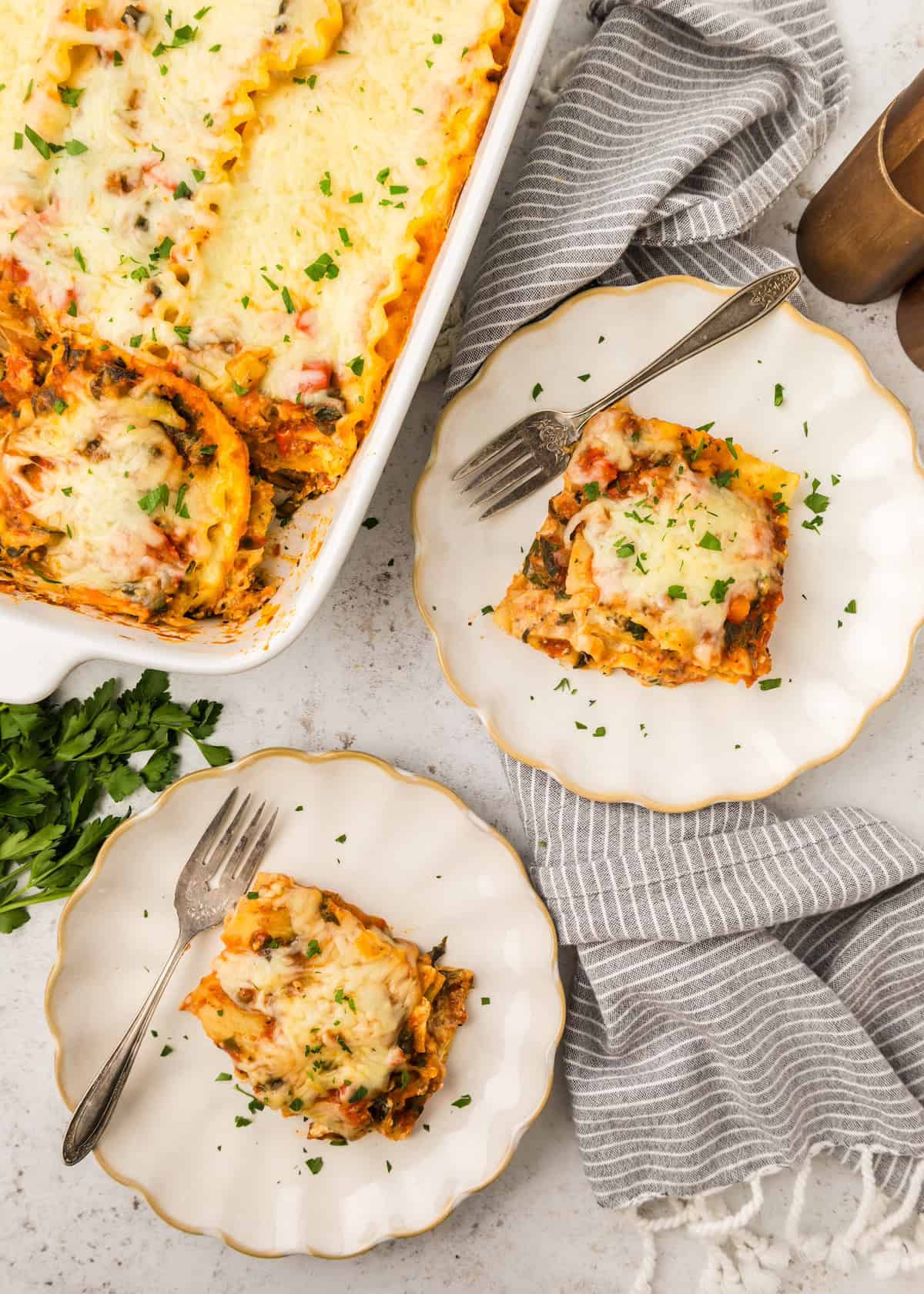
Save this Recipe
How to Store:
- Storage: Leftovers can be stored in an airtight container in the refrigerator for up to 3 days. Reheat in the oven or microwave.
- Freezing: If you'd like to freeze your vegetable lasagna for longer storage, wrap the dish tightly in plastic wrap followed by a layer of aluminum foil. It can be frozen for up to 2-3 months. When ready to serve, thaw it overnight in the refrigerator.
- Reheating: Preheat your oven to 350°F. If reheating a whole dish, cover the lasagna with foil to retain moisture. Bake for 20-25 minutes, or until heated through.
Vegetable Lasagna FAQs:
To prevent watery vegetable lasagna, sauté the vegetables first to cook off excess moisture and use a thick marinara sauce. Letting the lasagna rest after baking also helps the layers set.
Yes. Cooking the vegetables before layering improves flavor and prevents excess liquid from releasing during baking.
Vegetable lasagna should rest for 10-15 minutes after baking. This allows the layers to firm up and makes clean slices easier to serve.
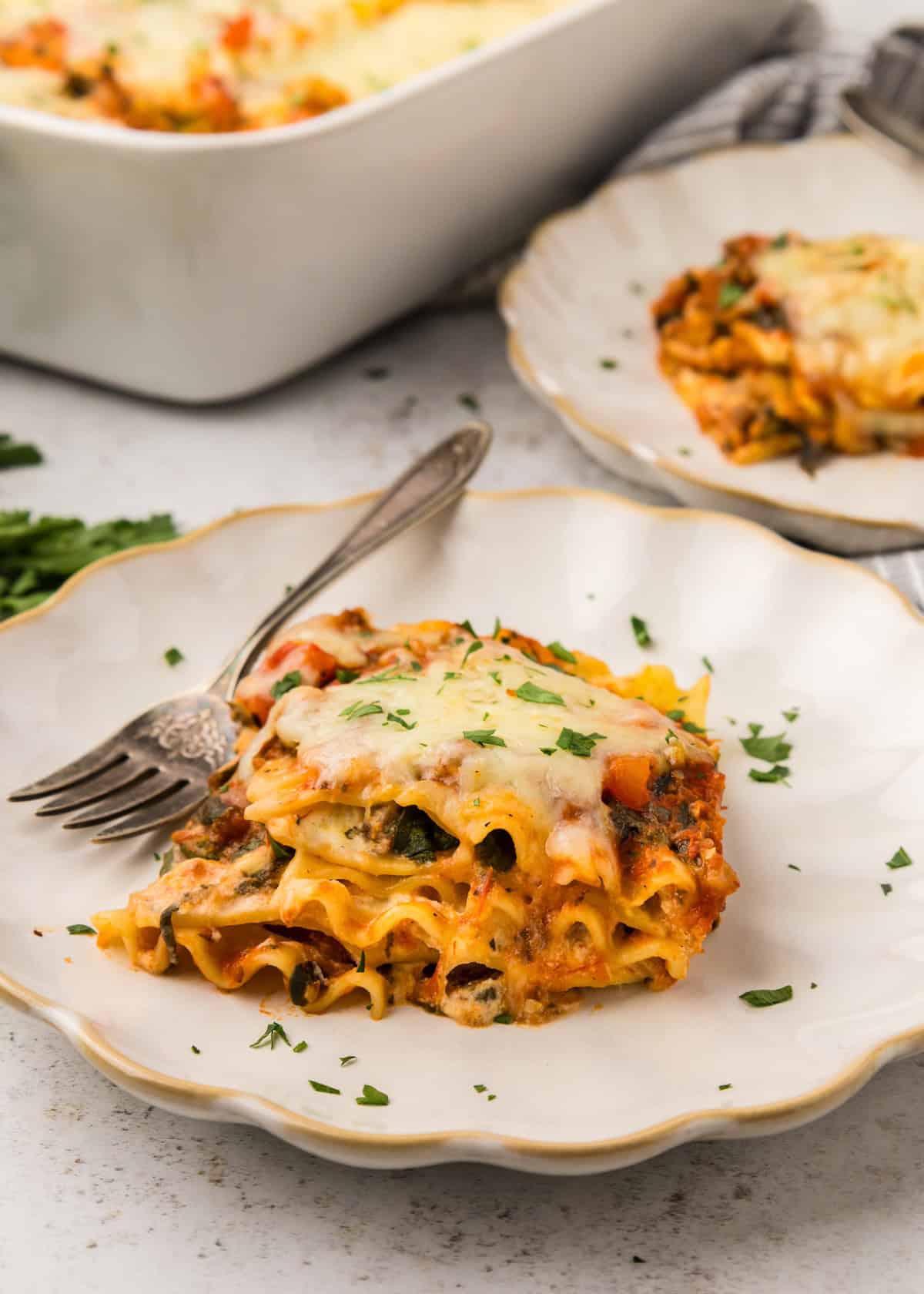


Grab your free copy
Get a FREE Healthy Meal Planning Ebook
Tips, Tricks, and Recipes for Stress Free Meal Planning
Vegetable Lasagna
Ingredients
- 9 lasagna noodles
- 1 tablespoon olive oil
- 1 small onion, diced
- 2 garlic cloves, minced
- 1 red bell pepper, diced
- 1 cup mushrooms, diced
- 1 medium zucchini, diced
- 2 cups fresh spinach, chopped
- 2 cups marinara sauce
- 1 teaspoon dried oregano
- 1 teaspoon dried basil
- 15 ounces ricotta cheese
- 1 egg
- 1 teaspoon Italian seasoning
- 1 cup shredded mozzarella cheese
- ¼ cup grated parmesan cheese
Instructions
- Preheat the oven to 375°F. Lightly grease a 9×13-inch baking dish and set aside.
- Bring a large pot of salted water to a boil. Cook the lasagna noodles according to package directions until just al dente. Drain and lay flat to prevent sticking.
- Heat the olive oil in a large skillet over medium heat. Add the diced onion and cook for 2-3 minutes until softened. Stir in the garlic, red bell pepper, mushrooms, and zucchini. Cook for 5-7 minutes, until the vegetables are tender and most of the moisture has cooked off. Add the spinach and cook just until wilted. Stir in the oregano and basil, then remove from heat.
- In a medium bowl, mix together the ricotta cheese, egg, and Italian seasoning until smooth.
- Spread a thin layer of marinara sauce over the bottom of the prepared baking dish. Arrange a layer of noodles on top, followed by a portion of the ricotta mixture, sautéed vegetables, marinara sauce, and a sprinkle of mozzarella and parmesan. Repeat the layers until all ingredients are used, finishing with sauce and cheese on top.
- Cover the dish loosely with foil and bake for 35 minutes. Remove the foil and bake for an additional 15-20 minutes, until the cheese is melted and lightly golden.
- Remove the lasagna from the oven and let it rest for 10-15 minutes before slicing and serving.
Nutrition
Notes
- Cook the vegetables first: Sautéing the vegetables before layering removes excess moisture and prevents a watery lasagna.
- Season every layer: Light seasoning in the vegetables and ricotta ensures the lasagna is flavorful throughout, not just on top.
- Use thick marinara: A thicker sauce helps the lasagna hold its shape and keeps the layers from sliding apart.
- Don't overfill the pan: Even layers bake more evenly and make cleaner slices.
- Cover, then uncover: Baking covered first cooks the lasagna through; uncovering at the end allows the cheese to brown.
- Let it rest: Resting for 10-15 minutes after baking helps the layers set and makes slicing easier.
- Serving suggestions: Pair with Kale Apple Salad or serve alongside Gluten-Free Focaccia for a complete, crowd-pleasing meal.


Jake Pugliese says
Never thought I'd love this lasagna more than one with meat. There's so much flavor in the veggies, it's such an underrated dish.