
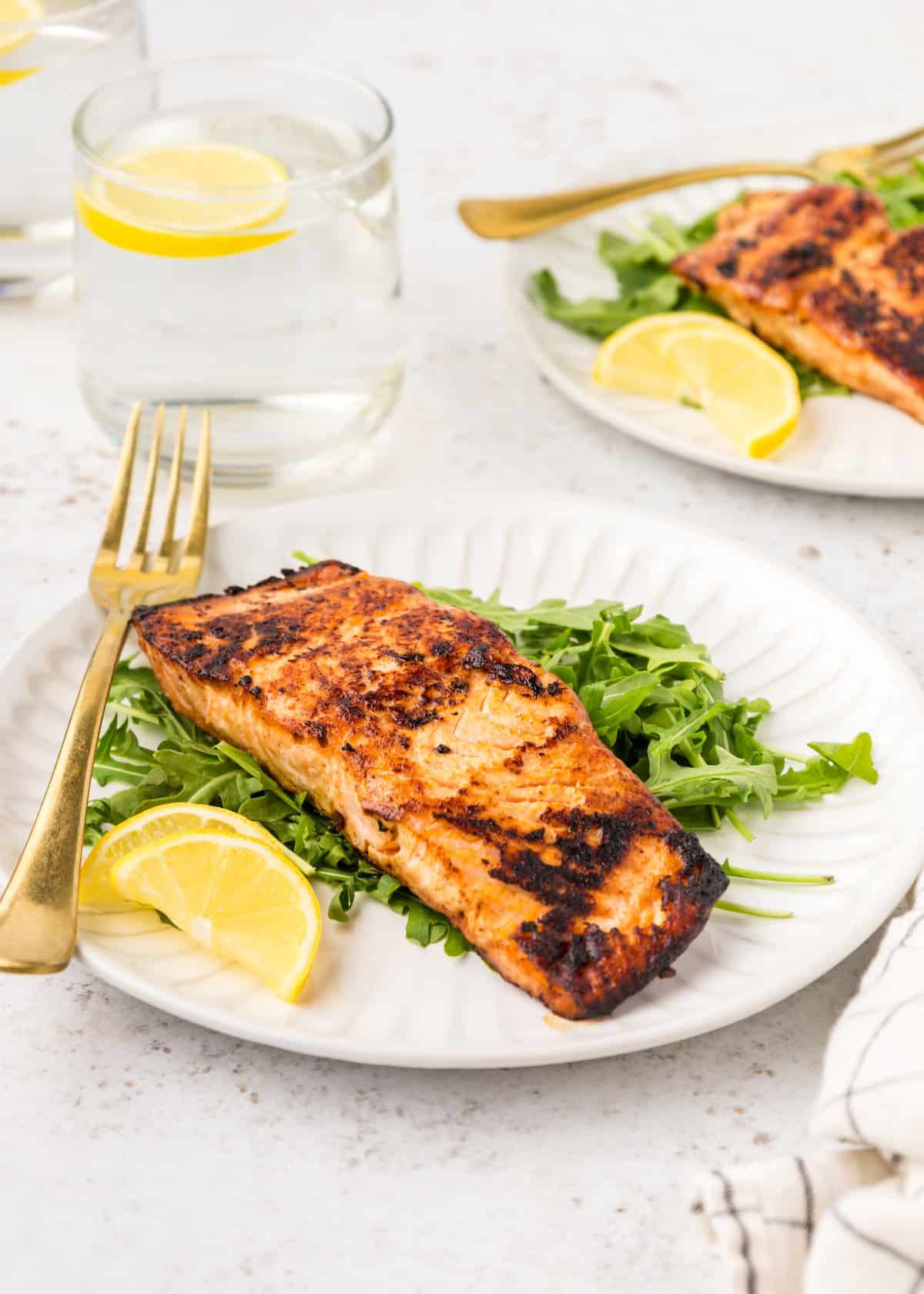
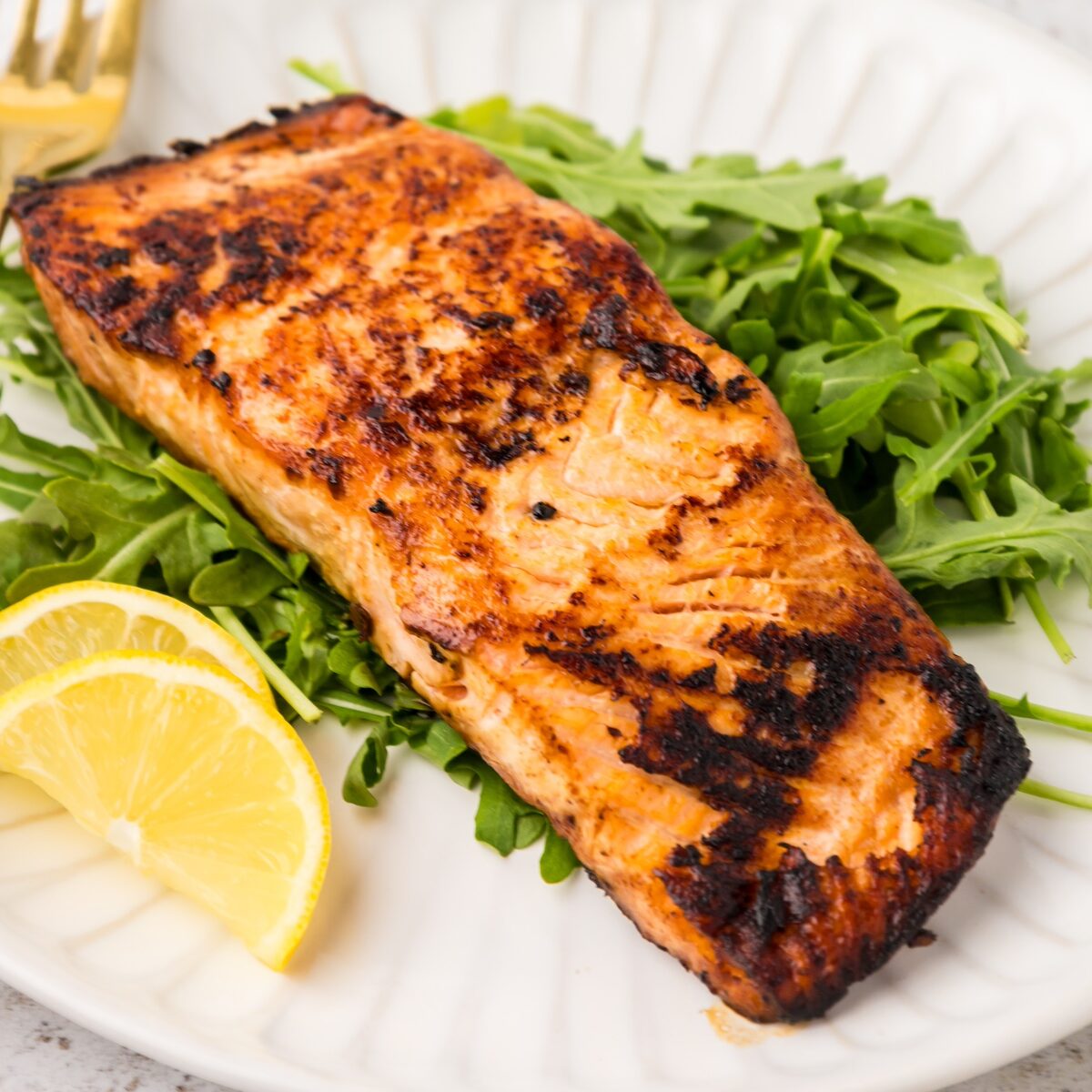
This seared salmon is a quick stovetop dinner made with tender salmon fillets marinated in a simple soy sauce and honey mixture, then pan-seared until golden on the outside and flaky inside. The balance of savory, slightly sweet flavors makes it both approachable and satisfying.

This post may contain affiliate links which won't change your price but will share some commission.
A Quick Look at the Recipe
✅ Recipe Name: Seared Salmon
🕒 Ready In: ~20 minutes
👪 Serves: 4 servings
🍽 Calories: ~360 per serving (estimated)
🥣 Main Ingredients: Salmon fillets, soy sauce, honey, garlic, butter, olive oil
📖 Dietary Info: Dairy-free adaptable; gluten-free adaptable
👌 Difficulty: Easy - quick stovetop cooking
SUMMARIZE & SAVE THIS CONTENT ON
With minimal prep and a short cook time, this recipe is ideal for busy weeknights when you want a protein-rich meal without turning on the oven. Finished in a hot skillet with butter and olive oil, the salmon develops a crisp exterior while staying moist and flavorful.
If you enjoy simple seafood meals like this, you may also like our Fish Casserole, Sheet Pan Lemon Pepper Salmon, or Lobster Bisque for more fast, flavorful options.
Jump to:
Why You'll Love this Seared Salmon:
Quick stovetop dinner: Cooks in under 20 minutes, making it perfect for busy weeknights.
Crispy outside, flaky inside: High-heat searing creates a golden crust while keeping the salmon tender.
Simple marinade: Soy sauce, honey, and garlic add bold flavor without extra ingredients.
Minimal prep: Short marinating time and straightforward cooking steps.
Versatile pairing: Works well with rice, vegetables, or salads for a complete meal.
Key Ingredients:
- fresh salmon. Use 2 pounds of fresh, wild-caught salmon fillets for optimal flavor and texture. If fresh salmon isn't available, you can substitute with frozen just thaw overnight.
- honey. This natural sweetener balances the savory and spicy elements of the marinade.
- soy sauce. For a gluten-free or paleo-friendly version, consider substituting with tamari or coconut aminos.
- butter. For those avoiding dairy, ghee or a high-quality coconut oil are excellent alternatives.
Scroll to the recipe card at the bottom of this page for exact quantities.
Easy Substitutions & Variations:
- Make it gluten-free: Use tamari or coconut aminos in place of soy sauce.
- Swap the sweetener: Honey can be replaced with maple syrup or brown sugar for a slightly different sweetness.
- Add citrus: Finish the salmon with a squeeze of fresh lemon or orange juice for brightness.
- Spice it up: Add red pepper flakes or a pinch of sriracha to the marinade for heat.
- Use a different fat: Butter can be skipped for all olive oil if preferred, or replaced with avocado oil for a higher smoke point.
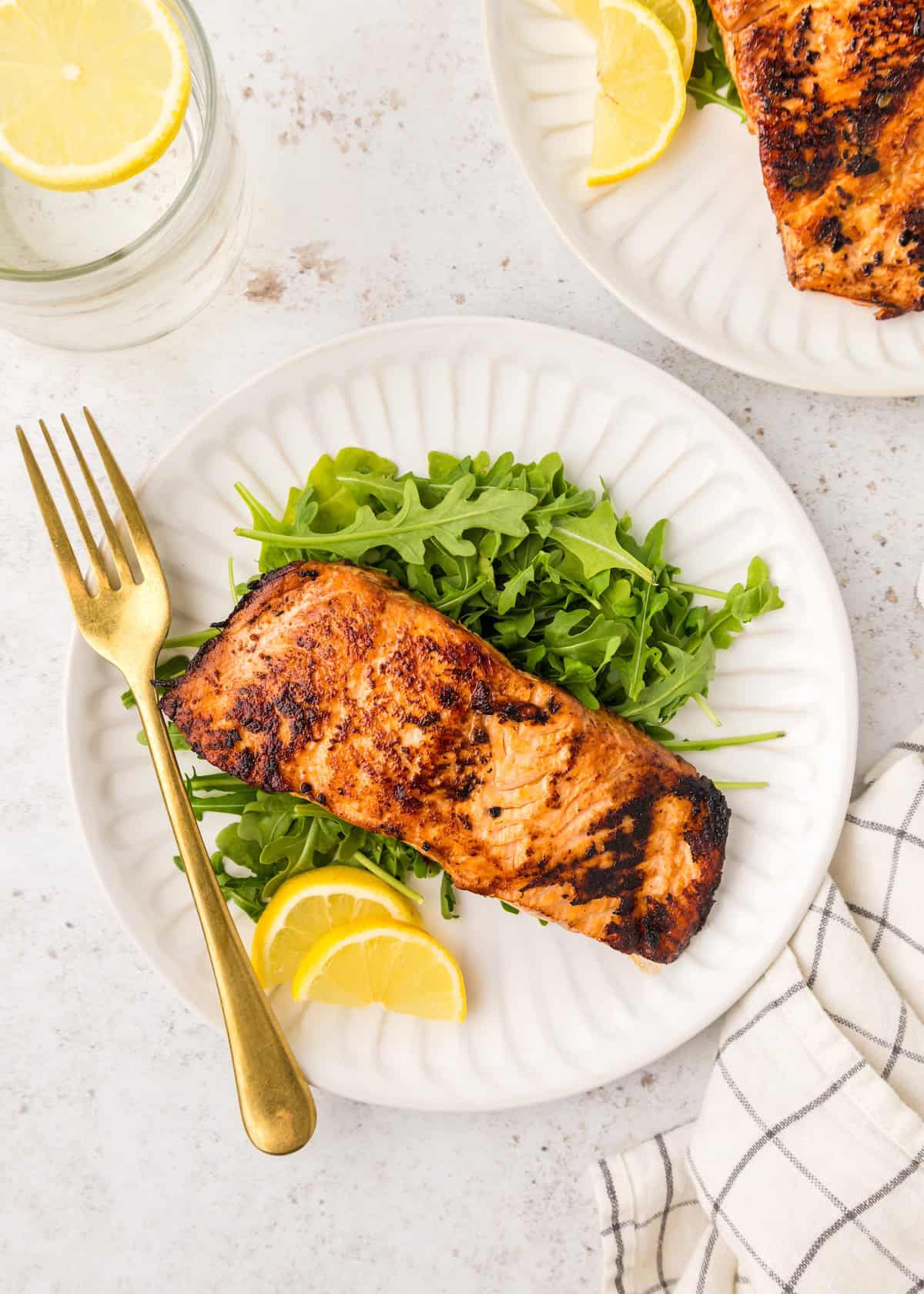
How to Make Seared Salmon:
- In a small bowl, whisk together the soy sauce, honey, olive oil, and minced garlic until well combined.
- Place the salmon fillets in a resealable plastic bag, shallow dish, or container. Pour the marinade over the salmon, ensuring each fillet is evenly coated.
- Seal the bag or cover the dish with plastic wrap and refrigerate for 15-30 minutes. For a more intense flavor, marinate for up to 1 hour. Avoid marinating longer than 2 hours, as the acidic soy sauce can break down the fish too much.
- Heat the butter and olive oil in a large skillet over medium-high heat. Place the salmon fillets in the hot pan, skin-side down (if the skin is on). Sear salmon for 3-4 minutes, without moving, until the skin is crispy and dark but not burnt.
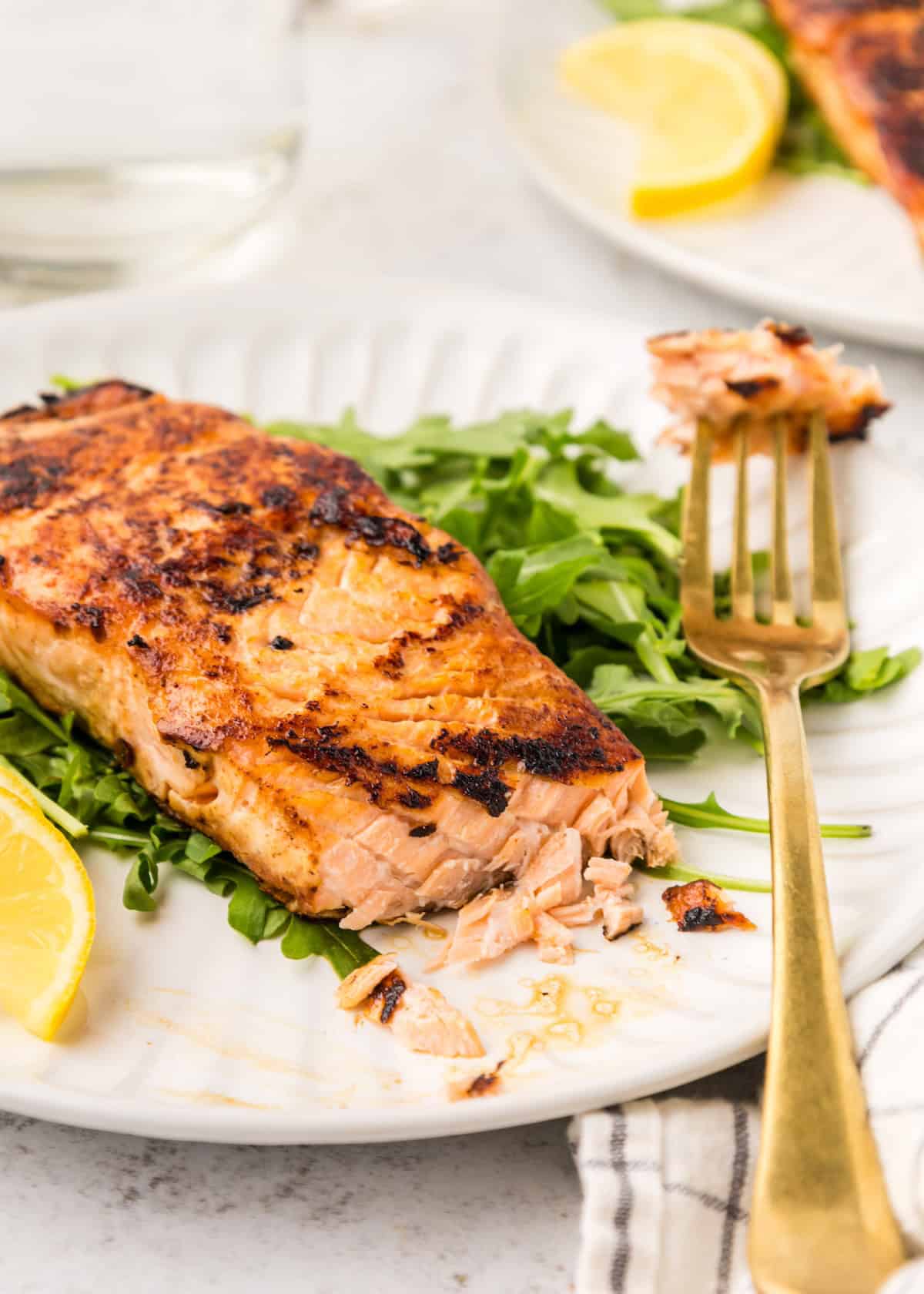
- Carefully flip the salmon fillets and cook for another 2-3 minutes on the other side. Remove the salmon from the pan and serve.
Save this Recipe
Recipe Notes & Tips:
- Pat the salmon dry: Removing excess moisture helps the fillets sear properly and develop a crisp surface.
- Use a hot pan: Let the skillet heat fully before adding the salmon to prevent sticking and ensure even browning.
- Don't move it too soon: Leave the salmon undisturbed while searing so it forms a golden crust before flipping.
- Watch the cook time: Salmon cooks quickly, remove it as soon as it flakes easily to avoid drying it out.
- Save the pan drippings: Spoon any remaining sauce from the pan over the salmon just before serving for extra flavor.
- Serving Suggestions: We love having this salmon with Garlic Roasted Potatoes and Balsamic Green Beans.
How to Store:
- Refrigeration: Store the salmon in an airtight container in the refrigerator for up to three days.
- Freezing Option: For longer storage, place the cooled salmon on a baking sheet in a single layer, freeze until solid, then transfer to a freezer-safe container. It can be kept frozen for up to 2 months.
- Thawing & Reheating: Thaw frozen salmon overnight in the refrigerator and reheat gently in the oven covered with foil at 350 degrees to preserve moisture and texture.
Seared Salmon FAQs:
Seared salmon typically cooks for 3-4 minutes on the first side and 2-3 minutes on the second side over medium-high heat. The salmon is done when it flakes easily with a fork and reaches an internal temperature of 125-130°F for medium or 145°F for fully cooked.
Marinating salmon before searing is optional, but a short marinade adds extra flavor. For seared salmon, 15-30 minutes is enough, longer marinating can soften the fish too much.
Yes, seared salmon should be placed skin-side down first when the skin is on. This helps render the fat, crisp the skin, and prevent the salmon from sticking to the pan.


Grab your free copy
Get a FREE Healthy Meal Planning Ebook
Tips, Tricks, and Recipes for Stress Free Meal Planning
Seared Salmon
Ingredients
Instructions
- In a small bowl, whisk together the soy sauce, honey, olive oil, and minced garlic until well combined.
- Place the salmon fillets in a resealable plastic bag, shallow dish, or container. Pour the marinade over the salmon, ensuring each fillet is evenly coated.
- Seal the bag or cover the dish with plastic wrap and refrigerate for 15-30 minutes. For a more intense flavor, marinate for up to 1 hour. Avoid marinating longer than 2 hours, as the acidic soy sauce can break down the fish too much.
- Heat the butter and olive oil in a large skillet over medium-high heat. Place the salmon fillets in the hot pan, skin-side down (if the skin is on). Sear for 3-4 minutes, without moving, until the skin is crispy and dark but not burnt.
- Carefully flip the salmon fillets and cook for another 2-3 minutes on the other side. Remove the salmon from the pan and serve.
Nutrition
Notes
- Pat the salmon dry: Removing excess moisture helps the fillets sear properly and develop a crisp surface.
- Use a hot pan: Let the skillet heat fully before adding the salmon to prevent sticking and ensure even browning.
- Don't move it too soon: Leave the salmon undisturbed while searing so it forms a golden crust before flipping.
- Watch the cook time: Salmon cooks quickly, remove it as soon as it flakes easily to avoid drying it out.
- Save the pan drippings: Spoon any remaining sauce from the pan over the salmon just before serving for extra flavor.
- Serving Suggestions: We love having this salmon with Garlic Roasted Potatoes and Balsamic Green Beans.



Gary says
Still no Worcestershire sauce listed. So how much? Guess I'd just start with a tablespoon or two for the marinade, but it would be nice to know what you recommend.
Rachel says
Why did the Worcestershire sauce get taken off this recipe?
Roche Woodworth says
Hi, that is a mistake. I will fix it, thank you for bringing it to my attention.
Danny says
Simple ingredients but such good flavor!! Thanks for the recipe