
This homemade almond milk is a simple, unsweetened dairy-free milk made with just raw almonds and water. Smooth, neutral in flavor, and free from gums or additives, it's an easy alternative to store-bought almond milk and works well in smoothies, coffee, baking, or everyday drinking.
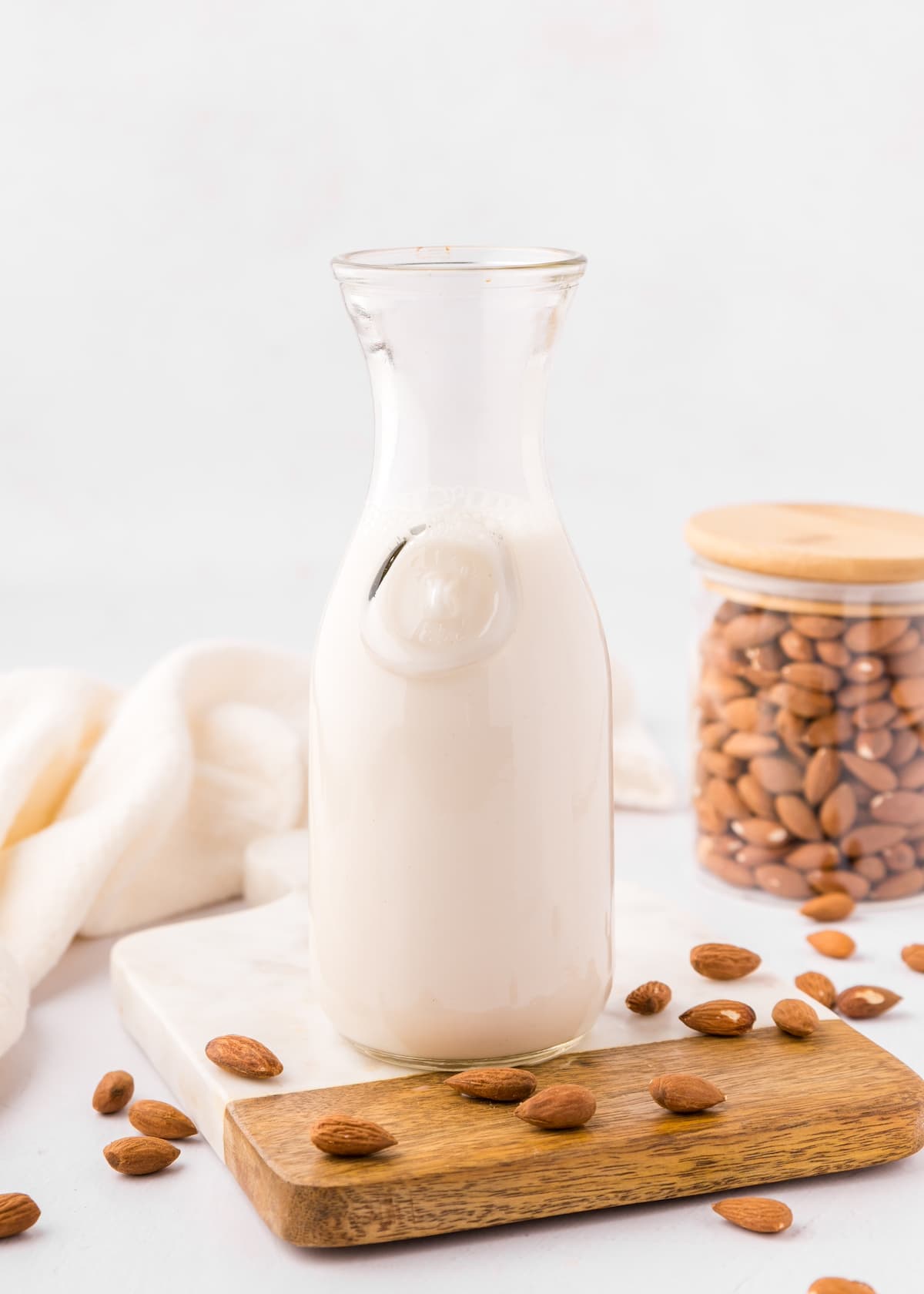
A Quick Look at the Recipe
✅ Recipe Name: Homemade Almond Milk
🕒 Ready In: ~10 minutes (plus soaking time)
👪 Serves: About 4 cups
🍽 Calories: ~60 per cup (estimated)
🥣 Main Ingredients: Raw almonds, filtered water
📖 Dietary Info: Dairy-free; gluten-free; unsweetened
👌 Difficulty: Easy - blend and strain
SUMMARIZE & SAVE THIS CONTENT ON
Making almond milk at home lets you control the ingredients and consistency, resulting in a clean, fresh milk that's lightly nutty without being sweet. Soaking the almonds helps create a smoother texture, while blending and straining produces a pourable almond milk that's easy to use across recipes.
If you enjoy making simple staples from scratch, you may also like our Homemade Hot Chocolate, Iced Matcha Latte, or Medicine Ball Tea that come together with minimal ingredients.
Jump to:
Why You'll Love Homemade Almond Milk:
Just two ingredients: Made with only almonds and water, this almond milk is completely free from gums, stabilizers, and added sugars.
Clean, neutral flavor: Unsweetened almond milk works well in smoothies, coffee, baking, or cereal without overpowering other ingredients.
Easy to make at home: A quick soak, blend, and strain is all it takes to make fresh almond milk from scratch.
A great store-bought alternative: Homemade almond milk is a simple, additive-free option that's easy to keep in rotation.
Key Ingredients:
- almonds. Use raw, unsalted almonds for the best flavor and texture. Blanched almonds can also be used for a smoother consistency.
- water. Filtered water provides a cleaner taste, but regular water works fine. Adjust the water amount for a thicker or thinner consistency.
Scroll to the recipe card at the bottom of this page for exact quantities.
Easy Substitutions & Variations:
- Adjust the thickness: Use 3 cups of water for thicker almond milk or up to 5 cups for a lighter consistency, depending on how you plan to use it.
- Skip soaking: If you're short on time, you can blend unsoaked almonds, though soaking helps create a smoother texture and milder flavor.
- Add sweetness: For lightly sweetened almond milk, blend in a small amount of honey, maple syrup, or a soaked date.
- Flavor it: Add a splash of vanilla extract or a pinch of cinnamon for flavored almond milk.
- No strainer option: If you don't have a nut milk bag, a fine mesh strainer or cheesecloth works well.
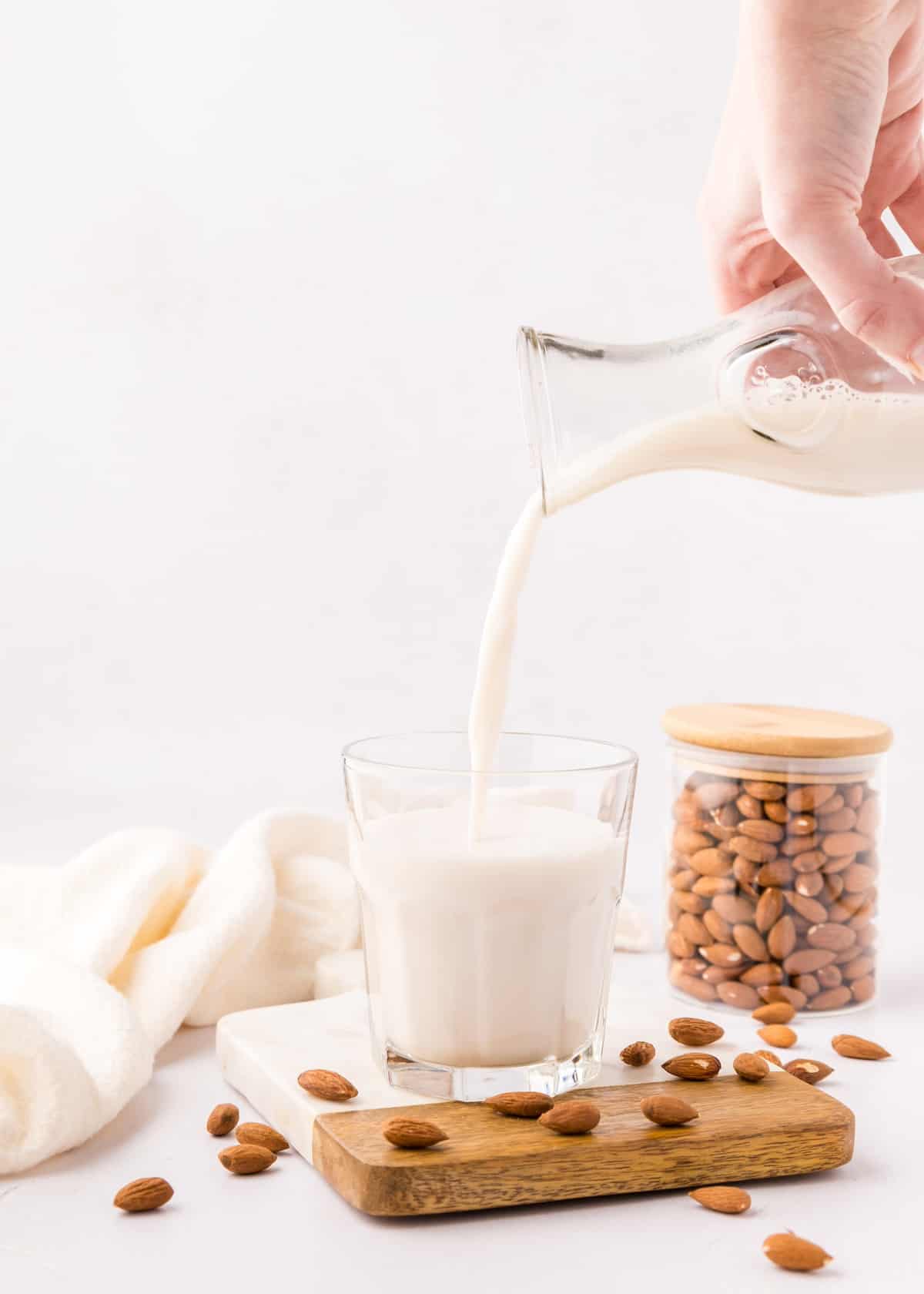
How to Make Homemade Almond Milk:
- Place almonds in a bowl and cover with water. Let them soak for at least 8 hours or overnight. Drain and rinse well.
- Add the soaked almonds and 4 cups of fresh filtered water to a high-speed blender. Blend on high for 1-2 minutes until smooth and creamy.
- Pour the blended mixture through a nut milk bag, fine mesh strainer, or cheesecloth into a bowl or pitcher. Squeeze out as much liquid as possible.
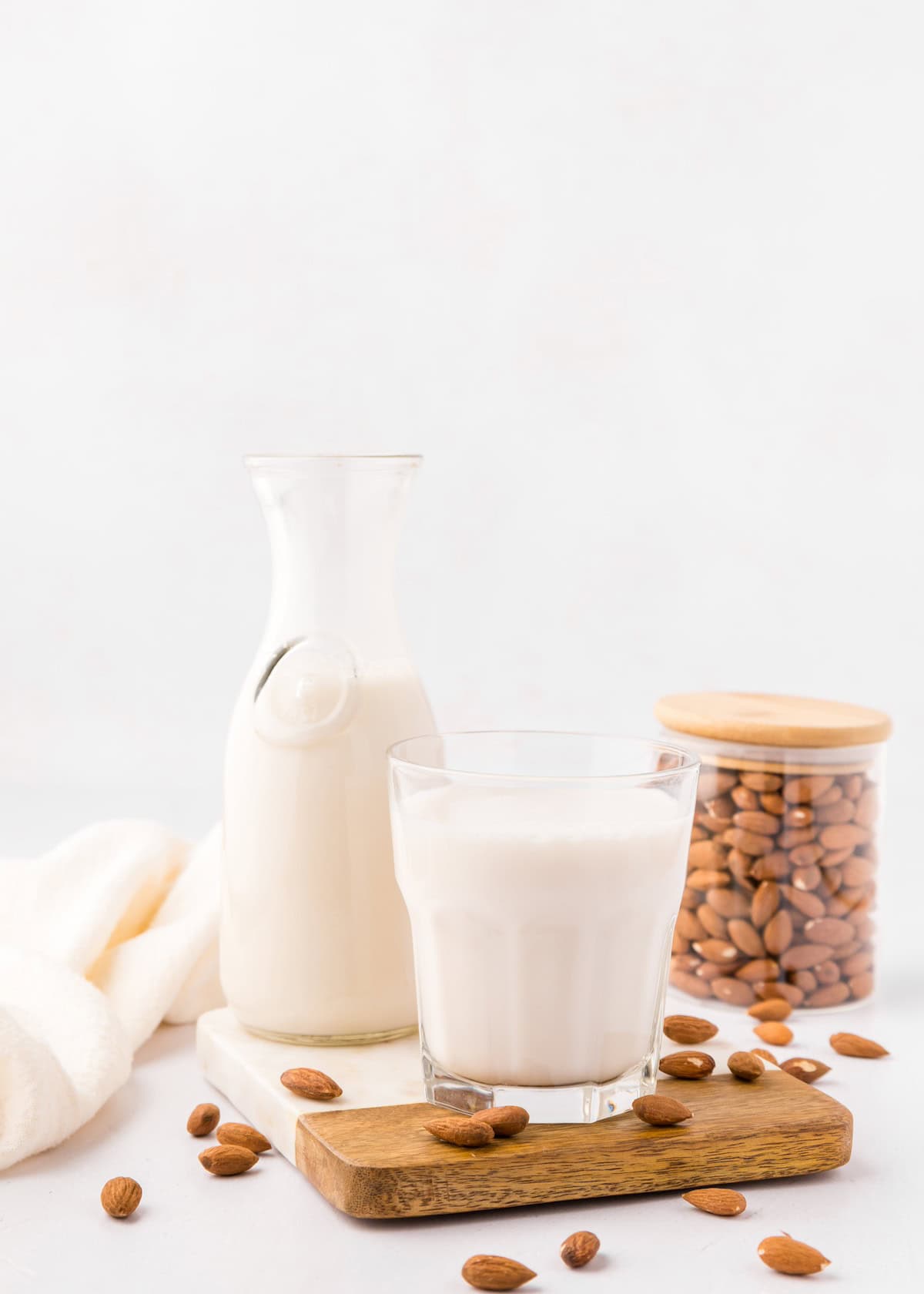
- Transfer the almond milk to a sealed jar or bottle and refrigerate for up to 4 days. Shake well before using, as natural separation occurs.
Save this Recipe
Recipe Notes & Tips:
- Soaking the almonds: Soaking for at least 8 hours (or overnight) softens the almonds, making them easier to blend and improving the milk's texture.
- Blending thoroughly: A high-speed blender works best to fully break down the almonds and create a creamy consistency.
- Straining properly: Use a nut milk bag, cheesecloth, or fine mesh strainer to remove any almond pulp for a smooth result. Squeeze firmly to extract as much liquid as possible.
- Adjusting consistency: For thicker almond milk, reduce the water to 3 cups. For a thinner consistency, add more water.
- Using the leftover almond pulp: Don't discard the pulp! It can be dried and used in baking, smoothies, or as an addition to oatmeal and granola.
How to Store:
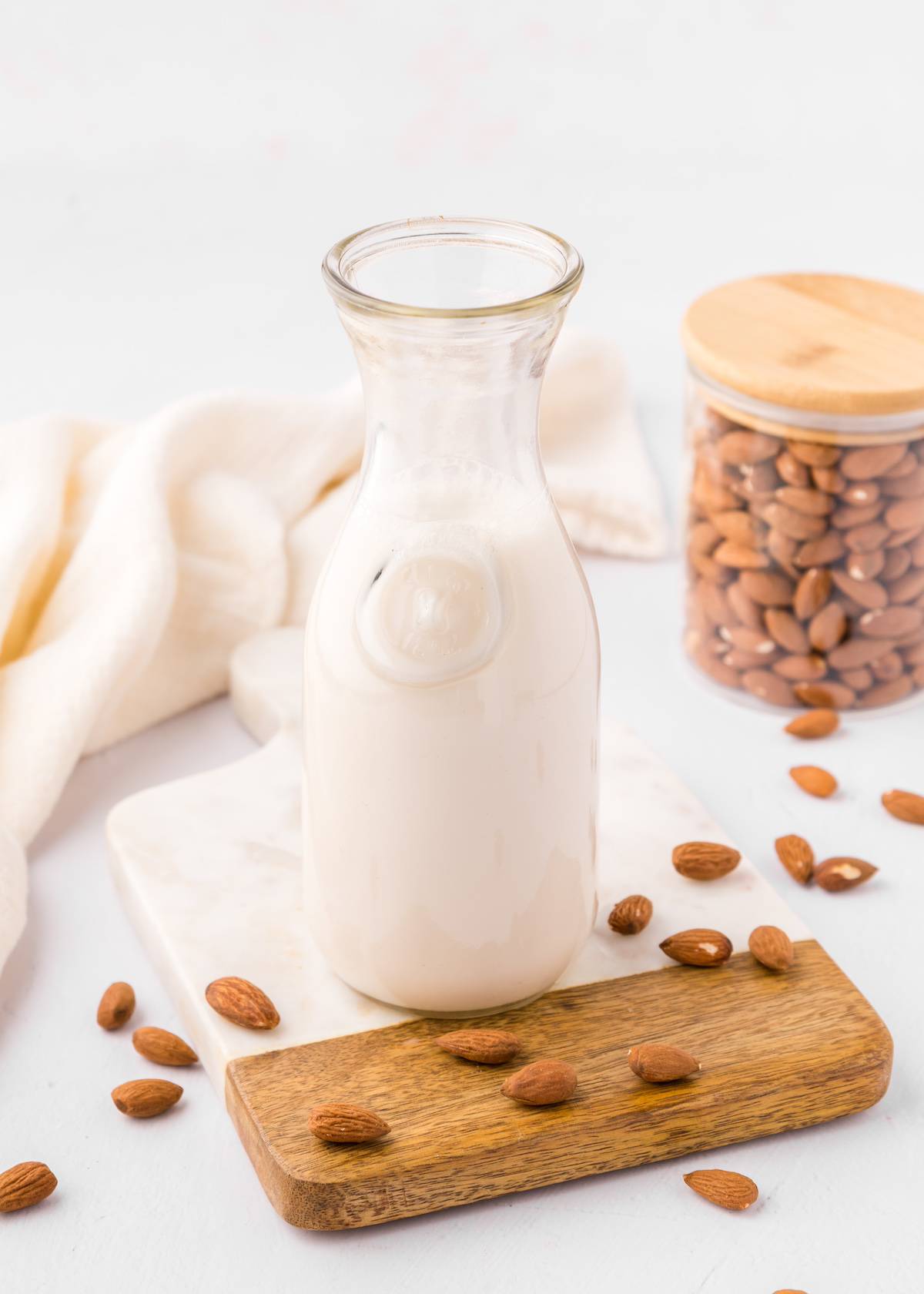
Refrigerate: Store homemade almond milk in a sealed glass jar or airtight container in the refrigerator for up to 4 days. Shake well before each use, as natural separation occurs.
Avoid freezing: Freezing can cause the texture to change, making the almond milk grainy when thawed. However, if necessary, freeze in ice cube trays for blending into smoothies.
Use fresh containers: Always store almond milk in a clean jar or bottle to prevent spoilage. If it develops an off smell or sour taste, discard it.
Homemade Almond Milk FAQs:
Homemade almond milk is often considered better than store-bought because it contains only almonds and water, with no gums, stabilizers, or preservatives. It also has a fresher, cleaner taste and lets you control the thickness and ingredients.
Soaking almonds is recommended because it softens them, making the almond milk smoother and easier to blend. While you can make almond milk without soaking, the texture may be slightly grainier.
Separation is normal with homemade almond milk because it doesn't contain emulsifiers. Simply shake the container before using to recombine the almond milk.
Grab your free copy
Get a FREE Healthy Meal Planning Ebook
Tips, Tricks, and Recipes for Stress Free Meal Planning
Homemade Almond Milk
Ingredients
- 1 cup raw almonds
- 4 cups filtered water
Instructions
- Place almonds in a bowl and cover with water. Let them soak for at least 8 hours or overnight. Drain and rinse well.
- Add the soaked almonds and 4 cups of fresh filtered water to a high-speed blender. Blend on high for 1-2 minutes until smooth and creamy.
- Pour the blended mixture through a nut milk bag, fine mesh strainer, or cheesecloth into a bowl or pitcher. Squeeze out as much liquid as possible.
- Transfer the almond milk to a sealed jar or bottle and refrigerate for up to 4 days. Shake well before using, as natural separation occurs.
Nutrition
Notes
- Soaking the almonds: Soaking for at least 8 hours (or overnight) softens the almonds, making them easier to blend and improving the milk's texture.
- Blending thoroughly: A high-speed blender works best to fully break down the almonds and create a creamy consistency.
- Straining properly: Use a nut milk bag, cheesecloth, or fine mesh strainer to remove any almond pulp for a smooth result. Squeeze firmly to extract as much liquid as possible.
- Adjusting consistency: For thicker almond milk, reduce the water to 3 cups. For a thinner consistency, add more water.
- Using the leftover almond pulp: Don't discard the pulp! It can be dried and used in baking, smoothies, or as an addition to oatmeal and granola.

Sally Quinto says
This is the recipe I was looking for, plain, unsweetened almond milk. Thank you! 2 Questions: 1. Can I make this with almond meal, starting with almond meal instead of whole almonds? Would I still soak the almond meal overnight, then mix with water, blend, and filter? 2. Has anyone tried this with other nuts, walnuts, hazelnuts, etc (just wondering!). From Baltimore.
Kaeleigh Pugliese says
Hi Sally! After soaking your almond meal, blend it with water as you would with whole almonds and then strain through a fine mesh or nut milk bag. You can try with other nuts just keep in mind that each type of nut can have a different flavor and creaminess!
Gail says
I’ve been making this for about 3 months for our protein drinks, recently our son and DIL drank some of it just out of the bottle and they said it tasted bitter, have you had anyone else comment that the milk tastes bitter? I don’t notice it.
Kaeleigh Pugliese says
Hi Gail! I've never had this happen, maybe it was the batch of almonds used to make it?
Mr. Areth says
Yeah, please fix the calorie rating, 274 calories is at least 5 times too high.
Virginia says
I’m not a genius, but the nutritional values seem way off 😏
Roché Woodworth says
Yes, they do! I’ll look into this - thanks!
Lisa K says
Does the 174 kcal/cup take into account that you’re straining out the almond pulp/meal?
Roger says
I have a question about the nutrition information: what is the volume that these measurements refer to? is it for all 6 cups of beverage? or per 8 ounces?
How were these figures derermined?
Roche Woodworth says
Hi Roger, the nutrition information is per serving. So for this recipe, it’s per cup of almond milk. Use the information as a guideline only - we do our best to provide our readers accurate information, but since we use a third-party nutrition calculator, we cannot guarantee that it is 100% accurate. Hope that helps:)
Lydia says
Very easy to make! Will never buy almond milk again- thanks for the recipe
Tina says
Recipe is super easy - great for using in smoothies. I would like to know what the cals/carbs are but I do not see the nutritional facts anywhere.
Roche Woodworth says
Hi Tina, we are in the process of adding nutritional labels to all our recipes, I’ll bump this one up the list.
Mary says
Can I use what I strain out, and how?
Roche Woodworth says
Hi Mary, yes we use the leftovers to make homemade almond meal - https://www.livingchirpy.com/homemade-almond-meal/ 🙂